|
|
|
|
|
|
|
|
|
|
The Morning Risk Report: Chips Held Hostage in Trade War Start Flowing Again to Auto Suppliers
|
|
By David Smagalla | Dow Jones Risk Journal
|
|
|
|
|
|
|
Good morning. Nexperia microchips are leaving China again, easing a shortage of simple but ubiquitous parts that threatened to paralyze the auto industry.
|
|
-
Supply chain resuming: German automotive supplier Aumovio, which was recently spun out of tire giant Continental, said Friday that the Sino-Dutch company’s semiconductors and components containing them were on their way from China to Aumovio’s distribution hub in Hungary.
-
Why this happened: The shipments are the first clear sign that Nexperia chip supplies are flowing more freely, following last week’s meeting between President Trump and Chinese leader Xi Jinping in South Korea. The Chinese commerce ministry on Saturday said it would grant export licenses in eligible cases.
-
The background: Beijing moved to halt exports of Nexperia chips last month after the Dutch government seized control of the company from its Chinese owner Wingtech, citing risks to economic security. Nexperia, which is based in the Netherlands, sends most of its products to facilities in China for packaging and testing before they are delivered to customers.
-
What was at stake: The move sparked a flurry of warnings from automakers that they would have to suspend operations because of thinning inventories of parts containing Nexperia’s chips, which are used in everything from lights to electronics.
|
|
|
|
|
Content from our sponsor: Deloitte
|
|
|
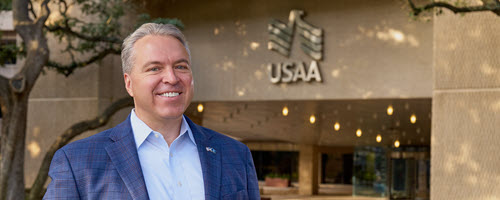
USAA Chief Legal Officer: Mission Reaches Beyond Service
|
|
Strategic alliances and advocacy are central to USAA’s mission to empower the military community’s resilience, says the association’s Chief Legal Officer Bob Johnson. Read More
|
|
|
|
|
|
|
|
|
|
|

|
|
Aerial view of Belem, Brazil, where the U.N. climate change conference is being held over the next two weeks. Photo: Wagner Meier/Getty Images
|
|
|
|
|
|
Country commitments, global carbon markets and greenhouse gas accounting. What to watch for at COP30.
Yusuf Khan is in Belem, Brazil, for Risk Journal, attending the 30th edition of the United Nations’s annual climate change conference, where he reports that unlike some previous summits, there aren’t expected to be as many long drawn-out talks over a final deal.
Small steps. Attendees to the two-week conference, more widely known as COP, are instead likely to focus on implementing commitments made at previous editions of the summit, including whether countries can actually deliver on their transition plans and how to implement the global carbon-credit deal made last year in Baku, Azerbaijan.
|
|
|
|
|
Trump administration blocks Gunvor takeover of Russian oil assets.
Gunvor pulled its offer to buy the international assets of sanctioned Russian oil producer Lukoil after the U.S. Treasury Department said it opposed the deal and called the Swiss commodities trader the “Kremlin’s puppet.”
What it means. The move signals the Trump administration is taking a hard-line approach in its recently launched effort to use economic pressure on Moscow to end the war in Ukraine.
|
|
|
|
-
Tesla shareholders approved a record-setting pay package for Chief Executive Elon Musk, a plan designed to motivate the world’s richest man with as much as $1 trillion in additional stock.
-
Families in the U.S. and Canada are suing OpenAI, alleging that loved ones have been harmed by interactions they had with the artificial-intelligence company’s popular chatbot, ChatGPT. Four of them died by suicide following the interactions.
-
Visa and Mastercard are nearing a settlement with merchants that aims to end a 20-year-old legal dispute by lowering fees stores pay and giving them more power to reject certain credit cards, according to people familiar with the matter.
-
The European Union could implement new changes to its Artificial Intelligence Act in a bid to make it easier for companies to obey the law, according to a draft proposal seen by The Wall Street Journal.
-
Japan’s financial regulator said it would back a new pilot project by some of the country’s largest banks to jointly issue stablecoins, Risk Journal reports.
-
Prediction markets can be used as a “powerful lever” to pressure states to legalize online sports betting, DraftKings CEO Jason Robins said in an earnings call Friday morning.
-
A German investigation into who was behind the greatest act of sabotage in modern history—the bombing of the Nord Stream pipelines—is threatening to splinter support for Ukraine, the country they hold responsible.
-
BBC’s director general and head of news each resigned on Sunday after criticism over the editing of remarks by President Trump that were included in a documentary program.
-
Singapore’s public companies must implement risk management and internal controls throughout their domestic and overseas operations, reports Risk Journal, or face scrutiny from the Monetary Authority of Singapore.
|
|
|
|
|
|
|
|
|
|

|
|
OpenAI CEO Sam Altman at a conference in February. Photo: YUICHI YAMAZAKI/AFP via Getty Images
|
|
|
|
|
|
OpenAI CEO says U.S. shouldn’t bail out AI companies.
OpenAI Chief Executive Sam Altman said the startup doesn’t want federal guarantees for its data centers or a bailout if it fails, laying out what he thinks the government’s role should be in America’s AI infrastructure build-out.
“If we screw up and can’t fix it, we should fail, and other companies will continue on doing good work and servicing customers,” Altman wrote in a lengthy X post.
Altman’s post came a day after OpenAI Chief Financial Officer Sarah Friar said at The Wall Street Journal’s Tech Live conference that the startup hoped financial institutions and perhaps the federal government would support its efforts by helping to guarantee chip financing. Her comments set off a frenzied discussion about the degree to which the federal government should underwrite the risks of the AI boom.
|
|
|
|
|
How the lowly soybean got trapped in the crossfire of the U.S.-China trade wars.
After years of getting whipsawed by global politics, Illinois farmer Dean Buchholz thought he had seen it all. But even he was shocked when his soybean crop got caught up in a South American financial crisis.
Just days after the Trump administration pledged a $20 billion loan to backstop the finances of Argentina under libertarian President Javier Milei, China bought billions of dollars worth of soybeans from Argentina. The massive agriculture deal ricocheted through international markets, pressuring U.S. soybean prices and providing a bump to Argentina’s currency.
In the middle of a Chinese trade war with Washington, Beijing and Buenos Aires had teamed up to show that the world could live without American soybeans. “We paid all our taxpayer money to help out a foreign country,” said Buchholz, and then “they basically cut our throats.”
|
|
|
|
-
Consumers’ moods dropped further in November, according to a monthly survey from the University of Michigan, continuing a slide that has worsened amid persistent price increases and an extended government shutdown.
-
Leverage among hedge funds is the highest it has been since regulators started tracking the data more than a decade ago, a dynamic the Federal Reserve noted Friday as part of a broader set of vulnerabilities it is monitoring within the U.S. financial system.
-
President Trump’s tariffs are starting to take a big bite out of Canada’s economy.
-
China’s leaders have again pledged to give consumption a bigger role in driving growth, but economists remain unconvinced.
-
Nigeria is trying to persuade Trump not to insert the U.S. military or cut off aid over cattle herdsmen accused of killing Christians.
-
Senate Republicans on Thursday rejected a measure to block military action by the Trump administration in Venezuela without congressional authorization.
-
The Federal Aviation Administration ordered all MD-11 planes temporarily grounded after the Tuesday crash of a United Parcel Service cargo jet in Louisville, Ky., killed at least 14 people.
-
NSO Group, the Israeli company behind Pegasus spyware, says a group of investors led by Hollywood producer Robert Simonds has acquired a controlling stake in the firm, which has named a former Trump official to lead an effort to restore its battered reputation.
-
Iraqi Prime Minister Mohammed Shia al-Sudani is seeking a second term, aiming for independence from both the U.S. and Iran.
|
|
|
|
|
|
|
$60 Million
|
|
Amount that Cornell University will pay as part of a deal with the Trump administration to restore federal-research funding and settle the government’s complaints alleging discrimination at the Ivy League university.
|
|
|
|
|
|
|
|
|
|
|
|
|
|
|
|
|
|
|
|
|
|
|