|
|
|
|
|
|
|
|
|
|
The Morning Risk Report: Despite Trump’s Venezuela Eagerness, Sanctions and Risks Loom
|
|
By Richard Vanderford | Dow Jones Risk Journal
|
|
|
|
|
|
|
Good morning. President Trump’s apparent green light for business in Venezuela is unlikely to lead companies to zoom into the country, observers said, as they likely face obstacles even if U.S. sanctions wind down.
Even if the administration can quickly undo an expansive set of sanctions imposed to target now-deposed President Nicolás Maduro, businesses face a number of separate risks, Risk Journal Reports.
|
|
-
Risk remains: “In a nation that was as comprehensively sanctioned as Venezuela, just because the sanctions are lifted doesn’t mean the risk is gone,” said Daniel Tannebaum, who heads the global anti-financial crime practice at consulting firm Oliver Wyman.
-
Reasons to pump the brakes: Large oil companies and the global banks that serve them have many reasons besides U.S. sanctions to avoid doing business in Venezuela, from a history of nonpayment, expropriation and money laundering to ongoing geopolitical uncertainty as the U.S. sends sometimes conflicting signals about who is in charge there.
-
Lessons from Syria: The U.S. pulled about 500 Syria-related entities off its sanctions rolls in 2025 and repealed a statute that also blocked transactions with the country. But the recent U.S. about-face on Syria sanctions after regime change there hasn’t led to a surge of foreign investment.
|
|
|
|
|
Content from our sponsor: Deloitte
|
|
|
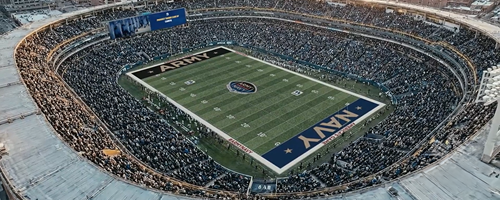
With Brand Refresh, USAA Draws on a Century of Shared Experiences
|
|
For interim CMO Lindsey O’Neill, both facts and feelings were critical to shaping USAA’s refreshed brand, which launches with a campaign focused on the individual experiences of military families. Read More
|
|
|
|
|
|
|
|
|
|
|

|
|
Sen. Lindsey Graham said he expects the Senate to vote on the bill as early as next week and that it would have bipartisan support. Photo: Getty Images
|
|
|
|
|
|
Trump greenlights ‘sledgehammer’ sanctions bill targeting Russian oil trade.
President Trump has given his blessing to a sweeping bipartisan sanctions package intended to cripple Russia’s revenue streams, Sen. Lindsey Graham (R., S.C.) said.
Graham, in a post on X, said Trump “greenlit” the Sanctioning Russia Act of 2025 following a meeting at the White House. The proposed legislation, co-authored with Sen. Richard Blumenthal (D., Conn.), aims to provide the Trump administration with what the lawmakers described as an economic “sledgehammer” to force Russian President Vladimir Putin to the negotiating table over the war in Ukraine.
|
|
|
|
|
New York attorney general requests Instacart share information on price testing.
New York Attorney General Letitia James is demanding that Instacart share information about its price-testing experiments following a report that the app’s users were charged different prices for identical products from the same stores.
In a Thursday letter to the company, James and Assistant Attorney General Ryan Galisewski requested copies of the company’s pricing agreements with a range of retailers and food and beverage brands.
|
|
|
|
-
French authorities said lender HSBC agreed to pay a fine of nearly 268 million euros ($312.9 million) in connection with an investigation into accusations of tax fraud relating to dividend payments.
-
Political relations between the U.S. and Venezuela just got more complicated, but for many Venezuelans, getting money from friends and relatives in the U.S. is as easy as sending a text.
-
China said it would review Meta’s recent acquisition of artificial-intelligence startup Manus, firing a warning shot toward Chinese entrepreneurs lured by Silicon Valley riches.
|
|
|
|
|
|
|
2,223
|
|
The number of sanctions list additions in 2025 by the U.S. Treasury Department's Office of Foreign Assets Control, according to a report by Castellum.AI.
|
|
|
|
|
|
|
|
The U.S. seizure of a Russia-linked tanker in the eastern Atlantic, previously identified as seeking to break the U.S. embargo on oil exports from Venezuela, dramatically underscores the Trump administration’s determination to enforce its dominance of the Western Hemisphere–even in the face of a challenge from major powers.
Dow Jones Risk Journal’s webinar discussed how the seizure of the vessel will be viewed in Moscow, whether this has a bearing on broader U.S.-Russia relations, including the Ukraine war, what this might tell us about U.S. intentions in the Western Hemisphere and more. To watch, click here.
|
|
|
|
|
|

|
|
Smoke rises near Fort Tiuna in Caracas amid a blackout during the U.S. strike. Photo: Leonardo Fernandez Viloria/Reuters
|
|
|
|
|
|
Venezuela raid highlights cyber vulnerability of critical infrastructure.
Critical infrastructure is increasingly hit in cyberattacks during global conflicts, showing that even small power plants and water facilities must now consider themselves at risk in military strikes and build up their cybersecurity appropriately.
The U.S. incursion into Venezuela last weekend, and cryptic statements from President Trump, prompted speculation that cyber capabilities helped trigger a partial blackout in Caracas during the raid.
|
|
|
|
|
China deprives Japan of rare-earths supply, escalating dispute.
China has begun choking off exports of rare earths and rare-earth magnets to Japan, a potential blow to Japanese companies that use them to produce components for global chip makers, car companies and defense firms.
The move is the latest by Beijing to punish Japan for Prime Minister Sanae Takaichi’s remarks late last year suggesting the country could become involved in a conflict over Taiwan, the self-ruled island that China has pledged to take by force, if necessary.
|
|
|
|
-
The Trump administration’s seizure of tankers under a growing oil embargo is meant to warn adversaries attempting to gain a foothold in the Western Hemisphere and boost Washington’s influence in Latin America, according to U.S. officials.
-
The internet was almost completely shut down in Iran, an internet-watchdog group said Thursday, amid widespread protests and a call from the son of the country’s former shah to “take to the streets.”
-
The U.S. is scrambling to contain a worsening clash between two of its military partners in Syria, as the country’s new government battles a Kurdish militia in the city of Aleppo.
|
|
|
|
|
|
|
|
|
|
|
On this week’s episode of the Dow Jones Risk Journal Podcast: The U.S. military operation in Venezuela has ushered in a new era of geopolitical risk. Adam Ward and Max Fillion discuss the implications of this marked shift in foreign policy and its effects on companies and markets.
|
|
|
|
Also, Kim S. Nash explains how cyber threats to critical infrastructure pose a significant risk in an era of increasing nation-state conflict. James Rundle hosts.
You can listen to new episodes every Friday on Apple Podcasts, Spotify and Amazon.
|
|
|
|
-
Chinese authorities are widening a crackdown on Christian groups, this week detaining church leaders in southwestern China as officials across the country intensify a campaign to root out religious organizations beyond the state’s control.
-
Glencore and Rio Tinto have restarted discussions about a possible merger that could create the world’s largest mining company.
-
A federal judge ruled Thursday that the prosecutor overseeing a civil-rights investigation into New York Attorney General Letitia James was serving unlawfully, handing another setback to the Trump administration’s efforts to pursue a Democratic official who previously sued the president.
-
The world has changed, and controlling Venezuela’s oil now has only modest and uncertain benefits, columnist Greg Ip writes.
-
Kenn Ricci went from pilot to billionaire. “I am accidentally wealthy,” he says.
|
|
|
|
|
|
|
|
|
|
|
|
|
|
|
|