|
|
|
|
|
|
|
|
|
|
Europe's Green-Energy Push Could Get Mired in Familiar Planning Fights
|
|
|
|
|
|
|
|
Welcome back. The European Union's plan for weaning itself off🔒 Russian oil, gas and coal boils down to one imperative: Speed up the energy transition. "The quicker we switch to renewables and hydrogen, combined with more energy efficiency, the quicker we will be truly independent and master our energy system," said Ursula von der Leyen, president of the EU's executive arm.
So what needs to happen to accelerate the expansion of renewable energy? At the top of the industry's wish list is faster permitting. Wind and solar developers—not just in Europe, but around the world—have long complained that it takes too long to get official approval for new projects. WindEurope, a trade association, said last month that Europe is only expected to add 18 gigawatts of wind power a year over the next five years—well short of the 30 gigawatts required every year for the EU to hit its target of 40% renewable energy by 2030.
Even before the war, the EU was trying to address that problem, developing new permitting guidance for national regulators that will be published in May. This week it exhorted EU countries "to ensure that the planning, construction and operation of plants for the production of energy from renewable sources, their connection to the grid and the related grid itself are considered as being in the overriding public interest."
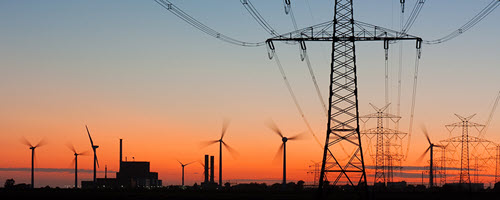
But it isn't so simple. Wind and solar farms projects and the infrastructure needed to connect them to the electricity grid take up a lot of space, often in places that people care about. The push to expand the green-energy industry runs up against other official priorities, such as the protection of natural habitats.🔒 In Europe, war may shift the balance somewhat in favor of project developers, but the planning fights aren't going to end overnight.
This week: Russian methane; battery metals; the dream of a globe-spanning grid.
|
|
|
|
|
Content from our Sponsor: DELOITTE
|
|
Grid Carbon-Proofing Could Save Utilities Billions of Dollars
An analysis of utility companies’ calculations in their Carbon Disclosure Project filings shows that the cost of decarbonizing the grid and adapting it to climate change impacts is lower than the cost of inaction. Read More ›
|
|
|
|
|
|
|
|
|
|
|
|
|

|
|
An LNG tanker in the Sakhalin region of Russia. The country supplies around 27% of Europe’s oil and 41% of its gas. PHOTO: SERGEI KRASNOUKHOV/ZUMA PRESS
|
|
|
|
|
|
Big oil's rush for the exit. Western oil companies walking away from their investments in Russia will be left with a strategic decision: Lean into the energy transition and invest more heavily in renewables, or retrench and focus on their core business. Meanwhile, Russia's vast energy industry will be depleted by an exodus of foreign talent. That could put the brakes on new developments, especially in difficult environments such as the Arctic. It could also undermine efforts to limit emissions of methane, a potent greenhouse gas that leaks from fossil-fuel infrastructure. Here are five ways the scramble for the exits could affect oil companies’ climate plans and the broader push
toward cleaner energy.
|
|
|
|
|
“There is a real risk that the Russian oil industry could unleash a torrent of methane that threatens global progress in bringing down greenhouse-gas emissions.”
|
|
— Andrew Logan, senior director for oil and gas at sustainable-finance nonprofit Ceres
|
|
|
|
|
|
|
Russian fuels clean energy, too. The price of nickel, a key component for electric batteries, soared to unprecedented highs this week as the war in Ukraine fueled concerns of supply disruptions. Russia provides much of the world's supply of the metal.
|
|
|
The wild price-jump this week was mainly a financial phenomenon created by short-covering in China, but prices are likely to remain elevated, Stephen Wilmot writes for Heard on the Street.🔒 Prices of cobalt and aluminum, other key battery metals supplied by Russia, have also risen. That will create problems for big battery makers such as LG Energy and Panasonic.
|
|
|
|
Republicans call for pause on climate-related regulation. In a letter to Treasury Secretary Janet Yellen, Republican members of the Senate Banking Committee reiterated concerns🔒 that climate-change policies being formulated by financial regulators could limit access to capital for U.S. energy companies. That could weigh on American oil-and-gas production over the long run, they said, leaving the U.S. more vulnerable to foreign suppliers.
|
|
|
|
|
|
|
🎁Newsletter Extra: Women’s share of board seat edges higher. Women continued to take a greater share of corporate leadership roles last year, but the rate of progress has been uneven from year to year and it could take another 20 years before women hold half of board seats, according to research from MSCI Inc. Overall, women held 22.6% of board seats in the global MSCI ACWI Index in 2021, compared with 21.1% in 2020. The share of companies with all-male boards fell to 14.2% from 17%.
—Dieter Holger
|
|
|
|
|
|
|
|

|
ILLUSTRATION: HARRY CAMPBELL
|
|
|
|
|
Can EVs save the grid? A school bus to power an emergency shelter. A Ford F-150 as a generator. With vehicle-to-grid concepts, companies and utilities are testing ways electric vehicles can act as batteries.
|
|
|
|
The dream of a global network. An India-led project envisions building a power network that would allow green electricity to be shipped across 10 time zones, from Europe to Vietnam. The goal is to get the network linked up by 2050. The grand idea has been around for decades—and has always run up against daunting technical, economic and political barriers. But many energy experts argue super grids’ time is coming.🔒
In the past, shipping electricity many hundreds of miles over conventional alternating-current lines wasn’t economical because of power losses that mounted rapidly the longer the distance. But improvements in the technology are making trans-continental power shipment more economical. Long-distance undersea cables are particularly expensive, but some are taking the plunge. Australia- and Singapore-based Sun Cable has proposed a 2,600-mile undersea line that would ship solar power from northern Australia to Singapore. U.K.-based Xlinks is planning a line nearly as long to ship power to the U.K. from Morocco.
|
|
|
|

|
|
|
|
|
|
|
|
|
|
|
|
LanzaTech to go public via SPAC. Carbon-capture and transformation company LanzaTech is merging with a special-purpose acquisition company to go public🔒 in a deal that values it at about $2.2 billion. The Chicago company traps carbon that would be emitted during industrial processes and uses bacteria to convert the waste gas into sustainable chemicals such as ethanol. Companies such as Chinese steelmaker Shougang Group Co. add LanzaTech’s technology into their manufacturing process, while buyers of the resulting end products include consumer-products maker Unilever and beauty company Coty.
|
|
|
|
|
|
|
📅 Join us on April 20 for the second WSJ Pro Sustainable Business Forum. We’ll be discussing the latest thinking on business topics including regulation and reporting, working with the C-suite and board, navigating the carbon credits market and figuring out Scope 3 emissions. Speakers will include leaders in corporate sustainability, policy and investing. Click here to register.
|
|
|
|
|
|
|
Consumer Brands Take Stance Against Russia, But Stand by Their Employees
An increasing number of international consumer brands are taking a stance against Russia by exiting or temporarily closing their operations in the country, joining international efforts to isolate it. On Thursday, Germany's Hugo Boss said it was temporarily closing its on-site and online sales in Russia, and Uniqlo reversed its earlier stance to keep stores open in the country. This follows similar moves by other Western fashion brands such as Inditex, H&M and Adidas, and luxury fashion brands such as LVMH and Hermes. Russia and Ukraine account for 3% of Hugo Boss' total sales. For Inditex, Russia generates 8.5% of the company's EBIT and for H&M, 4% of its sales. Dissociation from Russia will have a financial impact for these companies, but may protect them from the potential reputational damage of doing business there in the short term. Many companies that are suspending their
Russian and Ukrainian operations have said they will continue to pay salaries or develop support plans for local employees, but the duration of such efforts are likely to depend on the development of the geopolitical situation.
This is a sample of exclusive analysis of sustainability news from the Journal’s environment, social and governance (ESG) research analysts, whose work is primarily published by Dow Jones Newswires to help institutional investors and wealth managers integrate ESG factors into portfolio models, risk management programs and financial advice. The commentary by our research analysts is independent of the news coverage by reporters at the Journal. For more information about Dow Jones Newswires, click here.
|
|
|
|
|
|
|
|
The Securities and Exchange Commission plans to propose rules mandating increased disclosure about climate change and related risks in a meeting on March 21. (WSJ)
ESG investing risks entrenching inequality by favoring companies from rich economies and favored sectors, said a former head of the European Bank for Reconstruction and Development. (Nikkei)
Amazon's responses to environmental disclosure group CDP show it counts Scope 3 carbon emissions from own-brand products but not those of other products sold on its site. (Reveal)
Opposition is growing to deep-sea mining for rare-earth metals. (Grist)
The U.S. has overtaken China in grid-battery investment. (Canary)
Europe’s accelerated clean-energy transition plan to replace Russian fossil fuels will boost the order books of China renewable manufacturers. (Bloomberg)
China plans to build 450 gigawatts of wind and solar power capacity in the Gobi desert by 2030. (Climate Home)
The Biden administration said it will accelerate plans to convert the nation's fleet of trucks into zero-emission vehicles. (Supply Chain Dive)
Investors with €2.2 trillion under management filed a resolution calling on Credit Suisse to slash its exposure to oil, gas and coal assets. (Financial Times)
|
|
|
|
|
|
|
✍️ Feedback on this newsletter? We would love to hear from you, so please get in touch.
|
|
|
|
|
|