|
|
|
|
|
|
|
|
|
|
|
Sponsored by 
|
Farmers Shift to Soybeans as War Boosts Fertilizer Prices; America Now Has an EV Rust Belt
|
|
By Mark R. Long | WSJ Logistics Report
|
|
|
|
|
|
|
|

|
|
Soybeans, a less fertilizer-intense crop than corn, were planted in Iowa last year. BENJAMIN ROBERTS/BLOOMBERG
|
|
|
|
|
|
More U.S. farmers are shifting to planting soybeans this year, a less fertilizer-intense crop than corn, as fertilizer costs surge because of the war in Iran. American farmers intend to plant 84.7 million soybean acres in 2026, up 4% from last year, according to the U.S. Department of Agriculture.
The Wall Street Journal’s Patrick Thomas writes that farmers are expected to plant around 95.3 million acres of corn, down 3% from last year. Agriculture industry officials had generally expected more soybean acres to be planted as farmers rotated from a massive corn crop in 2025. A trade deal with China and new rules mandating more soybean oil be blended into diesel also helped lift soybean prices. Meanwhile, farmers are set to plant the smallest wheat crop since the Agriculture Department began keeping track in 1919.
It has been nearly a month since a vessel loaded with fertilizer left the Persian Gulf, which has become increasingly crowded with them, the Journal’s James T. Areddy reports. As of Tuesday, 36 ships were loading or laden with about 1.65 million tons of fertilizers in the Gulf, according to Kpler, up from the 23 vessels the shipping intelligence firm estimated in a March 11 report.
-
Brent crude oil futures surged 63% in March, the global benchmark’s largest one-month percentage gain on record. (WSJ)
-
President Trump told aides he is willing to end the U.S. military campaign against Iran even if the Strait of Hormuz remains largely closed. (WSJ)
-
The aircraft carrier USS George H.W. Bush and its accompanying warships are deploying to the Middle East, joining the USS Abraham Lincoln and the USS Gerald R. Ford carrier strike groups. (WSJ)
-
Malaysia said Iran assured it that its vessels will receive safe, toll-free passage through the Strait of Hormuz. (WSJ)
-
Direct air-freighter and widebody capacity between Europe and Asia rose 31% in the week ended March 21 from the week ended Feb. 28, the day the Iran war began. (Air Cargo News)
|
|
|
|
|
|
CONTENT FROM: PENSKE
|
|
|
Gain an Edge. Gain Ground With Penske.
|
|
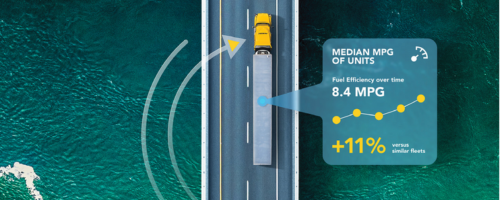
Penske’s industry-first Catalyst AI™ uses advanced algorithms and billions of data points to compare your fleet to similar fleets. This provides your business with unique benchmarks across key metrics, like fuel efficiency, fleet utilization and maintenance—giving you a personalized game plan for improvement.
Learn More
|

|
|
|
|
|
|
|
|
|
|
$8.60
|
|
Average rate to fly a kilogram of cargo by air from Shanghai to Dubai in March, up 95% from February and putting the 2020 pandemic record of $9.40/kg in sight, according to Drewry
|
|
|
|
|
|
|
Transportation Technology
|
|
|
|
Voltify raised $30 million in seed funding to trial its system that retrofits diesel locomotives with battery power and charges them on the go via a network of microgrids.
The company says it has signed a paid pilot agreement with one of the Class 1 railroads, the Journal’s Rhiannon Hoyle reports. Voltify will use the money to gear up for a real-world test of its technology just as conflict in the Middle East is sending diesel prices soaring.
The Philadelphia-based startup estimates it can cut energy costs by more than a fifth compared with the lowest price rail companies paid for diesel in the past decade.
|
|
|
|
|
|
|
|

|
|
The Magna factory in St. Clair, Mich., shown a year ago, was expected to stay busy for years building battery enclosures for electric pickup trucks. REBECCA COOK/REUTERS
|
|
|
|
|
|
Magna International’s contract to make battery enclosures for GM’s new electric pickup was so big and promising that North America’s largest auto-parts supplier built a new factory in Michigan. Five years on, that million-square-foot plant sits mostly empty, one of dozens of U.S. EV parts plants left desolate by America’s breakup with electric vehicles.
The WSJ’s Sharon Terlep writes that Magna and its big Detroit customers are forging ahead with plans to roll back EV investments, even as the war in Iran has pushed gas prices up enough to raise enthusiasts’ hopes of a comeback. GM said this week it would idle the Detroit factory where it builds the big electric trucks that Magna supplies, due to weak demand.
The unpredictability of any EV revival is reverberating through the auto industry’s sprawling supply chain. Multinational companies such as Magna, Dana and BorgWarner slashed jobs and closed plants because of the EV pullback, while a string of smaller manufacturers shut down altogether. Last year, more than $20 billion in previously announced investments in EV and battery facilities were wiped out, according to Atlas Public Policy.
-
Zhejiang Geely Holding Group’s Volvo Car will increase its stake in EV maker Polestar to 19.9% and consolidate Polestar 3 production at its South Carolina plant. (WSJ)
-
DoorDash invested in EV company Also as part of a $200 million Series C financing round led by Greenoaks. (WSJ)
|
|
|
|
|
|
|
|
-
U.S. job openings slipped in February, and hiring fell to its lowest level since April 2020, the Labor Department said. (WSJ)
-
The Conference Board’s economic sentiment index rose to 91.8 in March, up from 91 in February, defying analyst expectations of a decline as the Iran war continues. (WSJ)
-
U.S. home-price growth slowed in January, with the S&P Cotality Case-Shiller National Home Price Index rising 0.9% annually, compared with a 1.1% increase in December. (WSJ)
-
Canada’s GDP rose 0.1% in January and an estimated 0.2% in February, marking three months of expansion. (WSJ)
-
Japan’s economy is flashing mixed signals, with inflation cooling slightly in Tokyo and industrial output falling. (WSJ)
-
Eurozone consumer prices rose 2.5% in March, the fastest pace since January 2025, driven by energy prices due to the Iran war. (WSJ)
-
Unilever agreed to combine its food business with McCormick in a deal creating a new sauces-to-spices behemoth valued at more than $65 billion, including debt. (WSJ)
-
Virtus Minerals finalized its acquisition of Chemaf, one of the world’s biggest cobalt producers not already in China’s hands, securing supplies of the critical metal in the Democratic Republic of Congo. (WSJ)
-
Rheinmetall and Boeing’s Australian business struck a deal to offer autonomous combat aircraft for the German armed forces. (WSJ)
-
A three-judge appeals-court panel rejected the World Shipping Council’s challenge to a U.S. law that prevents carriers from unfairly denying space on ships to exporters. (Journal of Commerce)
-
The federal Endangered Species Committee, in its first meeting in over 30 years, exempted Gulf of Mexico oil and gas drilling from endangered species protections, citing national security. (Bloomberg)
-
Amazon is adding over 1,500 FedEx Office locations to its returns network, allowing shoppers to make returns without a box or printed label. (Axios)
-
Hanwha Ocean named Exxon Mobil veteran James Sagar as CEO of its shipping unit, and as president of a new division working on maritime technology and decarbonization. (TradeWinds)
-
Ryder System is participating in initial fleet trials of International Motors’ second-generation autonomous LT Series tractors. (Transport Topics)
|
|
|
|
|
|
|
|
|
|
|
|


