|
|
|
|
|
|
|
|
|
|
|
|
Trump Confronts Mexico Over Water Shortage Threatening Texas Crops
|
|
|
|
|
|
|
|
Today: Drought and other conditions have interrupted the flow of water owed to the U.S. under a treaty; Sandbrook Capital benefits from Europe's appetite for wind power; Congo's missing minerals.
|
|
|
|
|
|

|
|
The U.S. and Mexico share water from the Rio Grande under an agreement from the 1940s. Photo: Cheney Orr/Reuters
|
|
|
|
|
|
Welcome back: A water fight has erupted between the U.S. and Mexico. The two countries have shared water from the Rio Grande and the Colorado River since the mid-1940s under an agreement meant to ensure each has an adequate supply of the vital resource.
Now, thanks to drought and other conditions, Mexico owes the U.S. more than 1.2 million acre-feet of water from the Rio Grande. Frustrated Texas farmers, whose crops are dying of thirst, are urging President Trump to pressure the country into providing water it says it doesn’t have, the WSJ's Eric Niiler and José de Córdoba write.
Last week, Trump threatened Mexico with tariffs if the country doesn’t meet its obligations. In March, for the first time since the 1944 Water Treaty was signed, the State Department refused a request by Tijuana, Mexico, officials to deliver an emergency supply of municipal water from the Colorado River.
Environmental experts and hydrologists say a long-term drought brought on by climate change and increasing demand for water on both sides of the border are to blame for the shortage, and that many farmers aren’t doing enough to conserve the water they have.
Some experts believe only a hurricane that dumps rain on northern Mexico and fills the two reservoirs that feed the Rio Grande will allow Mexico to meet its treaty obligation by an October deadline, which is the end of a five-year water delivery schedule.
|
|
|
|
|
|
|
|
|
Content from our sponsor: Deloitte
|
|
|
Distributed Energy Resources Can Drive Grid Resilience, Customer Affordability
|
|
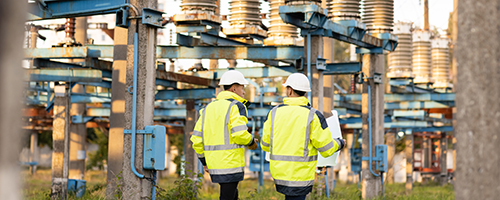
To support electricity goals for resilience, reliability, and customer affordability, utilities can center their strategies on distributed energy resources. Read More
|
|
|
|
|
|
|
|
|
Europe’s Appetite for Wind Power Helps Sandbrook Find an Exit
|
|
|
|

|
|
A wind farm in the Baltic Sea. Photo: Bernd Wastneck/Zuma Press
|
|
|
|
|
|
Sandbrook Capital has sold a Norwegian service provider for offshore-wind-energy project developers, in a $1 billion deal that benefits from the sector’s fast expansion in Europe even as it has fallen out of favor in the U.S.
The Stamford, Conn.-based private-equity firm and a co-investor agreed to sell Havfram, an operator of large vessels used in installing wind turbines, to Belgian marine-engineering company Deme Group in a deal valued at about €900 million, or roughly $1.02 billion, WSJ Pro's Luis Garcia reports.
Increased efforts by European countries to expand renewable energy generation have driven demand for Havfram’s services. The vessels it expects to put in service are critical to handling the bulky equipment used in offshore wind projects, including turbine towers as tall as the Washington Monument, Marti said.
The buoyant offshore-wind market in Europe contrasts with delays encountered by U.S. projects after President Trump fiercely criticized such development and directed federal agencies to halt permits. At the same time, the Trump administration has encouraged increased production of oil and gas with the aim of lowering energy prices.
|
|
|
|
|
|
|
|
|
|
While War Rages, Congo’s Neighbors Smuggle Out Its Mineral Wealth
|
|
|
|

|
|
Rwanda-backed M23 soldiers at a mine in Rubaya in the Democratic Republic of Congo. Photo: Camille Laffont/FP/Getty Images
|
|
|
|
|
|
During the 19th century’s Scramble for Africa, European countries raced to secure territory and wealth across the continent. Now, African powers are grabbing resources from a neighbor crippled by infighting and ill-equipped to defend itself, the WSJ's Nicholas Bariyo reports.
Caught in the middle is the Democratic Republic of Congo, a country the size of Western Europe whose forests conceal a wealth of gold, diamonds and coltan, a key component in smartphones and computers. These mineral riches are turning what was already a region plagued by militia violence into a battleground, as Rwanda and its local allies seize coltan supplies while Uganda and its proxies move to take over gold mines to the northeast, according to United Nations and Ugandan officials.
The officials say Ugandan President Yoweri Museveni and Rwandan President Paul Kagame are pouring troops and weapons into Congo, while their Congolese allies, who control strategic border crossings, secure smuggling routes to move more minerals to the global markets.
|
|
|
|
|
|
|
|
|
6.75 Million
|
|
Metric tons of engineered carbon removal Microsoft has committed to buy, marking the largest carbon removal deal in history. The carbon will be captured from a bioenergy with carbon capture and storage (BECCS) facility planned at the Port of Greater Baton Rouge, La.
|
|
|
|
|
|
|
|
|
-
Rio Tinto iron ore shipments drop sharply due to cyclones. (WSJ)
-
GM hires Dell’s sustainability head as new CSO. (ESG Today)
-
AstraZeneca’s $130 million biomethane plant is a model for high-emitting industries. (Trellis)
-
Rosendin to demo robotic solar panel installers in Texas. (ESG Dive)
-
Gavin Newsom says California to sue over Trump tariffs. (FT)
-
Tensions with China clear path for salt-powered batteries. (Bloomberg)
-
Blackouts the only way to turn voters off renewable energy, says Australian lawmaker. (Guardian)
-
Rewiring Britain for an era of clean energy. (NYT)
-
AI models are helping dirty industries go green. (Economist)
-
U.K. Supreme Court rules trans women can’t be defined as women. (WSJ)
|
|
|
|
|
|
|
|
|
|
|
|
|
|
|
|


