|
|
|
|
|
|
|
|
|
|
|
|
Environmental Rules Under Clean Air Act Face Cuts From GOP Lawmakers
|
|
|
|
|
|
|
|
Today: Republicans say proposed bills would slash red tape and boost the country’s manufacturing to compete with China; EFRAG floats simplified sustainability reporting standards; Chinese tech stokes security concerns.
|
|
|
|
|
|

|
|
Gary Palmer during a House committee meeting earlier this year. Photo: Andrew Harnik/Getty
|
|
|
|
|
|
Welcome back: Republicans on Capitol Hill have their sights set on passing several bills that would loosen yet more environmental rules—from Environmental Protection Agency reviews to permitting requirements—that they say are overly burdensome.
WSJ Pro Sustainable Business's Clara Hudson reports that the environment subcommittee of the House Committee on Energy and Commerce is poised to mark up the proposed legislation on Wednesday—the first step in bringing the bills to a vote.
One of the bills, the Air Permitting Improvements to Protect National Security Act, introduced by Gary Palmer (R., Ala.), aims to make it easier to build advanced manufacturing facilities and critical minerals facilities.
The Clean Air Act requires preconstruction permits for major sources of emissions and pollution, but there is an exception for rocket engines or motors because of national security priorities. Palmer’s bill would add an exception for manufacturing and critical minerals facilities, also citing national security reasons to shore up the U.S. supply chain and defense.
A proposed law that will be reviewed would loosen the EPA’s National Ambient Air Quality Standards, which aim to protect the public from pollutants. Another proposal wants to undo a requirement for the EPA to conduct a second review of other federal agencies’ projects and regulations and publicly comment on the environmental impact of them.
The legislative push comes as the Trump administration has moved to slash environmental rules from emissions standards to reporting requirements.
|
|
|
|
|
Content from our sponsor: Deloitte
|
|
|
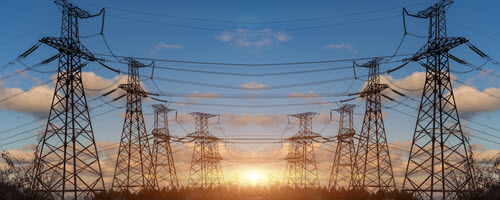
Exelon CEO Calvin Butler: How Utilities Are Adapting to Unprecedented Demands
|
|
As AI’s rapid growth reshapes the U.S. power grid, Exelon’s CEO discusses the importance of investing in modernization to achieve a sustainable energy future. Read More
|
|
|
|
|
|
|
|
|
European Group Floats Simplified Sustainability Reporting Standards
|
|
|
|

|
|
The ESRS is part of the Corporate Sustainability Reporting Directive. Photo: Yves Herman/Reuters
|
|
|
|
|
|
A European Union financial reporting body wants to simplify company sustainability reporting standards, as the bloc seeks to keep both climate and competitiveness on the agenda.
EFRAG, formerly known as the European Financial Reporting Advisory Group, on Thursday released a proposed revision of the European Sustainability Reporting Standards, which require companies to report on their risks, opportunities and impacts from environmental, social and governance issues, Yusuf Khan writes for Dow Jones Risk Journal.
The ESRS is part of the Corporate Sustainability Reporting Directive, one of the EU’s flagship climate laws. Last month, EU lawmakers voted to further narrow the scope of the bloc’s corporate sustainability rules following pressure from the Trump administration.
Under the recommended revisions from EFRAG, 61% of reporting requirements originally called for would be removed, along with all voluntary data points requested by the original standard.
|
|
|
|
|
|
|
|
|
|
Growing Prevalence of Chinese Technology Stokes Security Concerns
|
|
|
|

|
|
Oslo’s authorities tested a Chinese-made Yutong bus for digital vulnerabilities. Eilif Swensen/Ruter
|
|
|
|
|
|
This summer, Oslo’s public-transport authority drove a Chinese electric bus deep into a decommissioned mine inside a nearby mountain to answer a question: Could it be hacked? The answer came back a qualified yes.
The Wall Street Journal's Stephen Wilmot and Ed Ballard write that the worry is the same for solar panels, electric vehicles and other connected devices: that mechanisms used for wirelessly delivering system updates could also be exploited by a hostile government or third-party hacker.
Security concerns are growing about energy infrastructure, with Europe’s push into green power underpinned by low-cost Chinese equipment. Around 30 members of the European Parliament wrote to Europe’s top cybersecurity officials recently to warn that inverters—devices that connect solar panels to the grid—could be exploited to disrupt the power system.
Roughly a dozen inverter suppliers—not all Chinese—have remote access to enough solar panels in Europe for a compromise of their systems to have a “significant impact on the stability of the grid,” according to estimates by risk-management company DNV for trade association SolarPower Europe.
|
|
|
|
|
|
|
|
Chinese Solar Panels Increasingly Popular Amid Clean-Tech Boom
|
|
|
|

|
|
A solar field in Europe in southern Spain. Photo: Raul Caro/EPA-efe/shutterstock/Shutterstock
|
|
|
|
|
|
The green economy has surpassed $5 trillion, according to a recent report from the World Economic Forum and Boston Consulting Group. Clara Hudson writes that China–which leads the world in solar and battery manufacturing–invested $659 billion in clean energy in 2024, it said.
Appetite for Chinese clean tech is growing, according to a separate report published Monday by Chatham House and Globescan.
About half of consumers surveyed said they are at least somewhat likely to consider buying clean tech made in the country and almost 70% of people globally said they are comfortable with their governments purchasing Chinese-made solar panels and wind turbines to some degree.
|
|
|
|
|
|
|
|
-
Sable Offshore aims to restart dormant oil platforms near Santa Barbara, facing strong opposition from California. (WSJ)
-
Climate rift opens between Amazon and rivals in row over data centre power. (FT)
-
In a geothermal milestone, Zanskar claims major discovery in Nevada. (Canary Media)
-
Hiring rate for workers with green skills dramatically outpaces broader market, according to LinkedIn survey. (ESG Today)
-
New Zealand rejects climate recommendations, including strengthening 2050 methane and carbon targets. (OPIS)
-
China’s nuclear capacity is projected to exceed that of the U.S. by 2030, potentially giving it an edge in a technology. (Dow Jones Risk Journal)
-
European Union negotiators agreed to delay by one year a landmark law to curb deforestation across the world. (Bloomberg)
-
Global climate cooperation is unravelling despite years of ambitious Western pledges. (Dow Jones Risk Journal)
|
|
|
|
|
|
|
|
|
|
|
|
|
|
|
|
|
|