|
|
|
|
|
|
|
|
|
|
|
|
Rare-Earth Startups Seal $1.4 Billion Deal With the Trump Administration
|
|
|
|
|
|
|
|
Today: Agreement with Vulcan Elements and ReElement Technologies is strong sign Pentagon is intent on building a supply chain to reduce China’s control; real-estate developers are betting on sustainable communities; EU countries agree weaker climate targets ahead of COP30; turbine earnings.
|
|
|
|
|
|

|
|
A rare-earth mine in Mountain Pass, Calif., owned by MP Materials. Photo: Bridget Bennett for WSJ
|
|
|
|
|
|
Welcome back: Two startups aiming to produce an American supply of rare-earth magnets have sealed a $1.4 billion deal with the U.S. government and private investors. It is the latest sign that the Trump administration is moving to build out a domestic rare-earths supply chain and thwart China’s sector dominance—and willing to pay large sums for it.
The Wall Street Journal's Heather Somerville reports that rare-earth magnets are essential for the construction of motors needed in AI data centers, electric vehicles and consumer electronics as well as missiles, drones, satellites, ships, jet fighters and other defense systems. China has long dominated the supply chain, from mining to processing.
Led by Vulcan Elements, the deal involves a $620 million loan from the Defense Department’s Office of Strategic Capital to build and operate a U.S. magnet facility capable of producing 10,000 metric tons of magnets each year, the company said Monday. The Commerce Department is chipping in $50 million and private investors are putting in another $550 million.
Also involved in the deal is ReElement Technologies, a company that works to purify and recycle rare-earth materials, which will help in the recycling of old magnets to boost domestic production. ReElement secured $160 million from the Office of Strategic Capital and private investors.
-
MP Materials and other rare-earth stocks declined after Trump said the export restriction threat from China had “completely gone”. (Barron's)
|
|
|
|
|
Content from our sponsor: Deloitte
|
|
|
Chemicals Path to Sustainability: A Data-Driven Road Map
|
|
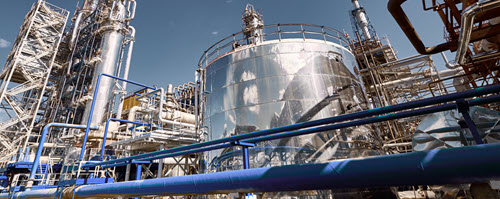
As demand for chemicals accelerates, the sector is challenged to reduce emissions without compromising growth. A study offers a roadmap for sustainable development across the chemicals value chain. Read More
|
|
|
|
|
|
|
|
|
Real-Estate Developers Are Betting On Sustainable Communities
|
|
|
|

|
|
The Veridian at County Farm sustainable community in Ann Arbor, Mich., where the houses are all-electric and nothing relies on fossil fuels. Photo: Thrive Collaborative
|
|
|
|
|
|
There’s a neighborhood nestled in Ann Arbor, Mich., where the houses are all-electric and nothing relies on fossil fuels, WSJ Pro Sustainable Business's Clara Hudson writes.
The community is part of a broader push to build more responsible real estate as those looking for homes or offices seek out climate-friendly living. The sustainable development located on 14 acres—part of which used to house a youth prison—is now a residential district with 170 mixed-income homes from townhouses to lofts.
“It’s ordinary, it’s Norman Rockwell, it’s front porch living, it’s a beautiful walkable neighborhood—and we have clean energy,” said Matt Grocoff, founder of property developer Thrive Collaborative, who oversees the site called Veridian at County Farm. “It’s not some sort of science experiment.”
There are no gas lines around, but the homes are equipped with solar panels, battery storage in the basement, triple pane windows, LED lights, and even geothermal energy—where heat is pulled directly from the ground beneath the buildings. And there’s more: the houses are outfitted with energy-saving appliances, special materials such as locally-harvested wood, and electric-vehicle chargers.
-
The real-estate industry is shifting to adapt to climate change with a new slate of climate-conscious developments. (Dow Jones Risk Journal)
|
|
|
|
|
|
|
|
|
|
EU Countries Agree Weaker Climate Targets Ahead of COP30
|
|
|
|

|
|
Photo: Virginia Mayo/Associated Press
|
|
|
|
|
|
European Union environment ministers agreed to a watered-down version of the bloc’s 2040 climate goals, bringing the EU a step closer to setting new targets for lowering carbon emissions.
The Journal's Edith Hancock reports that ministers adopted a number of climate-focused policies, including a legally-binding target to slash the EU’s collective emissions by 90% by 2040 from 1990 levels.
The deal lets EU countries make up 5% of their national emissions reductions targets through carbon credits—effectively lowering the overall target to 85%—while ministers also agreed to consider allowing an extra 5% of the 2040 emissions target to be made up with credits in future.
The agreement comes just ahead of the COP30 climate summit in Brazil, where governments are set to submit their climate target plans for 2035, which are known as Nationally Determined Contributions.
Ministers agreed a new NDC for the EU, setting a target of cutting emissions by between 66.25% and 72.5% by 2035. This will now be submitted to the United Nations Framework Convention on Climate Change.
-
Brazil’s Belém is attempting a billion-dollar transformation. (Bloomberg)
|
|
|
|
|
|
|
|
|
|
Vestas Shares Rise on Surprise Results; Orsted Swings to Loss
|
|
|
|

|
|
Vestas turbines in Botievo, Ukraine. Photo: Vincent Mundy/Bloomberg
|
|
|
|
|
|
Vestas Wind Systems’ shares jumped after earnings beat expectations and it launched an unanticipated $172 million share buyback, while narrowing its full-year guidance, the WSJ's Adam Whittaker reports.
The Danish wind-turbine maker said Wednesday that it benefited from higher deliveries and an improved performance at its onshore unit.
Meanwhile, Orsted booked a loss over the most recent quarter, which was hit by a stoppage to a major U.S. wind project, but said it remains confident of reaching its full-year targets, the WSJ's Joshua Kirby reports.
President Trump’s administration in August hit Orsted with a stop-work order at its Revolution Wind project off the coast of Rhode Island, though a court later reversed that order with a preliminary injunction, allowing Orsted to restart work. A total cancellation of Revolution Wind would entail impairments of some 8 billion kroner, Orsted said.
-
Apollo Global Management to invest $6.5 billion for a 50% stake in Orsted's Hornsea 3 offshore wind project. (Dow Jones Newswires)
|
|
|
|
|
|
|
|
|
|
-
Norway’s sovereign-wealth fund, a major investor in Tesla, rejected Elon Musk’s proposed $1 trillion pay package. (WSJ)
-
Diamondback Energy’s third-quarter profit rose to $1.02 billion, or $3.51 a share, from $659 million, or $3.19 a share, a year earlier. (WSJ)
-
Amid AI’s power rush, the makers of small turbines and fuel cells are seeing surging investor interest. (WSJ)
-
Companies must address resilience and adaptation, say bankers gathering in Brazil for COP. (Dow Jones Risk Journal)
-
Crusoe, Blue Energy to build first-ever gas-to-nuclear powered data center project. (ESG Today)
|
|
|
|
|
|
|
|
|
|
|
|
|
|
|
|