|
|
|
|
|
|
|
|
|
|
The Morning Download: Anthropic Teams Up With Accenture
|
|
By Steven Rosenbush | WSJ Leadership Institute
|
|
|
|
|
|
|
What's up: Sam Altman's sprint at OpenAI; Nvidia can export its chips to China; Your thoughts on 'Death of the Billable Hour'
|
|
|
|

|
|
San Francisco-based Anthropic is in a heated battle with other AI model makers, including OpenAI, for business customers. Algi Febri Sugita/ZUMA Press
|
|
|
|
|
|
Good morning. Anthropic and Accenture announced this morning that they have struck a three-year partnership to sell artificial-intelligence services to businesses. WSJ Leadership Institute’s Belle Lin has an exclusive look at the effort, in which the companies will help customers seek a return on investment that has so far been elusive for many companies.
Such ROI is critical to Anthropic and Accenture, as well as to the success of an entire AI ecosystem that is counting on a massive acceleration of revenue to support construction of models, data centers and other infrastructure investments. That ROI depends on rapid and widespread adoption of AI by businesses and consumers.
The partnership makes Accenture one of Anthropic’s three largest enterprise customers.
Accenture said it would train about 30,000 of its employees on Claude, Anthropic’s flagship AI model. The companies declined to share financial terms behind their partnership.
Building a bridge. The partnership enables Anthropic and Accenture to “be the bridge from AI to actually creating value,” said Manish Sharma, Accenture’s chief strategy and services officer. “It is not about ‘We want to develop agents.’ We are in the business of delivering outcomes.”
To start, Anthropic and Accenture will target highly regulated industries like financial services, life sciences, healthcare and the public sector. The two companies also plan to create a business group called the Accenture Anthropic Business Group—which is formally part of Accenture—and jointly launch an offering that aims to help CIOs measure value and adopt AI across their engineering groups.
|
|
|
|
|
Content from our sponsor: Deloitte
|
|
|
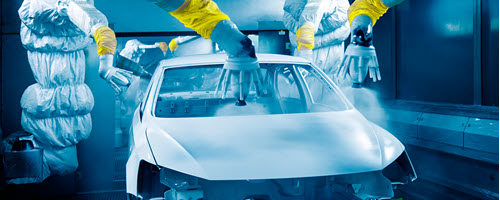
PPG: To Navigate Road Ahead, Suppliers and Customers Must Drive Digital Together
|
|
Leveraging digital ecosystems can boost speed, agility, and collaboration with customers, says Alisha Bellezza, PPG’s senior vice president of automotive coatings. Read More
|
|
|
|
|
|
|
|
|
|
|
|
|

|
|
OpenAI CEO Sam Altman has declared a ‘code red.’ BRENDAN SMIALOWSKI/AFP/GETTY IMAGES
|
|
|
|
|
|
When OpenAI CEO Sam Altman made the dramatic call for a “code red” last week to beat back a rising threat from Google, he put a notable priority at the top of his list of fixes, WSJ reports.
The world’s most valuable startup should pause its side projects like its Sora video generator for eight weeks and focus on improving ChatGPT, its popular chatbot that kicked off the AI boom.
In so doing, Altman was making a major strategic course correction and taking sides in a broader philosophical divide inside the company—between its pursuit of popularity among everyday consumers and its quest for research greatness.
|
|
|
|
|
|

|
|
Nvidia Chief Executive Jensen Huang. Graeme Sloan/Bloomberg News
|
|
|
|
|
|
President Trump said he would let Nvidia export its H200 chip to China and that the U.S. would receive a 25% cut, his latest bid to make money for the government in an unusual agreement with a private company, WSJ reports.
Also in Nvidia news, the chipmaker beat out last year’s winner, Apple, to top the Drucker Institute’s 2025 annual ranking of the best effectively managed businesses, WSJ reports. This year, 668 companies were graded on customer satisfaction, innovation, social responsibility, employee engagement and development, and financial strength, using 34 indicators supplied by third-party data providers.
Tech companies, as usual, took the five top spots, with Apple second in the rankings, followed by Microsoft, Alphabet, and Amazon.com, but the top ten also saw more engagement than usual from non-tech players like Caterpillar, Mastercard and Johnson & Johnson.
|
|
|
|
|
|

|
|
Paramount is run by David Ellison. Jeenah Moon/Reuters
|
|
|
|
|
|
Paramount launched a $77.9 billion hostile takeover offer for Warner Bros. Discovery Monday, taking its case for acquiring the storied entertainment company directly to shareholders just days after Warner agreed to a deal with Netflix, WSJ reports.
Paramount, run by David Ellison, is arguing that its all-cash $30-a-share offer for all of Warner, owner of networks such as CNN, TBS and HGTV as well as the HBO Max streaming service, is a better deal for shareholders and more likely to pass regulatory muster.
|
|
|
|
Lindsey Graham Pushes for National AI Standards
|
|
|
|
|

|
|
Screenshot/WSJ Opinion Video
|
|
|
|
|
|
AI is moving "really quickly," and there’s an urgent need for Congressional AI regulation, Sen. Lindsey Graham (R-SC) said last night at the WSJ CEO Council Summit in Washington.
Graham emphasized the need for national AI standards and guardrails that don’t stifle innovation.
He said Congress should move on AI legislation as early as 2026, and that he has talked to President Trump who wants to hold an AI summit.
Graham says his bill would sunset Section 230 of the 1996 Communications Decency Act in two years. The federal law that offers broad protections to tech companies that host user-generated content. Just as telecom companies aren’t liable for what people say on the phone, internet companies shouldn’t be liable for what users say online, the thinking went.
Graham and many voices across the political spectrum are pushing for revisions to the law. “There’s a consensus that social media sites were ruining the country because they are unregulated and you can’t sue them,” Graham said in conversation with Paul Gigot, editorial page editor of The Wall Street Journal. “There’s growing consensus in the Senate Judiciary Committee—it’s my bill—to sunset Section 230,” Graham said. Watch the interview here.
|
|
|
|
Your Responses to ‘Death of the Billable Hour’
|
|
|
|
Last week, we featured a piece from Columbia Business School academic director in executive education Rita Gunther McGrath about why AI is poised to destroy the so-called “billable hour.”
“When an AI system can review thousands of contracts in minutes rather than weeks, draft complex documents in seconds rather than hours or generate strategic analyses near-instantaneously, the time component becomes almost meaningless,” she wrote. The bottom line is that the use of AI could result in delivering better work in a faster time frame. “This misalignment between value creation and revenue generation makes the billable hour’s demise inevitable.”
Our readership had a lot of feelings about this, and many of you wrote to us to share your thoughts.
Not so fast. Some felt that the billable hour is so entrenched that it will be hard to move over to something different. “The death of billable hours has been called many times by many people going back at least 40 years,” said Mark Montgomery, founder and CEO of software company KYield, Inc. Whether they use AI or not, top tier professionals, which are increasingly hard to find, can and will set hourly prices for their expertise, he told us.
In defense of the billable hour. Others argued that the billable hour is an important way for consultants, lawyers and others to set prices based on what they think their time is worth. Amanda Durkee, a user experience researcher at Microsoft wrote to tell us, “I don’t have an answer to what should replace the billable hour structurally, but I hope there will be a way for firms to do this in a way their employees still feel motivated to do good work, and not demoralized.”
And end to abuses? Others felt the end of the billable hour could be a net positive for clients. Former defense attorney Randy Roeder wrote to us to point out that the billable hour was ripe for abuse. “In many cases, when plaintiff's counsel asserted a claim for attorneys' fees, I saw excessive claims based on exorbitant hours. AI will put a clamp on that, for both sides.”
—Isabelle Bousquette
|
|
|
|
Everything Else You Need to Know
|
|
|
|
When Federal Reserve officials gather Tuesday for their final two-day rate-setting meeting of the year, as much as half the room might not want a cut. But the final call will rest with Chair Jerome Powell, who appears poised to secure one despite the unusual opposition. (WSJ)
Chinese industrial production broke records this year as its factories churned out more cars, machinery and chemicals than ever before. Despite the disruptions of tariffs, the country’s trade surplus in goods has set a record, as growing shipments to Asia, Europe, Latin America and Africa offset the hit from Trump’s levies on direct sales to the U.S. (WSJ)
The war in Gaza has reduced much of the enclave to rubble, with most of its buildings either destroyed or damaged. Clearing it to pave the way for rebuilding will be a gargantuan task that is expected to take years and cost over a billion dollars. (WSJ)
|
|
|
|
|
|
|
|
|
|
|
|