|
|
|
|
|
|
|
|
|
|
The Morning Risk Report: U.S. Approves Business With Venezuela’s PdVSA
|
|
By Mengqi Sun | Dow Jones Risk Journal
|
|
|
|
|
|
|
Good morning. The U.S. Treasury issued a general license allowing established U.S. businesses to conduct a broad array of oil transactions with the government of Venezuela and its state oil company, Petróleos de Venezuela, S.A., Risk Journal’s Max Fillion reports.
-
The background: The license issued Wednesday builds on previous U.S. moves easing sanctions on the Venezuelan government and PdVSA. In a series of licenses issued since late January, Treasury has authorized specific categories of transactions such as servicing oil fields or selling barrels of crude, but the latest action authorizes transactions with the exception of tailored prohibitions.
-
The details: The license keeps in place prohibitions on deals related to Venezuela’s government debt, including bars on attempts by creditors to seize revenue from oil sales. It also prohibits transactions involving people and businesses otherwise sanctioned by the U.S. as well as those people located in Iran, North Korea, Cuba and Russia. Deals involving businesses controlled by Chinese entities are also prohibited, as are transactions involving sanctioned ships, debt swaps or payments in gold or digital currency, as well as non-commercially reasonable deals.
-
The context: The action comes amid a surge in global oil prices due to Iran’s blocking of the Strait of Hormuz, a vital route for global oil trade, in retaliation for U.S. and Israeli attacks. Brent crude futures, a global benchmark for oil prices, rose to $109 a barrel Wednesday after Israel struck a gas facility shared by Iran and Qatar.
|
|
|
|
|
Content from our sponsor: Deloitte
|
|
|
The Future of Human-Led, AI-Powered Leadership
|
|
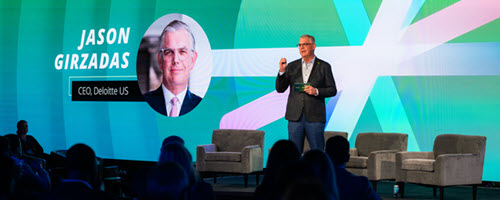
The real story of AI is the future it enables, says Deloitte US CEO Jason Girzadas. Leaders of successful transformations will be those who see that AI’s true value lies with the people who use it. Read More
|
|
|
|
|
|
|
|
|
|
|

|
|
Anthropic CEO Dario Amodei, and U.S. Defense Secretary Pete Hegseth. Photo: Ludovic Marin; Brendan Smialowski/Agence France-Presse/Getty Images
|
|
|
|
|
|
Anthropic risk designation should be overturned, judges say.
Risk Journal reports that the Trump administration’s designation of Anthropic as a supply-chain risk isn’t lawful and should be overturned, a group of former federal and state judges said.
Anthropic’s dispute with the administration over the use of its artificial intelligence tools doesn’t make it a risk under the law, the judges said Tuesday in an amicus brief filed in D.C. Circuit Court.
|
|
|
|
|
Food and beverage companies mull risks from droughts to microplastics.
Food and beverage giants and fast casual restaurants flagged a new spread of environmental, health and supply-chain risks in annual reports in recent weeks.
In their latest reports to investors, the companies raised matters from the effects of increasingly intense weather, to consumer anxieties about ingredients in food products. The added disclosure comes as shoppers worry more and more about toxins in food and packaging, from microplastics to forever chemicals. That sentiment coincides with the Make America Healthy Again movement homing in on everything from food dyes to pesticides.
|
|
|
|
-
President Trump temporarily waived a century-old shipping law in a bid to lower the cost of moving oil, gas and other fuels around the U.S. Here’s how that move would work.
-
Australia’s anti-money-laundering regulator warned that lawyers are routinely targeted by criminal networks seeking to legitimize illicit funds through property transactions, trust structures and company formations, as reforms bringing law firms under formal anti-money-laundering obligations take effect from July 1.
.
-
A fund holding consumer and small-business loans made by companies including Affirm and Block is the latest corner of the private-credit market to come under stress.
|
|
|
|
|
|
|
|
|
|

|
|
Almost all of Iran’s crude oil exports go to China. Darley Shen/Reuters
|
|
|
|
|
|
How China is quietly helping an isolated Iran survive.
China is a longstanding friend of Iran that has helped sustain the Islamic Republic through decades of sanctions and international isolation.
Since the U.S. and Israeli militaries began striking Iran late last month, Beijing has offered Tehran limited public support, condemning the killing of the Iranian leadership while calling on all sides to stop fighting. But its longstanding support for Iran could grow increasingly critical as the war continues.
Meanwhile, surging oil prices and the closure of the Strait of Hormuz are hitting Southeast Asian economies, Singapore’s Foreign Minister Vivian Balakrishnan said at an emergency meeting of ASEAN foreign ministers.
Also:
|
|
|
|
-
Israel is hunting down Iranian regime members in their hideouts, one by one.
-
European Commission President Ursula von der Leyen plans to visit Australia next week as talks on a long-awaited trade deal between the two regions progress.
-
Nvidia is mobilizing an effort to create “open” artificial intelligence models that make their code publicly available and provide an alternative to proprietary giants such as OpenAI and Anthropic
-
The Federal Reserve held interest rates steady Wednesday and preserved a path to cutting rates this year as higher energy prices from the Iran war threaten to prolong their yearslong inflation fight.
|
|
|
|
|
|
|
|
-
For Jeffrey Epstein, the line between social networking and securities law wasn’t just blurred, it was part of the way he conducted business. The Epstein files show how easily the sex offender collected confidential information from his well-connected associates.
-
Elliott Investment Management has built a stake in Mitsui O.S.K. Lines, saying the Japanese shipping giant is materially undervalued despite its business strength, the latest in a series of activist moves targeting prominent Japanese companies.
-
Groups with ties to Cesar Chavez, the Hispanic labor and civil-rights icon, are distancing themselves from the leader who died more than 30 years ago, after allegations that he abused women and girls at the height of his prominence in the 1960s and ’70s.
|
|
|
|
|
|
|
|
|
|
|
|
|
|
|
|