|
|
|
|
|
|
|
|
|
|
The Morning Risk Report: Trump Says U.S. Will Allow Nvidia H200 Chip Sales to China and Get 25%
|
|
By David Smagalla | Dow Jones Risk Journal
|
|
|
|
|
|
|
Good morning. President Trump said he would let Nvidia export its H200 chip to China and that the U.S. would receive a 25% cut, his latest bid to make money for the government in an unusual agreement with a private company.
|
|
-
What it means for Nvidia: The move is a boon for Nvidia, which has fought for months to maintain access to the world’s second-largest economy in a continuing saga. The company had agreed earlier this year to give the U.S. 15% of the China sales from a lower-performing chip, only for the Chinese to scuttle those plans as part of ongoing trade talks between the two sides.
-
Power play: Chips from the world’s most valuable company have become a valuable geopolitical tool. The H200 has higher performance than the H20 it was previously allowed to sell—but it isn’t as powerful as the company’s top Blackwell products released this year nor the Rubin generation of chips coming next year.
-
Why the shift? The move follows a meeting between Trump and Nvidia Chief Executive Jensen Huang last week, where the pair discussed H200 exports, people familiar with the matter said.
-
Background: Nvidia has been applying a full-court press to the Trump administration and lawmakers this year, seeking permission to send its valuable chips all over the world and arguing that the exports will ensure U.S. technology dominance. The company has antagonized some administration officials and others in Washington who feel it is giving priority to a sales bonanza over national-security concerns.
|
|
|
|
|
Content from our sponsor: Deloitte
|
|
|
PPG: Communication, Culture Unite Global Workforce
|
|
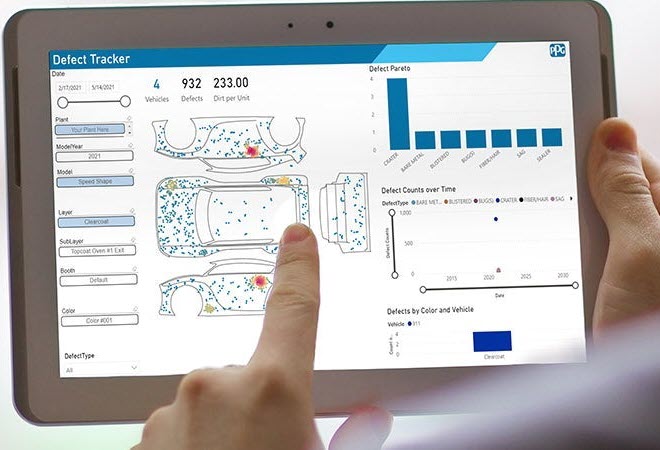
PPG SVP of Automotive and Packaging Coatings, Alisha Bellezza, shares insights on leading global teams by embracing cultural differences, fostering transparency, and supporting talent development. Read More
|
|
|
|
|
|
|
|
|
|
|

|
|
Earlier this year President Trump targeted Democrats serving on more than a dozen federal panels. Will Oliver/Press Pool
|
|
|
|
|
|
Trump’s firing spree gives Supreme Court the chance to remake government.
President Trump’s firing spree at federal agencies has snowballed into a Supreme Court showdown over how modern American government should work.
What’s at stake? Dangling by a thread is the tradition that certain sensitive policy details—from regulating nuclear reactors to setting safety standards for consumer products—should be managed by bipartisan panels of technocrats, whose jobs are insulated from political pressure.
Trump’s view: In its place, the high court appears poised to enshrine a competing view championed by Trump: that presidents must have the power to dismiss any of these unelected experts for any reason—or no reason at all. That is the only way, proponents say, to cut red tape and ensure that regulators remain accountable to voters.
|
|
|
|
|
Texas businessman found guilty of bribing Pemex officials in mixed verdict.
A Texas federal jury in a mixed verdict found businessman Ramon Alexandro Rovirosa Martinez guilty of bribing officials at Mexico’s state oil company in exchange for contracts, reports Risk Journal’s Max Fillion.
In a verdict delivered on Friday following a weeklong trial, the jury found Rovirosa guilty of two charges of violating the Foreign Corrupt Practices Act and one related conspiracy charge, but found him not guilty of a fourth charge related to one of the illicit cash payments alleged by Justice Department prosecutors.
|
|
|
|
-
The Securities and Exchange Commission is evaluating whether to change rules around conflicts of interest for auditors and their clients, how its audit watchdog handles inspections of accounting firms and the cost for companies of complying with requirements.
-
President Trump said Netflix’s $72 billion deal to acquire Warner Bros. “could be a problem” because it would result in a large market share for the streaming giant, signaling possible government resistance in his first public comments about the sale.
-
Meta Platforms plans to hand Facebook and Instagram users in the European Union more control over how much data they share to see personalized ads, as the tech giant seeks to reassure EU officials that its services comply with the bloc’s strict digital regulations.
-
Alina Habba, a former personal lawyer for President Trump, abruptly resigned Monday as the top federal prosecutor in New Jersey, a week after an appeals court ruled she was unlawfully serving in the role.
-
President Trump said he would sign an executive order this week that would seek to punish states imposing laws deemed restrictive for artificial intelligence, a pledge that comes after Congress refused to advance a similar measure for the second time this year.
-
The maker of an app that tracks immigration agents has sued several Trump administration officials, saying they censored his speech through a pressure campaign that ultimately resulted in the app being removed from Apple’s App Store.
-
The European Union opened an antitrust investigation into Alphabet’s Google, citing concerns about how it uses uploaded content on platforms such as YouTube to power and train its artificial-intelligence tools.
|
|
|
|
|
|
|
|
|
|

|
|
China has made itself an indispensable cog in global supply chains. STR/AFP/Getty Images
|
|
|
|
|
|
China’s trade surplus tops $1 trillion, underscoring its export dominance.
China’s trade surplus in goods this year topped $1 trillion for the first time, a milestone that underscores the dominance that the country has attained in everything from high-end electric vehicles to low-end T-shirts.
For the first 11 months of the year, China’s exports increased 5.4% from the year-earlier period to $3.4 trillion, while the country’s imports declined 0.6% over that same stretch to $2.3 trillion. That brought the country’s trade surplus this year to $1.08 trillion, China’s General Administration of Customs said Monday.
|
|
|
|
|
Putin wanted AI supremacy. Now Russia is struggling to stay in the race.
President Vladimir Putin has often proclaimed that Russia must lead the world in artificial intelligence. In reality, the country is stuck on the sidelines as others pull ahead.
What happened? Western sanctions choked off Russia’s access to critical hardware such as computer chips and hamstrung its domestic production abilities. Russian companies now depend on middlemen in third countries to secure everything from high-end chips to even a simple ChatGPT subscription. Moscow has also leaned heavily on China—further deepening what analysts already describe as an economic vassalage to its neighbor.
|
|
|
|
-
Americans are still worried about inflation and the broader state of the economy, but they are growing marginally more confident that inflation won’t get worse.
-
Jamie Dimon wants to protect America from potential foreign adversaries. He is assembling a group of national titans and close friends, from Jeff Bezos to Condoleezza Rice, to help him get it ready.
-
European powers are pushing to have a bigger say in the U.S.-led peace process to ensure that Ukraine isn’t forced to accept a deal that leaves it, and the rest of Europe, vulnerable to future Russian aggression.
-
For most of the year, a couple hundred Hamas militants have manned fighting positions in the tunnels under southern Gaza. But the walls are closing in.
-
Berkshire Hathaway announced a raft of leadership changes Monday as the company prepares for life without Warren Buffett at the helm.
-
Thailand’s military on Monday launched airstrikes on targets across its disputed border with Cambodia, shattering a volatile cease-fire agreement between the two Southeast Asian countries brokered by President Trump.
|
|
|
|
|
|
|
$12 Billion
|
|
Size of the aid package the Trump administration is proposing to aid struggling U.S. farmers as the agricultural sector grapples with the fallout from the president’s far-reaching tariffs.
|
|
|
|
|
|
|
-
Republicans have yet to coalesce around a healthcare strategy just days before an expected vote on extending enhanced Obamacare subsidies, triggering concerns from some GOP lawmakers about a voter backlash.
-
Drugmakers are moving to sell their medicines directly to patients, abandoning the middlemen they have long relied on.
-
Many car owners don’t complete repairs to defective airbags, which can be deadly. Automakers say they issue multiple notices, and safety regulators say they can’t force owners to act.
-
American households are nearing the end of the year feeling a lot more dour about the economy than they did at the beginning, even as they keep spending.
|
|
|
|
|
|
|
|
|
|
|
|
|
|
|
|