|
|
|
|
|
|
|
|
|
|
|
Sponsored by 
|
Helium Shortage Looms; Companies Swarm Fight for Tariff Refunds; GM to Boost Big Pickup Output
|
|
By Mark R. Long | WSJ Logistics Report
|
|
|
|
|
|
|
|

|
|
Helium cools the superconducting magnets inside MRI scanners. ALAIN JOCARD/AFP via GETTY IMAGES
|
|
|
|
|
|
The Iran war is cutting deeply into supplies of helium, the invisible gas that is essential for cooling AI chip-making tools and keeping MRI scanners humming. The global supply of the natural-gas byproduct is being squeezed by a halt in gas exports from Qatar, the source of about a third of the world’s total, the WSJ’s Georgi Kantchev writes.
The shortage is threatening to hamper production of everything from semiconductors to military-drone components and space rockets. Although it is the second-most-common element in the universe after hydrogen, helium is rare on Earth. Energy producers separate it out from methane, nitrogen and other gases, then ship it as a supercooled liquid.
While many users won’t immediately feel the shortage, suppliers are already telling some customers to expect supply cuts and surcharges. Helium buyers–who mostly lock in supply through long-term contracts–are now scrambling for scarce spot market cargoes, in a bidding war that has caused prices to more than double. Some suppliers are already rationing.
-
Benchmark U.S. oil futures gained $3.24 a barrel Monday to settle at $102.88, their first close above $100 since 2022 when Russia invaded Ukraine. (WSJ)
-
Thirty ships passed through the Strait of Hormuz over the past two days, easing some global supply constraints, Treasury Secretary Scott Bessent said, though the oil market still faces a deficit of 10 million–12 million barrels a day. (WSJ)
-
Yemen’s Houthi militants joined the Iran war over the weekend, raising fresh concerns about the vulnerability of Mideast oil flows. (WSJ)
-
Operations at Oman’s Port of Salalah will gradually resume from Tuesday, A.P. Moller-Maersk said in an advisory, after the site was hit by drone strikes over the weekend.
-
Alaska Air Group said higher fuel costs would lead to a steeper adjusted loss in the first quarter. (WSJ)
-
Two containerships belonging to Chinese state-owned Cosco transited the Strait of Hormuz, days after being turned back from crossing the narrow waterway. (Lloyd’s List)
|
|
|
|
|
|
CONTENT FROM: PENSKE
|
|
|
Gain an Edge. Gain Ground With Penske.
|
|
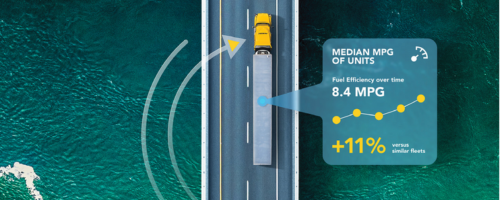
Penske’s industry-first Catalyst AI™ uses advanced algorithms and billions of data points to compare your fleet to similar fleets. This provides your business with unique benchmarks across key metrics, like fuel efficiency, fleet utilization and maintenance—giving you a personalized game plan for improvement.
Learn More
|

|
|
|
|
|
|
|
|
The $166 billion the Trump administration collected from tariffs voided by the Supreme Court amounts to the largest illegal government levy in U.S. history. Now, companies of every size are wrestling with uncertainty about whether, how and when they will get refunds, the Journal’s Louise Radnofsky, Lydia Wheeler and Sarah Nassauer write.
The federal government isn’t eager to return the gains, and even in the best-case scenario, a refund program of such scale is going to be messy and slow. Some business owners are mounting a fight. More than 3,000 lawsuits have been filed against the government in the Court of International Trade.
Costco’s December lawsuit spurred some other importers to join in, before the high court ruled. In recent days, CVS Pharmacy, Nintendo, Pandora Jewelry, Hasbro, Skechers and Nissan followed suit. But the majority of companies suing are tiny, and need the money far more urgently.
|
|
|
|
|
|
|
|
|
8 cents
|
|
Approximate minimum per-mile savings at current diesel prices for truckers slowing to 65 from 75 miles per hour, according to DAT
|
|
|
|
|
|
|
|
|
|
|

|
|
GM’s Flint Assembly plant currently operates five days a week. BILL PUGLIANO/GETTY IMAGES
|
|
|
|
|
|
General Motors will run its heavy-duty truck plant in Michigan six days a week starting in June, citing strong demand for its most powerful pickups even as gas and diesel prices rise, the WSJ’s Christopher Otts writes.
Flint Assembly plant currently runs around the clock on three shifts, five days a week. The additional production day will allow the plant to churn out more Chevrolet Silverado and GMC Sierra pickups. The plant produces the heavy-duty versions of those trucks, the 2500 and 3500, with about 1,100 a day rolling off the line, according to a United Auto Workers official.
|
|
|
|
|
|
|
|
|
|
-
German inflation rose to 2.8% in March, driven by energy prices due to the Iran war, exceeding the ECB’s 2% target. (WSJ)
-
The European Commission’s Economic Sentiment Indicator fell to 96.6 in March, on increased eurozone pessimism as the war in Iran continues. (WSJ)
-
Food distributor Sysco agreed to acquire family-owned Jetro Restaurant Depot for about $29 billion, including debt. (WSJ)
-
Golden Pass LNG in Port Arthur, Texas, produced its first liquefied natural gas on Monday. (WSJ)
-
Air Canada CEO Michael Rousseau will leave the carrier following political blowback over his inability to communicate in French after a fatal runway collision. (WSJ)
-
Japanese builders have acquired 23 U.S. single-family home construction companies since 2020, more than double the number from 2013 to 2019. (WSJ)
-
CVS Health plans to open about 60 stores in 2026, including traditional stores, pharmacy-only sites and locations in Target stores, expanding its footprint after years of contraction. (WSJ)
-
Japan’s Mitsui O.S.K. Lines signed an agreement with Hitachi and Hitachi Systems to develop floating data centers converted from second-hand vessels. (Splash247)
-
The Georgia Ports Authority plans to open a new inland port in Gainesville, Ga., on May 4, to help manufacturers more quickly move goods through the Port of Savannah. (Supply Chain 24/7)
-
R.J. Corman Railroad agreed to use Intramotev’s TugVolt autonomous railcars on its Memphis line. (TrainsPRO)
-
The EPA said makers of trucks and other diesel equipment could replace exhaust fluid sensors with nitrogen oxide sensors, following complaints of system failures and vehicle shutdowns. (Transport Topics)
-
The U.S. Maritime Administration last week said it would provide $488.6 million in grant funding for ports, and shipyards under the Port Infrastructure Development Program. (WorkBoat)
|
|
|
|
|
|
|
|
|
|
|
|


