|
|
|
|
|
|
|
|
|
|
The Morning Risk Report: Attacks in Qatar, Saudi Arabia Drag Energy Sector Into Mideast Conflict
|
|
By Max Fillion | Dow Jones Risk Journal
|
|
|
|
|
|
|
Good morning. Iran’s paralyzation of tanker traffic through a key waterway and drone attacks on critical energy facilities in Saudi Arabia and Qatar have brought the Mideast conflict to the energy industry, raising the risk of disruption to energy supplies and the global economy.
-
Qatar: The gulf country said it halted production of liquefied natural gas after it intercepted two Iranian drones targeting an energy facility in Ras Laffan Industrial City. The area houses a major LNG hub for Qatar, one of the world’s biggest exporters of the fuel.
-
Strait of Hormuz: Shipping through the Strait of Hormuz—a critical chokepoint that handles roughly a fifth of global oil consumption—has ground to a near-halt as a result of the fighting. An attack on Saudi Arabia early Monday caused a fire and forced state oil company Saudi Aramco to halt operations at a refinery in the Ras Tanura oil complex, which houses a large offshore oil-export facility.
-
Saudi Arabia: The attacks mark a dangerous inflection point in the conflict. Having previously exercised strict restraint to prevent a broader war—including denying its airspace to U.S. warplanes—Saudi Arabia is now pushed closer to direct military retaliation against Tehran after this threat to its economic core.
-
Prices jump: The attack adds to global oil-supply jitters. Brent crude futures jumped by over 8% in Monday trading, a price surge that, if sustained, could boost inflation and put more pressure on consumers already stressed by high prices. Natural-gas prices in Europe, a big customer of Qatari LNG, shot up by around 40%.
See also:
|
|
|
|
|
Content from our sponsor: Deloitte
|
|
|
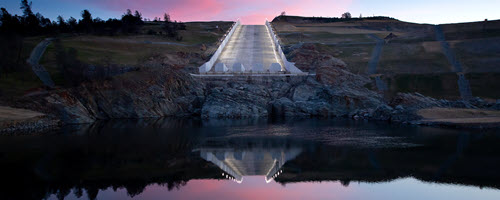
At a California Water System, Risk Management Drives Strategy, Resilience
|
|
The California State Water Project’s risk and resilience officer explains how risk-informed strategy and strategic risk management helps get ahead of major challenges including water scarcity and aging infrastructure. Read More
|
|
|
|
|
|
|
|
|
|
|

|
|
Polymarket offered users the chance to bet on Khamenei being ‘out as Supreme Leader.’ Michael Nagle/Bloomberg News
|
|
|
|
|
|
Bets on fate of Iran’s Khamenei spark uproar at leading prediction markets.
Before U.S. and Israeli missiles struck Tehran, users of Kalshi and Polymarket placed short-term wagers that Iran’s Supreme Leader, the Ayatollah Ali Khamenei, would be out of power.
Now, those bets are under scrutiny after the killing of Khamenei. Some U.S. lawmakers have raised questions about whether the markets should be allowed, and if some anonymous traders had inside information ahead of the strikes. Meanwhile, some users complained about how their bets were resolved.
See also: Kalshi Co-Founder Says Prediction Markets Need ‘Moral Side’ After Halting Khamenei Trades
|
|
|
|
|
CFTC names former federal prosecutor to lead enforcement division.
The Commodity Futures Trading Commission has tapped a veteran federal prosecutor and cryptocurrency attorney as its new director of enforcement, as the derivatives regulator looks to supervise an evolving financial market with the introduction of novel products, Mengqi Sun reports for Risk Journal.
CFTC Chairman Michael Selig on Monday said David Miller will serve as the regulator’s new enforcement chief. Miller most recently served as a litigation partner at law firm Greenberg Traurig, representing traditional financial institutions and crypto companies and helping defend executives facing charges or enforcement actions.
|
|
|
|
|
|
-
Music fans and small promoters decried the Live Nation-Ticketmaster merger when it was announced 16 years ago. The computer-system meltdown that hobbled the rollout of Taylor Swift’s “Eras Tour” and concert ticket prices hitting the $1,000 mark renewed focus on the deal. Now, the entertainment behemoth is facing an existential reckoning, as an antitrust trial gets under way in a Manhattan federal court Monday.
|
|
|
|
|
|
|
|
|
|

|
|
European airlines are among those that have canceled flights to the Middle East on Monday. Robert Ghement/EPA/Shutterstock
|
|
|
|
|
|
Airlines pull back from Middle Eastern routes.
Major airlines are rushing to clear the skies above the Middle East. As of Monday morning, more than 75% of flights in Israel, Qatar, Bahrain and the United Arab Emirates were scrapped, according to Cirium, an aviation data provider.
American Airlines, which partners with Qatar Airways to serve the region, has temporarily suspended its service to Doha. Delta Air Lines suspended flights to Tel Aviv for the rest of the month, and United Airlines canceled all departures to the Israeli capital for the next week, issuing waivers to affected customers.
See also: Airlines Grapple With Disruptions That ‘Far Surpass’ Past Middle East Conflicts
|
|
|
|
|
Amazon Web Services disrupted in U.A.E. amid Mideast conflict.
Amazon Web Services is suffering disruption to its services in the United Arab Emirates after unidentified objects struck one of its data centers, causing a fire.
The company didn’t elaborate on what caused the incident on Sunday but the fire broke out as Iranian projectiles continued to strike the U.A.E. Disruption continued Monday.
|
|
|
|
-
The Lebanese militia Hezbollah didn’t step in to help its patron Iran when it was at war with Israel last year. This time around, Hezbollah did, sending small volleys of rockets and drones into northern Israel on Monday morning, opening a new front in the conflict. It was a moment that Israel was waiting for.
-
France will increase its stockpile of nuclear warheads and may, for the first time, temporarily deploy them on allies’ territory, effectively broadening the country’s nuclear deterrence amid mounting doubts about the U.S. security commitment to Europe.
-
The Trump administration on Monday abandoned its defense of the president’s executive orders sanctioning several law firms, punctuating a year of turmoil that rocked the legal industry and forced its leaders to choose between taking on the White House or capitulating.
-
The U.S. government filed a forfeiture complaint seeking to take ownership of an oil tanker and 1.8 million barrels of crude oil that U.S. authorities say supported Iran’s Islamic Revolutionary Guard Corps and Venezuela’s state oil company, the Justice Department said Friday.
|
|
|
|
|
|
|
|
|
Special Edition: Air travel disruptions, heightened security concerns and rising oil prices are rippling across supply chains and financial markets as military and political developments in the Middle East shift hour by hour. James Rundle hosts.
You can listen to new episodes every Friday on Apple Podcasts, Spotify and Amazon.
|
|
|
|
|
-
The Hennepin County Attorney’s office in Minnesota is investigating more than a dozen incidents involving federal immigration officials that occurred during an enforcement surge targeting the Twin Cities.
-
Two people were killed and 14 were injured in a shooting in downtown Austin, Texas, early Sunday that authorities said might be connected to terrorism. The shooter was also killed.
-
Since J. Edgar Hoover took the reins a century ago, the Federal Bureau of Investigation has sought to present itself as the Ivy League of law enforcement, where agents wear suits and ties—and keep a low profile. Kash Patel’s ultracasual style and attraction to the spotlight are chipping away at that image.
-
Berkshire Hathaway’s Greg Abel is setting the tone for how he will run one of America’s largest companies.
-
Consumers are encountering a new kind of sticker shock when buying a car. It is called the “destination charge” and is now running an average $1,600.
|
|
|
|
|
|
|
|
|
|
|
|
|
|
|
|