|
|
|
|
|
|
|
|
|
|
|
|
Welcome to Belém, the City in the Rainforest Hosting UN Climate Talks
|
|
|
|
|
|
|
|
Today: Travel to the event is tricky and some delegates are being housed aboard cruise ships moored in the nearby river, but the United Nations’ COP30 negotiations are under way; Brazil is digging for fertilizer in the Amazon; Exxon-backed coalition sets out goals to fix carbon accounting.
|
|
|
|
|
|

|
|
COP30 is taking place in Belém, Brazil, this week. Photo: Torsten Holtz/ZUMA Press
|
|
|
|
|
|
Welcome back: It has been 10 years since the world agreed to limit global warming to 1.5 degrees Celsius above preindustrial levels. In that time, investment in clean energy has overtaken fossil fuels with $2 trillion invested last year, according to research firm BloombergNEF, while electric vehicles have surged to 20% of global new car sales.
WSJ Pro Sustainable Business's Yusuf Khan reports from the United Nations' climate talks in Belem—known as COP30—that talks this year are likely to focus on getting more countries to commit to their climate-target plans. To date, 69 countries have committed to reducing their emissions in what are known as nationally determined contributions, or NDCs. That includes China, which recently said it would aim to cut emissions across its entire economy by 7% to 10% from a peak by 2035.
But many countries have yet to agree on their NDCs. In a recent report, the U.N. said commitments from those that had represented 63% of global emissions.
Negotiations will also center on protecting forests through new financing mechanisms and making food production more sustainable, given Brazil’s position within global agricultural production. The U.N.’s climate body is also aiming to get countries to figure out a way to finance $1.3 trillion of investments in emerging markets, something that countries agreed upon last year.
Meanwhile, Brazil itself is sending mixed messages. The host is committing billions of dollars to saving the rainforest, but it also wants to increase oil production off its coast. In the weeks before the conference, oil and gas major Petrobras, was given licenses by the Brazilian government to explore offshore drilling near the mouth of the Amazon River.
-
Despite Western political shifts away from climate measures, China’s clean technology manufacturing dominance is driving global clean energy adoption. (WSJ)
-
At COP30, “adaptation” to global warming is high on the agenda as efforts to reduce emissions stall. (FT)
-
Playing host to COP30 while balancing economic growth with his environmental agenda presents risks for Brazil’s president. (Bloomberg)
|
|
|
|
|
|
|
|
|
Content from our sponsor: Deloitte
|
|
|
DC Water CEO David Gadis: Embedding Sustainability into Strategy
|
|
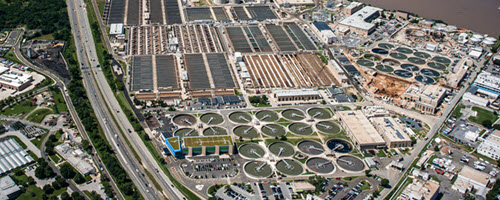
Urban water utilities face mounting challenges from aging infrastructure, environmental changes, and financial constraints, prompting innovative approaches to sustainability and resilience. Read More
|
|
|
|
|
|
|
|
|
Brazil Is Developing a Weapon for Trade Wars: Fertilizer in the Amazon
|
|
|
|

|
|
Cleared land where potash mining will take place, in the community of Urucurituba, near Autazes; Photo: María Magdalena Arréllaga for WSJ
|
|
|
|
|
|
In the heart of the Amazon rainforest, workers are preparing to dig a vertical shaft as wide as a subway tunnel half a mile down into the ground.
It isn’t gold or oil hidden here in a grassy clearing between indigenous lands, but fertilizer—something arguably just as precious to this vast farming nation, the WSJ's Samantha Pearson writes.
As global trade tensions flare, Brazil has replaced a growing share of U.S. agricultural exports to China, which has shunned American soybeans in response to Trump administration tariffs. The Trump administration’s imposition of 50% tariffs on Brazil this year raised the stakes for the country’s globally dominant agriculture industry to carry Latin America’s largest economy through the trade war.
But fertilizer remains Brazil’s Achilles’ heel. Brazil imports some 90% of the nitrogen, phosphorus and potassium nutrients it needs, primarily from Russia, whose war in Ukraine plus Western sanctions have made supplies precarious.
A solution lies in the world’s largest rainforest.
-
A U.S. carbon-credit marketing company, a French bank and corporate buyers are looking to invest more than $200 million to support forest-conservation projects led by indigenous communities. (WSJ)
|
|
|
|
|
|
|
|
|
|
Exxon-Backed Coalition Sets Out Goals to Fix Carbon Accounting
|
|
|
|

|
|
Amy Brachio, centre, CEO of Carbon Measures, at the event in Sao Paulo. Photo: Camilla Maia
|
|
|
|
|
|
A new carbon-accounting initiative to establish a system for calculating emissions at a product level set out its goals during a Friday event in Sao Paulo, Brazil, in the run up to the United Nation’s climate conference taking place in the country this week.
Carbon Measures, founded last month and backed by U.S. energy giant Exxon Mobil, aims to create an accounting system based on the direct emissions of products and one that avoids the double counting seen in current supply-chain—or Scope 3—reporting.
The initiative, which includes BASF, Banco Santander and BlackRock’s Global Infrastructure Partners among its members, is forming an independent panel of experts to advance a ledger-based carbon accounting framework, WSJ Pro Sustainable Business reports.
Speaking at the event on Friday, Amy Brachio, the CEO of the organisation, said: “We're going to move fast, but we're also going to be collaborative with respect to our approach.”
Missing from the discussion, however, was GHG Protocol, the organization behind the de-facto global accounting standard used by the majority of companies in the world today, including some 97% of S&P 500 companies.
-
ExxonMobil says it will “pace” spending on low-carbon projects because of disappointing customer demand. (FT)
|
|
|
|
|
|
|
|
|
|
|
|
-
Elon Musk has one trillion reasons to finish his robot story. (WSJ)
-
Walmart heir’s family office commits $100 million for debt swaps designed to help finance climate projects. (Bloomberg)
-
Nexperia microchip shipments from China to Hungary have resumed, easing a shortage that impacted the auto industry. (WSJ)
-
Salesforce launches new program to address water use at its data centers and in power supply. (ESG Today)
-
New York approved water permits for controversial natural-gas pipeline, reversing previous denials. (Barron's)
-
Federal flood maps omit millions of at-risk properties, particularly in urban areas, where rainfall causes significant damage. (WSJ)
-
Software company Atlassian experienced an 83 percent increase over the past year in customers asking about its emissions targets. (Trellis)
-
How the lowly soybean got trapped in the crossfire of the U.S.-China trade wars. (WSJ)
|
|
|
|
|
|
|
CONTENT FROM OUR SPONSOR: DELOITTE
|
|
6 Lessons on AI and Data From Sol Rashidi
|
|
Sol Rashidi is a seasoned data and artificial intelligence (AI) executive and CEO of Executive AI. Learn the six lessons she has for fellow leaders during this rapidly changing environment. Read more.
|
|
|
|
|
|
|
|
|
|
|
|
|
|
|
|


