

Welcome to the Spring edition of Blue Knot Review, an electronic journal chronicling recent developments and new perspectives around complex trauma and trauma-informed practice.
Soon to be Released
Organisational Guidelines for Trauma-informed Service Delivery
`Stand-alone’ organisational guidelines: different from (but complement) the clinical guidelines

Following the release of Practice Guidelines for Clinical Treatment of Complex Trauma (updated 2019), Practice Guidelines for Identifying and Treating Complex Trauma-Related Dissociation (2020) and other guideline sets (all available at https://www.blueknot.org.au/resources/Publications/Practice-Guidelines )
Blue Knot Foundation is soon to release Organisational Guidelines for Trauma-informed Service Delivery. The organisational guidelines are `stand-alone’ for services seeking to operate in a trauma-informed manner. They are not clinical but rather address policies and procedures (although also complement the clinical guidelines).
A common misconception is that `trauma-informed’ relates to clinical treatment rather than to the context in which treatment is offered: `Trauma-informed services are designed specifically to avoid retraumatizing those who come seeking assistance’.[1] This also means that recommendations for trauma-informed practice are relevant to diverse service contexts. Because the term `trauma informed’ has generated some misconceptions, the organisational guidelines begin by clarifying the term. They also situate the guidelines within the wider context in which we live and work, which is very different from when the Blue Knot Practice Guidelines were first released in 2012.
A changed landscape: service provision in the age of pandemic
The Coronavirus – officially named COVID-19 by the World Health Organisation in February 2020 - has not only changed the landscape of healthcare. It has brought a new form of trauma to public awareness. It has also transformed the economy and the ways in which we relate to one another. Trauma-informed practice is relevant to all areas of service provision in the `new’ age of the Coronavirus pandemic.
For example, an underlying principle of trauma informed care is that the prevalence of trauma[2] means that the possibility of prior trauma in the lives of service-users cannot be discounted. Hence the importance of a trauma-informed approach for engagement with all clients because of the high premium placed by this paradigm on the principle of `do no harm’. In prioritising the values of safety, trustworthiness and empowerment, the principles of trauma-informed care assist optimal service delivery more broadly.
A parallel exists with the often a-symptomatic nature of COVID-19 (in that it cannot be assumed that lack of visible sign of the virus necessarily means that people do not carry it). Hence the need for precautions around sanitisation to be observed in the interests of safety for all.
Just as the possibility of prior trauma in the lives of those who access services needs to be borne in mind (thus the need for trauma-informed practice `across the board’) so the often `invisible’ presence of COVID-19 requires `across the board’ health practices and processes as well.
In both cases and contexts, trauma-informed principles also apply as much to health professionals and service providers as to the clients for whom services are provided.
Format of organisational guidelines
The Organisational Guidelines for Trauma-informed Service Delivery include contextual information about the emergence and nature of the trauma-informed paradigm, issues to arise in relation to it, and the current state and scope of its implementation. In 2020, what is the status of trauma-informed practice and care in Australia? Addressing this question also requires reference to the wider international, and more specifically the US, context from which the trauma-informed paradigm originated.
The introduction - `Dispelling Misconceptions: What `Trauma Informed’ is and What it is Not’ – clarifies key foundational points which substantiate why trauma-informed approaches are necessary. Part 1 summarises the roots and background to the trauma-informed paradigm and core issues which surround it. In taking account of developments of the previous several years, it addresses the question of `where we are now’, and draws on material which has become available since the original publication of the Blue Knot guidelines in 2012.[3]
The guidelines and recommendations are presented in Part 2. Appendices which include a summary of questions to consider in relation to whether an organisation is trauma-informed are also provided.
References
[1] Roger D. Fallot & Maxine Harris, `Creating Cultures of Trauma-Informed Care (CCTIC): A Self-Assessment and Planning Protocol’ (Washington DC: Community Connections, 2009), p.2.
[2] Richard Benjamin et al, ed. Humanising Mental Health Care in Australia (Routledge, London, 2019), pp. xxxiii-xxxiv; Bessel A. van der Kolk, `Posttraumatic Stress Disorder and the Nature of Trauma’, ch.4 in Marion F. Solomon & Daniel J. Siegel, Healing Trauma (Norton, New York, 2003), pp.168-195).
[3] A key text is Humanising Mental Health Care in Australia: A Guide to Trauma-Informed Approaches, ibid. Edited by two Australian psychiatrists and a clinical psychologist, this collection brings together diverse contributions, both national and international, and is the first text of its kind in Australia.
Practice Guidelines - understanding Blue Knot’s different publications and guidelines
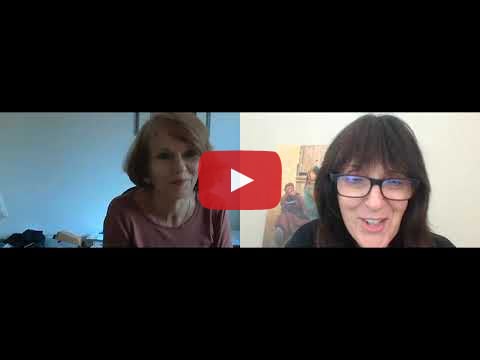
Blue Knot Foundation has produced a substantial number of publications, including guidelines and fact sheets in recent years. In this interview conducted by Cathy Kezelman AM, President with Pam Stavropoulos PhD, Head of Research provides insight into the conceptualisation and evolution of the different guidelines and seminal papers produced.

Kick-off 2021 with professional development in Complex Trauma

We are pleased to announce the return of our public training across Australia in 2021
You are invited to join Blue Knot Foundation's professional development training for an informative, interactive and engaging experience. Our training is facilitated by our experienced and qualified trauma aware facilitators around Australia.
• Do you want to increase your knowledge and awareness in complex trauma?
• Do you want to learn how to stay safe and well when working with complex trauma?
• Do you need tools for your clinical work with complex trauma clients?
*Please note, in the event of a resurgence in COVID-19 levels and subsequent heightened restrictions in the local training area, Blue Knot Foundation will review the decision to present Face to Face trainings instead in a webinar format. For example: One full-day of Face to Face training would be presented instead as 2 x half-day (3.5 hour) webinars accessible via a Zoom link provided.
Covid 19 Safety Protocol
Blue Knot Foundation recognises that the COVID-19 pandemic is a public health emergency, that all actions in respect of COVID-19 should be founded in expert health advice and that the following principles operate subject to the measures agreed and implemented by governments through National Cabinet process, and different state government restrictions. More info here
Testimonials - what attendees think about Blue Knot Foundation's training
“Excellent training I learnt so much from today. Haven’t attended such a high level of training in quite some time. Presenters very knowledgeable, easy to understand and very applicable to my work. I will definitely recommend the training and will do so to senior psychologists at QPS as I think it was a brilliant session. I’m keen for more training.” – Kishwar, Griffith University
“Fabulous, knowledgeable trainer who was extremely passionate about Trauma Informed Practice. Well resourced. Extremely insightful. Lots of food for thought, tools for implementation and so much reading to do of various research papers and books. Thank you so much!” – Michelle Plummer, Intake, CatholicCare Wollongong
“I have worked in the AOD sector for 18 years and attended a lot of training and this training was of a very high standard, was relevant for people in a variety of work roles and was very engaging. In terms of my counselling role, it has shifted my thinking about several clients I am currently working with and will no doubt change my approach in my work with them. Thank-you” – Anonymous
“This training is very worthwhile to better understand how trauma impacts people and how to facilitate recovery. I will definitely be mindful of using TICP in future dealings both within and without the workplace.” – Nova Lamprell, Rehabilitation Case Manager, Services Australia
National Counselling and Referral Service (Disability)
The National Counselling and Referral Service is now not only supporting people affected by the Disability Royal Commission. It is a key trauma-informed support for people with disability, family members, carers, advocates and workers who have experienced or witnessed abuse, neglect, violence and exploitation during these difficult times. Anyone who wishes to access this support does not need to make a submission or have any prior involvement with the Disability Royal Commission.
If you are living with disability (or are a family member of or caring for a person with disability) and
- have experienced abuse, neglect, violence or exploitation
- are currently experiencing abuse, neglect, violence or exploitation
- are distressed or anxious about coronavirus
- are affected by the Disability Royal Commission
You can call the National Counselling and Referral Service on 1800 421 468.
This service operates from:
• 9am-6pm AEST/AEDT Mon-Fri and
• 9am-5pm AEST/AEDT Sat, Sun and public holidays.
Watch the National Counselling and Referral Service (Disability) - Panel discussion and Q&A below:

How to contact the National Counselling and Referral Service (Disability)
There are a number of different ways you can contact NCRS depending on your accessibility needs, and the type of service you require.
Telephone: Contact 1800 421 468 or 02 6146 1468 to speak with one of our counsellors for short term counselling support and referrals.
Video Conference (VC): VC is available to people who have restrictions around their ability to contact our counsellors via telephone. Please contact us first by email at to ncrscounsellors@blueknot.org.au You can call us yourself or with a support person on 1800 421 468 AEST to discuss accessing this service. This service is available for a single session with a focus on linking you with local and ongoing supports.
Webchat (WC): Webchat is available for people who require support, information or referrals. Webchat is found at the bottom right of the screen our website. It is not a counselling service. Please refer to the Webchat Terms and Conditions for further information should you choose to use this service.
SMS: SMS is available to people who have been in contact with us by phone or webchat and can be used to provide people with information or referrals. SMS contact 0451 266 601. It is not available for counselling support.
N.B. This is a separate service from the Blue Knot Helpline and Redress Support Service (call 1300 657 380 Mon-Sun 9-5 AEDT) which provides counselling, support, information to people with experiences of childhood trauma and for support around applications to the National Redress Scheme.
If in crisis, in need of immediate support or concerned for your safety:
Call Lifeline on 13 11 14. If you are currently experiencing any form of violence or abuse, or are concerned for your safety, call 000.


Blue Knot Review is an electronic journal chronicling recent developments and new perspectives around complex trauma and trauma-informed practice. Contact newsletter@blueknot.org.au for feedback or to contribute. Click here to subscribe or forward this email to anyone who may be interested

The Blue Knot Helpline and Redress Support Service has established a referral database of mental health practitioners, doctors, service providers and support groups to provide referral options to callers of our Helpline. If you are a trauma-informed health professional you can apply to be included on this referral database here.

 |  |  |  |  |  |
Blue Knot Helpline
1300 657 380
Monday - Sunday
between 9am - 5pm AEDT
or via email helpline@blueknot.org.au
National Counselling & Referral Service (Disability)
1800 421 468
9am - 6pm AEDT Mon- Fri
9am - 5pm AEDT Sat, Sun & public holidays


