No images? Click here


TRSI Newsletter
April 15, 2026
What is Social Impact?
In this ongoing segment we ask: what is social impact? What does social impact mean to you and how do you work towards it in what you do?
Roxanne Felix-Mah and Ashima Sumaru-Jurf are the current Managing Partners for the Social Impact Collective. Guided by principles of community building, equity, transparency, and action, the Social Impact Collective works toward building a community in which all people are full and valued participants. Roxanne and Ashima are also members of the TRSI Advisory Committee. Based on their work, they share the following definition for social impact:
Social impact describes improvements that confront inequalities and injustices in a community. Instead of viewing a potential solution in terms of financial returns or personal gain, groups that advocate for social impact consider the effect their actions have on the surrounding community. Since social impact advocates address systemic issues, the work and result of social impact require a series of many actions rather than one event (slightly modified from https://www.masterclass.com/articles/social-impact)

The Social Impact Collective is the newly renamed Edmonton Social Planning Council (ESPC). Community engagement, collaborative action, and research are the heart of ESPC. It’s how the organization contributes to building a community in which all people are full and valued participants. But this work is changing by how people access data, relate, make sense of the world, and how communities take action on the issues that are important to them.
Their new name - the Social Impact Collective - reflects what they seek to achieve through their mandate and approach - that working interdependently with others is the only way to get there.
ESPC’s 85 year history has had a lot of name changes - this will be the fifth evolution. But, the team remains committed to continuing its mission: deepening community understanding of social issues, influencing policy and sparking collaborative actions that lead to positive social change. Read more about the Social Impact Collective's future direction and new name here.
In March 2026, the TRSI Hub hosted its first Methods Seminar highlighting the voice of community researchers. The Methods Seminar provides a space to explore the 'how' of diverse research methodologies as well as 'how' social research methods can, do, and should address complex social challenges. These monthly gatherings create a collaborative environment for students, researchers, and communities to engage with innovative research techniques and thoughtful conversations.

In March, Omar Yaqub (Islamic Family) talked about the real challenges and impacts experienced with data collection, use, and mobilization across the social serving sector. He offered an example of a redesign of measurement systems (flourishing.systems) that could be more effective, trauma-informed, and genuinely engaging for practitioners and clients.
Seminar participants were very interested in issues of data ownership, ensuring meaningful consent processes, navigating privacy laws, and the real impact of breaking down silos between services for clients.
March was a busy month with a second seminar held on March 27, 2026. In this seminar, Matt Johnson and Samuel Braden presented the seminar titled The Challenges of Collecting Longitudinal Data - The Edmonton Transitions Study. Johnson and Braden explained the dimensions of longitudinal data, such as between-person variability and within-person variability, and they discussed many of the challenges of this time-consuming method, including the difficulties to retaining participants over time and attrition bias. Importantly, they also identified how best practices for longitudinal data collection, such as adopting a multi-dimensional tracking plan, rigorously training a data collection team, and practicing good contact conduct, can significantly improve data collection. These practices have helped to maintain one of the longest-running longitudinal surveys in Canada, the Edmonton Transitions Study. For those who are interested data are available through ICPSR.


CIRCA will continue in the Fall 2026 term
Announcements / Events

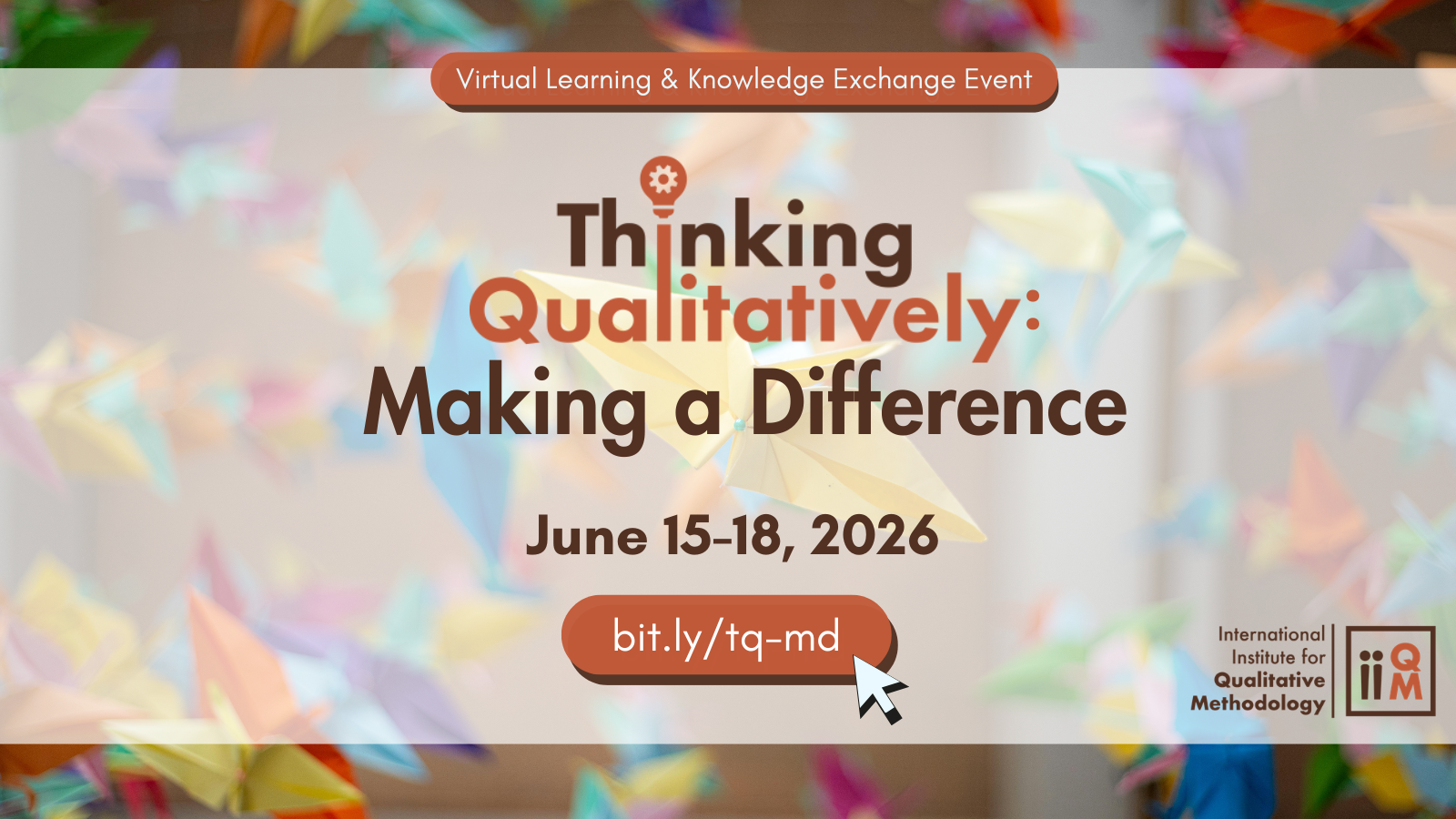
THINKING QUALITATIVELY 2026 (June 15-18) is live!
Learn more and register: bit.ly/tq-md
* Four days of virtual workshops, skill builders, and lightning presentations for graduate students, academics, community
research practitioners, and any other learners who want to deepen their qualitative research methods and practice.
* This year’s theme - Making a Difference - focuses on how qualitative inquiry can shape policy, practice, relationships, and communities.
* A wonderful lineup of instructors, including Jeong-Hee Kim | Johnny Saldana | Shose Kessi | Leah Levac | Heidi Levitt | Kylie Radel
SINGING BACK the BUFFALO -
screening and discussion with filmmaker Tasha Hubbard

Join us online or in person for a free viewing and discussion of the award-winning film Singing Back the Buffalo -- a visually rich exploration of humanity’s connections to buffalo and how their return to the Great Plains can usher in a new era of sustainability and balance.
We are honoured that filmmaker Tasha Hubbard will be at the event for a moderated discussion about the power of sharing research through film.
JUNE 16, 6:30 - 9:00 pm
Join ONLINE or IN PERSON in 2-210 Van Vliet Complex on the U of A Campus
(Zoom link, room information, and Calendar link will be sent to your email address after you REGISTER.)
Dr. Tasha Hubbard (Cree) is a filmmaker and an associate professor in the Department of English and Film and the Faculty of Native Studies at the University of Alberta. She is from Peepeekisis Cree Nation in Treaty Four Territory and has ties to Thunderchild Cree Nation in Treaty Six Territory. Her films, including nîpawistamâsowin: We Will Stand Up and Meadowlarks, have won multiple film and audience choice awards.


This event is held in conjunction with Thinking Qualitatively: Making a Difference and the Pushing Boundaries speaker series of the International Institute for Qualitative Methodology at the University of Alberta.
Community-Based Research Summer Institute:
Addressing Societal Issues Through Community-Based Approaches to Research
Training for emerging researchers interested in conducting applied research with community partners
The Community-Based Research Summer Institute is an interactive five-day virtual training opportunity for emerging researchers to build capacity in conducting applied research with community partners. Gain knowledge in community-based research theory and apply your learning hands-on to your own current or potential community-based research along with peers in a collaborative and energetic learning environment.

To submit an activity or opportunity for inclusion in the newsletter, please contact trsihub@ualberta.ca
