No images? Click here

Your Best Practice - Primary Care and Community Services
Spring 2026 edition
Dear colleagues,
Welcome to your Spring edition of Your Best Practice - showcasing and celebrating some of the innovative and amazing work which takes place in primary care and community services, throughout the North East and Yorkshire region.

Dr Faisel Baig
With the publication of the Neighbourhood Health Framework in March, it’s great to see the developing work of the 8 National Neighbourhood Health Implementation Programme (NNHIP) pioneer sites in our region. In this edition, you can read about some of the community-based initiatives taking place in Humber and North Yorkshire, South Yorkshire, West Yorkshire and North East and North Cumbria.
It is now well over two years since our Community Pharmacy services expanded with the introduction of Pharmacy First. Now with today's announcement of the new contract, the suite of services available is growing even further with the planned roll-out of independent prescribing, as well as the free emergency contraceptive pill already offered within the NHS Contraception service.
Even more primary care colleagues have shared their experiences in our Transforming Primary Care podcast series which has received over 20,000 listens to date. These discussions have also continued to support delivery of the 10-Year Plan and its 3 big shifts, with topics including: managing frailty, advice and guidance, dental reform and the work taking place in the community, within the 24/7 neighbourhood mental health centres and across the National Neighbourhood Health Implementation Programme (NNHIP) pioneer sites.
A national GP online access campaign recently took place and it is amazing to see the work across our region to ensure that patients and practices understand the benefits of using digital ways of interacting with general practice, including the NHS App and online registration.
We would also like to offer our congratulations to the primary care and neighbourhood health teams who have been recognised as regional champions in the NHS Excellence Awards. We wish them the very best of luck with the next stage - you can read about this in the closing item.
Please do share this newsletter as far and wide as possible and you can sign up to receive further editions directly, as well as encourage others to impart examples of best practice, by emailing: england.ney.pctransformation@nhs.net.
A huge thank you for your continued individual, and collective efforts, which have got 2026 off to a great start despite our continuing challenges.
Dr Faisel Baig, GP & Medical Director for Primary Care
Anna Calderwood, Head of Primary Care Transformation
Tracy Wright, Portfolio Lead - Neighbourhood Health and Community Services

Anna Calderwood

Tracy Wright
Cross-sector, community and neighbourhood health

How a blank sheet of paper is transforming a North East Lincolnshire community
A new innovative way of working is making a difference to patients in North East Lincolnshire
When North East Lincolnshire was named one of 42 National Neighbourhood Health Implementation Programme (NNHIP) pioneer sites, the question wasn’t simply how to improve healthcare. It was how to fundamentally rethink the relationship between residents, services, and place.
For a community like West Marsh near Grimsby - an area enclosed by railway lines, fragmented by poor transport links, and showing some of the most complex social inequalities in the region - that challenge was always going to be a big one.
However, thanks to deeply rooted community partnerships, new ways of organising care, and a commitment to “go to where people are,” the area is already starting to show what truly localised, neighbourhood‑level working can achieve.
“You can see how all those layers create inequalities,” Amy continues. “If the house is cold or full of damp, the park is perceived as unsafe due to undesirable behaviours, falling levels of aspiration and rising litter levels - of course it affects your physical and mental health. You can’t tackle all of that in a 10 or 20-minute GP appointment.”
Alongside long‑term community work, a multi‑agency “huddle” meets weekly to support people at risk of escalating need. GPs, community nurses, mental health teams, hospice staff, social prescribers, the hospital discharge team, digital leads and VCSE partners all share insights. What they hear isn’t always clinical. Adam Johnston, NNHIP, Integrated Neighbourhood Teams & Frailty Programme Manager (pictured) explains:
“People talk about loneliness, damp housing, debt or difficult relationships,” he says “Understanding the whole person helps us support them properly.”
Read more about the pioneering work in the West Marsh.
Learn about new neighbourhood ways of working across the region on our new microsite.
Listen to NNHIP Local Coach Sarah Everest Ford talk about the team's work in our latest Neighbourhood Health podcast episode or read her blog.
How joined-up care is supporting people to live a healthy life in Leeds
In a recent blog, Nicola Nicholson, Associate Director for Strategy & Programmes and Leeds National Neighbourhood Health Implementation Programme Local Coach talks about the work and early learnings from the Leeds pioneer site.

The team are also closely involved in the development of a new neighbourhood health centre on Beeston Hill.
Nicola explains how the work the team are doing under the umbrella of Neighbourhood Health in Leeds aims to support our ambitions for the city, most specifically reducing health inequalities.
She says:
"Our goal is to make Leeds the best city for health and care, where neighbourhood services work together, and with people, to reduce health inequalities, improve quality of life, and deliver integrated, person-centred care in the right place, at the right time.
Where the people of Leeds can say: “I live in a thriving community, where I feel safe and truly cared for. There are green spaces where I exercise regularly with social groups. When I need care it is joined-up care and understands me, not just my condition – I am supported to live a healthy life.”
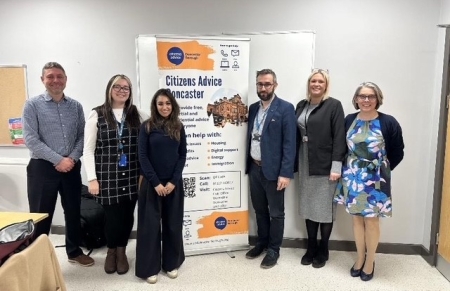
South Yorkshire shares vision for neighbourhood health
South Yorkshire recently welcomed a visit from Dr Minal Bakhai, who came to learn more about the innovative work being delivered across Doncaster and Rotherham’s neighbourhood pilot sites.
Minal was in post as a national lead for the National Neighbourhood Health Implementation Programme at NHS England until the end of March.
A ‘neighbourhood health service’ aims to help people to live well in their local areas and reduce their need for care delivered in hospitals. It does this through integration, bringing together services across the NHS, social care, and community organisations to work as a co-ordinated whole rather than in isolation. By aligning services and sharing information, integration aims to help ensure joined-up care for patients and improve health outcomes.
The neighbourhood health model also focus on prevention, maintaining health and preventing illness from developing or worsening through clinical services such as vaccinations, screening, management of risk factors, and early interventions. In addition, by working closely with local authorities and others, neighbourhood health services can also address the wider determinants of health, such as housing, education, employment and social support, which significantly influence people’s wellbeing and risk of illness.
The neighbourhood health model also focuses on bringing care closer to people’s homes and personalising care, tailoring health and care services to an individual’s needs, preferences and circumstances, giving people more choice and control over their care.
Minal met people from the Citizen's Advice to discover how CAB’s advice on prescription work is having a positive impact for people locally.
She also heard a shared vision for neighbourhood health and the priority areas from the Rotherham Place Board including:
- Prevention — including targeted over-40s health checks to identify risks earlier and support people to stay well for longer
- Reducing risk in 18–39 year olds — proactively supporting younger adults to address emerging health risks and inequalities
- Complex frailty — delivering coordinated, proactive care for people with complex and long-term needs
Anthony Fitzgerald, Executive Place Director for Doncaster and Rotherham at NHS South Yorkshire ICB said:
“We were delighted to welcome Minal Bakhai and showcase the exciting work taking place in Rotherham and Doncaster as we continue to develop our neighbourhood way of working. Our priority areas reflect Rotherham and Doncaster’s strong commitment to prevention, early intervention and tailored support at every stage of life, helping to ensure neighbourhood-based health services genuinely meet the needs of our local communities.”
Find out more about the Neighbourhood Health work in South Yorkshire in a recent episode of the Transforming Primary Care podcast. Listen here.
Data Driven Neighbourhood Health in Bradford District and Craven
The Bradford District & Craven National Neighbourhood Health Implementation Programme (NNHIP) site is demonstrating how data, targeted prevention and strengthened cross‑sector relationships can transform care for people living with multiple long‑term conditions.

Under the leadership of its clinical lead Keighley-based Dr Richard Carr, a GP for Modality Partnership, the area has adopted an approach that moves away from reactive, diagnosis‑based models and towards proactive, population‑level intervention.
From the outset, the Bradford District & Craven team chose not to focus on single conditions but instead on rising risk, multimorbidity and increasing complexity.
“The focus was less about a specific condition,” Dr Carr explained, “and more about recognising increasing age, multiple long‑term conditions and multimorbidity – and encouraging that leftward shift towards proactive identification”

Family-centred Neighbourhood Health in Stockton-on-Tees
The Stockton National Neighbourhood Health Implementation Programme (NNHIP) site is pioneering a neighbourhood health approach that places families – not just individuals – at the centre of its model.
Instead of starting with frailty or older adults, Stockton’s initial work focuses on people aged 50 - 64 with three or more long‑term conditions.
This rationale is rooted in the wider determinants of health. Helping someone remain in work – through condition management, wellbeing support or financial guidance - not only improves their own stability but influences the aspirations and outcomes of their children and grandchildren.
Dr Lucy Falcus explains:
“We want to look at a person as part of their whole family. People aged 50 to 64 are likely to have parents, children and even grandchildren. If we improve their health now, the benefits can filter down to younger generations.”
The programme also focuses on avoiding unnecessary waiting lists by finding lower‑level, neighbourhood‑based solutions leaning on long‑standing partnerships with the local acute trust.
Lucy continues: "Often a lower‑level intervention at home or in the community will prevent a small problem becoming a big one.”
Learn about the early learnings from the Stockton NNHIP work.

Partnership brings ground-breaking research into primary care
As part of the government’s health and growth missions, new HIHR Commercial Research Delivery Centres (CRDCs) across England are helping shift more research activity into primary care.
These centres aim to improve access to clinical trials for people in underserved communities, helping make research more inclusive and responsive to local need. This move enables more people to take part in research locally without regularly needing to travel to hospital.
Mid Yorkshire Teaching NHS Trust, partner of the NIHR Bradford and West Yorkshire Commercial Research Delivery Centre (CRDC) is working in partnership with Conexus Healthcare, Wakefield’s GP Federation to support an exciting new clinical study.
Across Wakefield, GP practices are supporting the study to focus on patients with Chronic Spontaneous Urticaria (CSU), a condition that causes recurring hives and swelling, often with significant impact on quality of life.
The research will test a new investigational medicine at two different dose levels to understand whether it can help manage symptoms for people whose CSU persists despite treatment with antihistamines.
Dr John Ashcroft, Co-Director of the NIHR Bradford and West Yorkshire Commercial Research Delivery Centre, Haematologist and Trust Research Director at Mid Yorkshire NHS Teaching Trust said; “GPs are the first point of call for many people seeking healthcare. Through the Bradford and West Yorkshire CRDC, we’re extending commercial research delivery by partnering with primary care to identify and support patients who may benefit from participating in clinical trials, increasing access to research across our communities.”
Marking Heart Month with Newcastle GP Services’ Healthy Heart checks
Cardiovascular disease (CVD) disproportionately affects communities with the poorest access to care.
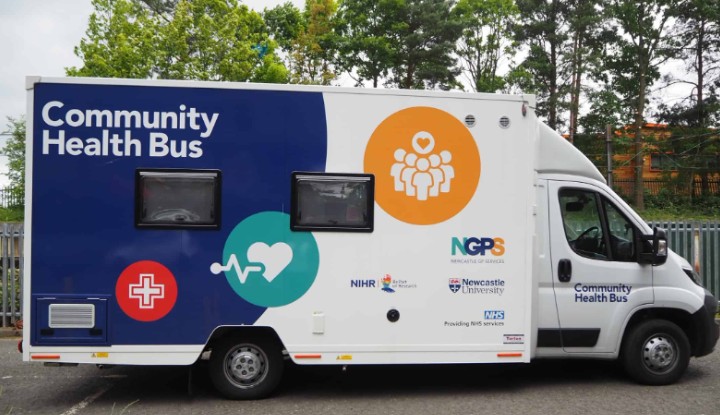
Newcastle GP Services were supported by Health Innovation North East and North Cumbria (HI NENC) Healthy Heart Checks on the road.
Through the community health bus, Monty, screening was delivered in everyday places like supermarkets, community centres and places of worship – reaching people less likely to visit their GP.
By bringing care closer to home, this approach supports early CVD detection, builds trust in underserved communities, and helps reduce health inequalities.
Speaking about the health checks, Joanna Vintis, lead nurse and head of workforce development for Newcastle GP Services, said:
"One of the biggest barriers we've got when we start looking at prevention is how do we engage with communities in the way that they want to be engaged with. Thanks to our wonderful community outreach bus called Monty, nurses go out into the community to deliver health checks.
"We have found we get this ripple effect - as we've gone and engaged with the community in a safe and really welcoming way, they're much more likely to engage with health information. Sometimes people just want that human element. For us nurses, that's our superpower!"
Hear from Joanna in our latest podcast.
Making sure mental health help is available around the clock
New 24/7 neighbourhood mental health hubs are making care available to those that need it most in the community.
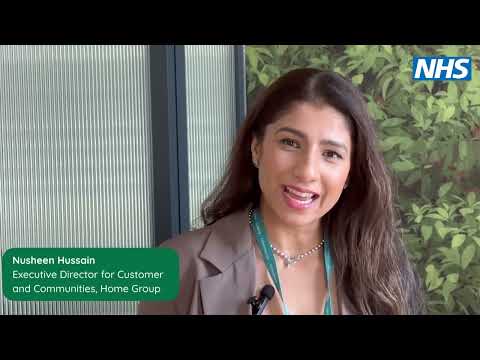
These include Hope Haven, a new NHS walk-in mental health hub, in Whitehaven. The hub, opening this month, offers immediate support plus help with housing, work and money as part of a pilot aimed at tackling high suicide rates in Cumbria.
David Storm, associate director for access and community services at Cumbria, Northumberland, Tyne and Wear NHS Foundation Trust (CNTW), said:
"Hope Haven is a radically new way of supporting people’s mental health and wellbeing.
“People don’t need to be referred and discharged between different teams. They get the help they need much earlier, just by contacting us or coming to a drop-in.
“The different services involved all link up around each person to provide what they need to get well, and stay well
Read more about 24/7 neighbourhood mental health hubs around our region,
Listen to GPs and consultants talk about mental health initiatives in Hartlepool, York and Sheffield in our podcast marking Mental Health Awareness Week.

Community Chronic Pain Clinic shifts care closer to home
The Upper Calder Valley Integrated Neighbourhood Team (INT) continues to demonstrate how neighbourhood working can translate strategy into meaningful change for local people.
The Upper Calder Valley Integrated Neighbourhood Team (INT) continues to demonstrate how neighbourhood working can translate strategy into meaningful change for local people. The re-launch of the Community Chronic Pain Clinic at Todmorden Health Centre is a clear example of partners coming together around a shared population, using collective expertise to redesign services in ways that are accessible, sustainable and centred on patient need.
Rooted in the Upper Calder Valley neighbourhood model, the clinic has been developed through collaboration between CHFT, the Upper Calder Valley PCN and wider neighbourhood partners. By shifting care closer to home and strengthening the interface between primary and secondary care, the service supports better patient experience, continuity of care and more joined-up working across the system.
Primary Care Network Manager Tony Martin said: “This puts the patient firmly at the forefront of the service, bringing care closer to their homes in a very meaningful way.”
General Practice
How Cloud-Based Telephony enables positive change, from staffing to patient communications.
Holly Jackson Digital Transformation lead at Cherry Tree Medical Practice explains how the practice team used data from their new cloud-based telephony system to make changes to their staffing.

She recalls:
“We couldn’t access data previously around the volumes of our incoming and outgoing calls. We now share that information with our patients on a monthly basis.
By looking at the data, we've realised that while we have that busy period in the morning, the need for afternoon appointments exceeds what we're offering currently. So the cloud telephony system information has allowed us to look at rejigging clinicians and put in additional GP capacity later on in the day rather than having everyone starting first thing."

Enabling a seamless patient registration service
GP practices across the region are helping patients access their practice digitally with the help of a new auto-registration option built into the Register with a GP surgery service.
With this new enhanced service, there is no need to print out patient registration emails, manually accept eligible patients, create patient records or allocate a named GP.
Practices are finding up to 30% of registrations can be processed via auto registration, which frees up more time to focus on post-registration activities and other aspects of patient care.
95% of patients who meet the criteria for auto registration can be confirmed as patients within their chosen practice within 2 hours of registering.
Rebecca Rowe from The Ridings Medical Group said:
“We turned our auto registration on in NHS Profile Manager. It’s so straightforward, we’ve saved around 5-10 minutes per registration and patients love how easy it is to fill in their details online. All we need to do is review the record before accepting the patient.”
Read more about the Ridings Medical Group's full use of the service.
Supporting previously underserved communities in Leeds
A West Yorkshire practice is being celebrated for its work with communities that historically find it difficult to access health and care services.

York Street Health Practice in Leeds supports people experiencing homelessness, refugees, sex workers and those from Gypsy, Roma and traveller communities.
The Care Quality Commission (CQC) upgraded the practice from "good" to "outstanding" in a recent inspection
The CQC inspectors said staff at the facility, run by the Bradford-based Bevan Community Benefit Society, were "kind, discreet and compassionate".
They also highlighted the work of the "Bevan Bus", a vehicle staffed by paramedics and nurses supporting people experiencing homelessness around Leeds.
A defining feature of York Street’s model is the time and attention given to each patient. Reception staff are trained to listen and support individuals with complex needs, often spending extended time with patients in crisis.
Practice Manager Abby Siuda explains: “A lot of our patients just want someone to listen to them. They’re so used to getting doors shut in their faces.”
Emma Perry, Bevan Community Benefit Society chief executive added: "We are thrilled and incredibly proud of the team - it is a real testament to the hard work and dedication they show every single day.
"We will literally go to where people are, so that might be a shop doorway, it might be a tent, it could be temporary accommodation, it's all about enabling access."
Learn about GP lead Dr Mark Astill and Practice Manager Abby Siuda's valuable work supporting vulnerable groups in Leeds.

How ambient scribing is improving clinicians' focus on patient consultations
Dr Tom Ratcliffe, Digital Transformation Lead for the national Modality Partnership and practicing GP partner in Keighley, West Yorkshire explains in his blog how new ambient scribing technology helps clinicians focus on their interactions with patients – however like any digital tool, governance is of the utmost importance.
General practice is under increasing pressure. Demand continues to rise, consultations are more complex, and clinicians spend significant time documenting interactions with patients. Against this backdrop, ambient voice technology (AVT), or “ambient scribing”, is emerging as a valuable tool for modern primary care.
Ambient scribing technology listens to consultations, transcribes them in real time and generates structured medical notes. It can also support referral letters, patient summaries and access to clinical guidance.
At Modality Group, the team has been using an ambient scribing platform for around 18 months, and their experience shows that, when implemented safely and thoughtfully, it can significantly improve both clinician experience and patient care.
Tom explains the figures:
“Our evaluation found that 78% of clinicians reported better rapport with patients when using the tool. This is not that surprising as when clinicians are not distracted by the need to type notes, they can maintain eye contact, listen more carefully and pick up on non-verbal cues.
“They also observed a 51% reduction in time spent on documentation and correspondence, alongside improved clinician wellbeing, with 45% reporting a better work-life balance.”
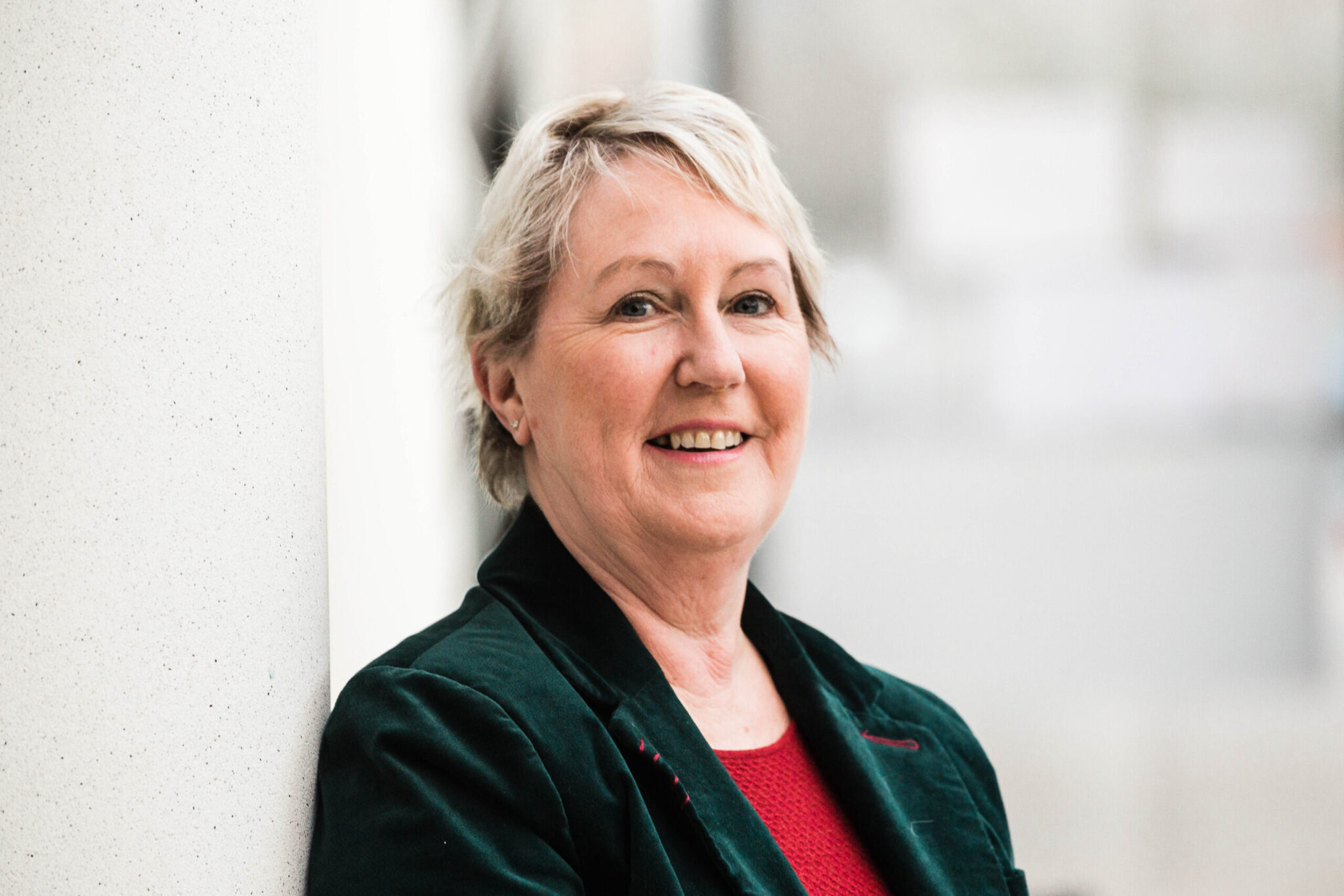
Award-winning service gives menopause support in North Yorkshire
Women and people experiencing the menopause who live in North Yorkshire and York can now get access to an award-winning service that provides support to stay well in work during this important life stage.
Women and people experiencing the menopause who live in North Yorkshire and York can now get access to an award-winning service that provides support to stay well in work during this important life stage.
NHS Humber North Yorkshire Integrated Care Board (the ICB) has partnered with Peppy Health to offer access to specially trained nurse prescribers who can help those experiencing the menopause to navigate their own journey.
The initiative is being rolled out as part of a York and North Yorkshire Combined Authority trailblazer programme which aims to help people stay in employment or return to work.
There are more than 34 recognised symptoms of the menopause with some experts listing more than 60.It goes beyond ‘hot flushes’ and can include a wider range of physical and mental health effects such as fatigue, mood swings, brain fog, joint pain, sleep issues and skin changes.
As well as access to virtual consultations, Peppy Health offers access to a dedicated mobile phone app that includes guidance, information, videos and a welcoming online community to support each person to find the right help for them and their own symptoms.
Originally piloted within health and social care, the move marks the latest in a range of steps to explore how solutions that have helped health and care staff to stay well in work during the pandemic could also be beneficial to people working in local businesses outside the NHS.
Jayne Adamson, executive director for people at NHS Humber and North Yorkshire ICB said: “Although research shows that being in work can have a positive benefit for those experiencing the menopause, approximately one in 10 women aged 40-55 have left a job due to their symptoms.
“Improving support for working women during this significant life stage plays an important role in ensuring equity in the workplace. By talking openly about the menopause and women’s health more broadly, we can challenge the stigma that often still exists.
“The feedback from health and care staff who have had support from Peppy Health is overwhelmingly positive and we’re delighted to work in partnership with York and North Yorkshire Combined Authority to broaden access to this award-winning service.”
New virtual Menopause Clinics in Hartlepool and Stockton
New virtual Menopause Clinics are being delivered by Hartlepool and Stockton GP Federation as part of the NHS WorkWell initiative in the region

The clinics offer a safe, supportive space with prescribing clinicians and flexible appointments (evenings/weekends). This vital service supports women experiencing peri-menopause and menopause across Tees Valley.
Dr Sangeetha Bomisetty, GP and clinical lead for womens' health within North East and North Cumbria ICB, speaking about the work to support women across the region said:
"It’s about moving away from hospital gynaecology, community gynaecology and general practice with special interests and bringing it all into one neighbourhood where you can collaborate, you can educate, you can improve, you can upskill and you can get the right care the very first time, first place."
Find out more about the WorkWell scheme.
Hull Truck Theatre partnership boosts GP trainees’ communication skills
For the past four years, the Hull and East Riding GP Training Scheme’s (HaERTS) GP training scheme has partnered with Hull Truck Theatre to deliver innovative communication skills workshops for GP trainees.
Each cohort takes part in two bespoke sessions: the first focuses on core consulting skills, empathy and understanding patient perspectives; the second uses 'forum theatre', a dynamic approach where trainees pause, rewrite and even step into scenes to explore alternative ways of handling challenging consultations.

This hands-on method helps trainees build confidence, reflect on power dynamics, and practise responding to complex scenarios in a safe, supportive environment. The project’s impact has been nationally recognised, with Hull Truck shortlisted in 'The Stage Awards’ Innovation category for its creative contribution to medical education.
Dr Emma Harkin, GP and GP Trainer from Modality Partnership and Training Programme Director at HaERTS explains:
"Communication is the greatest tool available to GPs. Working alongside theatre professionals brings something truly transformational to medical education.
"It allows trainees to explore complexity, challenge assumptions and practise real‑world communication in a safe, human and deeply engaging way. It shows just how powerful creativity can be in shaping compassionate, patient‑centred care.”

Enabling Access, Efficiency and Digital Adoption Through the Modern General Practice Programme
The Modern General Practice Programme delivered by delivered by North of England Commissioning Support (NECS).is helping GP practices streamline access, reduce workload and increase digital adoption through tailored process mapping, triage redesign and NHS App enablement.
Practices have seen over 60% of requests submitted digitally, significant reductions in the 8am rush, and large increases in NHS App logins, prescriptions and appointment bookings. Website compliance and digital front‑door standards have also improved. Staff report smoother workflows, fewer confrontations and better triage accuracy, while patients value clearer access and quicker responses. Testimonials highlight the practical, supportive guidance that has helped them introduce new ways of working.
Ann Simpson, Admin Manager at Queens Park Medical Centre said:
“The support was practical, collaborative and genuinely understanding of our needs… it has had a positive impact on both operational processes and team confidence.”
Community Pharmacy
How new additions to the NHS Contraception service are making support more accessible
Since launching the NHS Contraception service in April 2023, Pharmacy Plus Health in Headingley, West Yorkshire has seen a growing demand - particularly among its large student population.

The expanded contraception offer, introduced in October 2025, has made timely support even easier to access. With both pharmacists and trained pharmacy technicians delivering high‑quality consultations for the free emergency contraceptive pill, patients benefit from prompt, confidential and non‑judgemental care, while pharmacists gain time to focus on complex clinical cases.
Veronica Sanna, pharmacist at the Headingley and Alwoodley branches said:
"We have received excellent feedback from both GPs and patients - the service is easily accessible, patients get an in-depth consultation, and if the patient agrees, the results are communicated to the GP to be monitored.
"Thanks to the involvement of pharmacy technicians like Maria in the service, patients are seen more promptly, and it gives us a chance to inform patients of other services available in community pharmacy such as Pharmacy First which can only be provided by a pharmacist."

Pharmacy First marks 2-year anniversary
Pharmacies across the region have expanded their services so that you can get the right care quickly and easily this winter. This includes prescription-only medicine as appropriate for 7 common conditions including sore throats through Pharmacy First and recently the NHS contraception service has expanded to enable patients easier access to the contraceptive pill including emergency contraception.
To mark the two year anniversary of the service we’re sharing some feedback from our region’s pharmacists and their patients on the service. Get in touch if you have similar service feedback to share! (details at the bottom of the newsletter)
Watch a film featuring pharmacist Ella Hemsley above.

“I urge everyone to be aware of the seven conditions that pharmacists can now treat without the need for a GP appointment! This service is so accessible within the community, letting people live their lives without waiting to see a doctor for conditions that we, as pharmacists, can help with directly. It’s really rewarding to be able to support patients in such a quick and convenient way.”
Ella Hemsley, Pharmacist at Cromie Pharmacy, Amble, Morpeth
"Pharmacy First is a great service for patients all year round and especially through the colder months. It is easily accessible, and our team of trained professionals are able to treat an expanded range of conditions, providing antibiotics and other prescription medicines where appropriate without the need for a GP appointment.” “

People from out of the area can also use it, for example if staying with friends and family over the holidays. And if we can’t help, we can refer people into other NHS services – this is often ‘fast-tracked’, especially if they have been referred to us via their GP practice or 111 online.”
Julie Grigg, Pharmacist at Wicker Pharmacy, Sheffield

Mark is 47 years old and works as a Finance Director at a pharmacy in Sheffield. He developed a sore throat and knew of the Pharmacy First scheme from his work. The pharmacist was monitoring his condition which turned into tonsilitis, so he was then prescribed penicillin, all without needing to see his GP.
“I had a sore throat for a few days and knew of the pharmacy first scheme. I visited my local pharmacy, and the pharmacist gave a thorough examination of my throat and diagnosed tonsillitis. The prescription was issued straight away, and I was able to start my course of medication within minutes. The service was fast, efficient, friendly and enabled me to start treatment much quicker than if I’d had to see my GP. A big thanks to Pharmacy First!”
Mark Taylor, 47, from Sheffield
Dental
Making more urgent dental care appointments available
Dentist Shiney Singh shares his experiences of providing urgent dental care appointments in his North Leeds dental practice.

In a recent Transforming Primary Care podcast episode he describes the unique challenge posed by having to build a rapport with a patient in a short space of time and the reward of being able to get a patient out of pain and on the road to recovery.
He said:
“Urgent care presents itself as one of the most complex things we’ve taken on as a dental practice... You’ve got to really make a quick rapport with a patient."
Hear more about Shiney’s work.
Watch more dentists in our region speaking about urgent dental care:
Top Tips for Tiny Teeth campaign hits the road across Humber and North Yorkshire
Humber and North Yorkshire Health and Care Partnership’s Top Tips for Tiny Teeth campaign has returned, building on its success as a social media initiative and now reaching families face‑to‑face.

A series of public engagement events has taken place during school holidays, with teams visiting Scarborough, Eastfield and Bridlington to share practical oral health advice with parents and carers of young children.
The campaign focuses on improving oral health for 0–7 year olds by promoting good brushing habits, healthy diets and access to urgent dental care, while offering free dental kits and reward charts to encourage positive routines at home.
Louise Wallace, North Yorkshire Council’s Director of Public Health, said: “Too many children are still experiencing avoidable dental problems at a very young age.”
Zoe Stevens added: “Supporting children to develop strong oral health habits… is one of the simplest and most effective ways we can protect their long‑term health.”
Watch Dr Anna Beaven, Yorkshire and Humber Dental Speciality Trainee in Dental Public Health in a short video about the campaign to mark World Oral Health Day in March above.
You can also see campaign materials including a dedicated section for Top Tips For Tiny Teeth here.

Bringing the NHS App to life in Newcastle
In her blog, Jo Swift, NHS App Ambassador and Social Prescribing Service Manager for Newcastle GP Services talks about how she has worked with GP practices and communities across Newcastle to help people get the most out of the NHS App.
What started as a simple offer of support has rapidly grown into something much bigger, helping to break down barriers and make digital healthcare more accessible for everyone.
When she first joined Newcastle GP Services, she asked practices if they would like help supporting patients with the NHS App. The response was immediate and overwhelmingly positive.
Since then, the team have developed and delivered a programme of digital and research support sessions in communities across the city.
Since February, they've delivered around 40 sessions in GP surgeries, wellbeing hubs and community spaces from food banks to social groups, helping people understand and use the app in ways that suit them.
She explains:
"A big part of our approach is meeting people where they feel comfortable. That might be in their GP practice, but it’s often in community settings where people already gather.
"That has taken us into all kinds of community settings. One of my favourite visits was to a social afternoon with older residents. The youngest was 87, the eldest was 99 and they greeted us not only with a song and a dance but with delicious homemade cakes. It was such a warm welcome and by the end of the session, many of them were confidently using the app to manage prescriptions."
New digital inclusion training module available
The North East and North Cumbria NHS ICB Digital Inclusion team has launched a new digital inclusion training module designed for everyone working across health and care.

The module was produced on behalf of the ICB by the North East Commissioning Support Unit and was supported by a wide group of regional colleagues who are passionate about inclusion.
Shirley Wrann, Head of Digital Technology at NHS England - North East and Yorkshire said:
“We really wanted to produce something that would make a difference. We hope this new training will strengthen understanding and confidence in addressing digital barriers which will improve access and equity for patients and communities.”
And finally - celebrating excellence in primary care
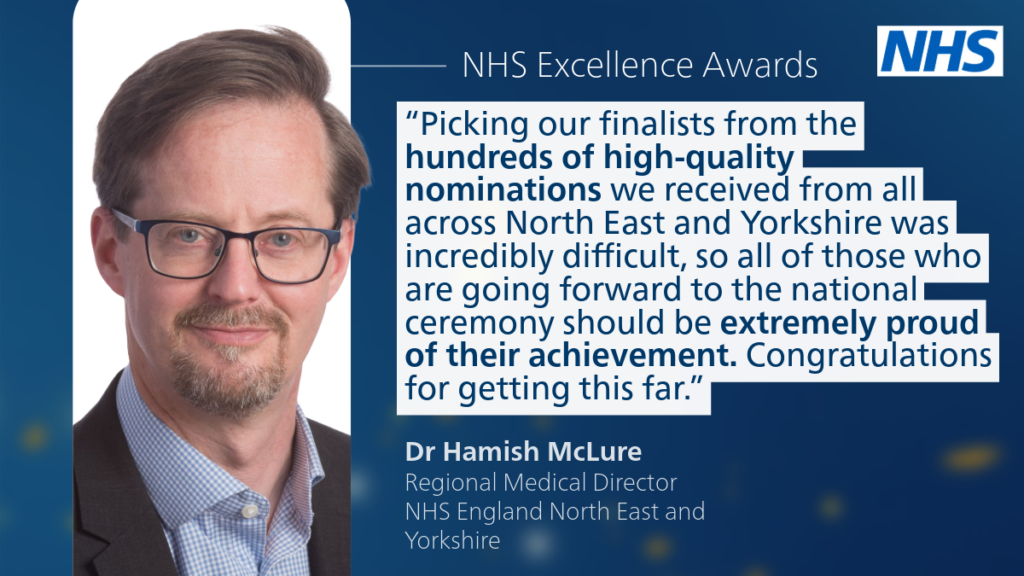
Congratulations to our primary care and neighbourhood health - based regional champions in the NHS Excellence Awards who will now form the shortlist from which national winners will be selected.
This includes Holderness Health’s Gold Team approach to improving palliative and end of life care in general practice, which has strengthened continuity and communication for patients and families, introducing rapid‑access support and proactive GP contact, cutting call waits to under a minute and earning praise from partners and carers.
Winners will be announced at an awards ceremony at NHS ConfedExpo in Manchester in June. The full list of regional champions for the North East and Yorkshire is:
- Digital innovation – Virtual Wards in Secure Environments – Spectrum Community Health CIC.
- Delivering Value – Transforming Same Day Urgent Care and Winter Services across North Yorkshire – Nimbuscare.
- Improving Health Outcomes – Wakefield Family Nurse Partnership Team – Harrogate & District NHS Foundation Trust.
- Leadership – Lucy Elkiss – Lead Project Nurse at Leeds Teaching Hospitals NHS Trust.
- Neighbourhood Health – Safety Hub – Bishop Auckland – Rethink Mental Health.
- Patient Involvement and choice – Gleadless and Heeley Neighbourhood Mental Health Centre project – Sheffield Health Partnership University NHS Foundation Trust.
- Quality Improvement – Gold Team Approach to Improving Palliative and End of Life Care in General Practice – Holderness Health.
- Sustainable Healthcare – Reusable Surgical Hats, Recycling Frayed Shirts and Second Hand Linen – North Cumbria Integrated Care.
- Valuing our people – North East and North Cumbria Staff Mental Health and Wellbeing Hub – North East and North Cumbria ICB, and Cumbria, Northumberland, Tyne and Wear NHS Foundation Trust.
- Working in partnership – Marie Curie Responsive Emergency Assessment and Community Team (REACT) – Marie Curie Hospice, Bradford.
Read more here: NHS England — North East and Yorkshire » North East and Yorkshire teams celebrated in NHS Excellence Awards
Find out more detail about our regional winners.
If you work in primary care and community services and would like to share your own stories of best practice or sign-up to receive future Your Best Practice editions direct to your inbox email the Primary Care Transformation team at england.ney.pctransformation@nhs.net.
Follow us on social media to see more success stories from around our region including primary care using the buttons below:
