

Key industry insights, every Sunday—exclusively for enterprise subscribers.
The Smart Take: Tender Offer Mercies
Happy Sunday WrapPRO Enterprisers,
Thank God for the Ellisons' billions, which have actually made what would have otherwise been a ho-hum year for M&A in media and entertainment pretty interesting.
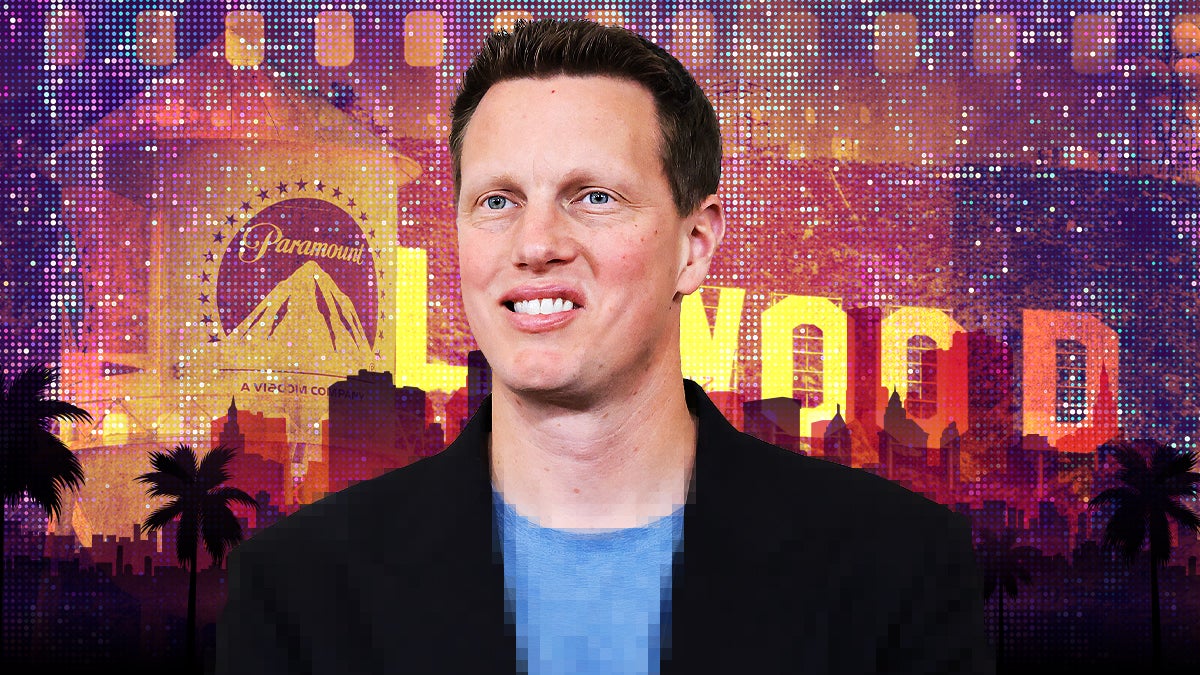
The latest, of course, is the pursuit by Paramount, under David Ellison's leadership and dad Larry's guidance, of troubled Warner Bros. Discovery. Paramount reportedly made a $20 a share bid for WBD that was spurned, leading to the hand-wringing last week over whether this was just CEO David Zaslav's gamesmanship for a richer offer for Warner Bros. Discovery and whether the Ellisons would take another crack at it.
The constituency we aren't reading too much about here is WBD shareholders who are sitting on a stock that is 27% lower than when WBD first started trading on April 11, 2022, after Zaslav engineered his Discovery's takeover of Warner. That is 27% lower, notably, even with the takeover talk bump to WBD stock from when Paramount's interest first broke. For shareholders, that's three-plus years of watching your stock go in the opposite direction of where it's supposed to go. Big shareholders include Vanguard Group and BlackRock on the institutional side, and Conde Nast owners the Newhouse family and cable mogul John Malone on the individual side.

Is it time for the Ellisons to dispense with three dimensional chess being played by the brass at WBD and take it directly to those shareholders by offering them a merciful exit with a good old-fashioned tender offer? It's been awhile since the media world has seen a scrappy proxy fight or hostile bid. The Ellisons seem suited to shake things up. It feels like their parachuting into Hollywood was all about that, with the bags of cash to make it happen.
Let's pause for a minute to consider the math:
$12.54 — This was WBD's closing price on Sept. 10, the day before Bloomberg broke the news that Paramount was preparing a bid.
$16.17 — This was WBD's closing price the next day, showing a 29% bump on a so-called takeover premium.
Takeover offers in the media space have been attracting a 20% to 25% premium.
If Paramount did indeed offer $20 per share offer, that represents a 59% premium from the $12.54 where WBD was languishing before the takeover news broke.
But let's say Zaslav and team are thinking that WBD will have much more value when it's split in two that's not being realized now, so let's call it hidden value, and hence it would scoff at a 59% premium.
Circling back to the Ellisons and those downtrodden WBD shareholders. What if Paramount would come back with a $26 a share offer (seems like a rounding error for billionaires)? That would be a 43% premium to the current price, and 107% premium to the Sept. 10 closing price. Pretty enticing for a shareholder who's held on for three years in a downward slide.
Tender offers and proxy fights are messy business, but maybe the Ellisons are ready to be messy.
Have a great week ahead.
Tom Lowry
SVP/Editorial Strategy
tom.lowry@thewrap.com
Your Data Playbook
1. Tech Companies Pushing Off Those Exits Research firm CB Insights reported some interesting data last week as part of its State of Venture Q3'25 Report that shows that tech companies are in less of a rush to strike an exit.
"The ability to raise at decacorn ($10 billion and above) valuations while staying private removes the pressure to go public for capital. Companies can now scale to a massive size, hire top talent through liquid secondary markets, and maintain founder control — all without the quarterly earnings pressure or regulatory burdens associated with going public" CB Insights explains.
Average time for tech startups to stay private rose from 12.2 years in 2015 to 15.9 years in 2025. See below.

2. AI Killing Jobs? Not if You Look at This Data It seems like companies are increasingly bringing people on board who help embed AI into daily operations, so dispelling the widespread notion that the technology is a job killer. The Economist cites work by Seyed Hosseini and Guy Lichtinger, both doctoral students at Harvard University, who have been tracking companies that hired “generative-AI integrators." The students used AI itself to go through 200 million job postings and found 130,000 such vacancies at 10,600 firms that they called “AI adopters.”
See below for the upward trend.

Executive Spotlight: Libby Bush, Global Head, Media and Entertainment Partnerships, CAA

When you hear Libby Bush talk about her motivating drive over the years, one that has been rewarded with a senior executive role for partnerships at CAA, it's hard not to think it came from her days on the soccer pitches and lacrosse fields of her youth outside Philadelphia. She ended up playing Division I lacrosse for the University of Richmond Spiders, a sport she's still involved with near her home in Pacific Palisades.
"I certainly didn't get promoted because I waited for somebody to recognize my worth. It takes fighting for yourself, asking for things even though you might not feel qualified or you might not feel like you've hit the mark completely to deserve it. The worst people can say is no.
"It's a little bit of the fake it til you make it. I never worked for an agency. How did I have the right to start one? But I believed enough in myself, I was willing to take the risk and I was willing to hear the word no as many times as I needed to until I heard the word yes. Holding myself back and not doing it because I didn't have the qualifications was just never a part of the trajectory for me."
Sure feels like the spark of a competitive athlete is still in there somewhere.
Bush, 43, spoke to our TV business reporter Lucas Manfredi for last week's installment of our Office With a View executive Q&A series about the importance of brands becoming an essential tool for creators to both finance and market their projects across platforms. Bush has been responsible for leading the CAAs team behind collaborations between hit series like Netflix's "Bridgerton" and Flonase and Apple TV+'s "Severance" and State Farm. She's also worked closely on connecting brands directly with CAA clients through projects like Ariana Grande's Swarovski ad campaign, the NBC competition series "On Brand with Jimmy Fallon" and Kerry Washington's YouTube series "Street You Grew Up On."
Bush, whose career has taken her to the NBA, WNBA, Disney and to her own startup agency Tandem Entertainment that CAA later purchased, is aware how important it was to hone her own story if she was going to help creators and brands do the same. "One size does not fit all in this business. There's a lot of options on how to financially get deals done and creatively tell great stories in entertainment and culture."
Ad Age this year put her on its list of Leading Women, an honor for which some commenters on LinkedIn called her a "badass."
Our favorite part of her interview with Lucas was this career advice: "I would also say I learned a lot about mentorship and mentoring. When you work in really big corporations and you start out young in your career in these big organizations, you realize really quickly that people will continue to grow in their careers and they may end up anywhere.
"So to me, it was always about treating everybody — whether they were next to you, below you or above you — the same, and how important it is to collect relationships and nurture them. Your network becomes everything to you in your career. Understanding how to use it and protect it and nurture it is a really big lesson for me throughout those companies."
Our Favorites From Elsewhere
The PR Guy Who Says The AI Boom Is a Bust, Channels with Peter Kafka podcast
What’s Your AI-dentity? Bloomberg Opinion (survey)
How a mogul picked his latest sports investment, The Athletic MoneyCall