Hi community college leader - Have you invited your member of Congress to your college this summer?
No images? Click here

August 20, 2026
Leading the News this Week
The Community Funding Accelerator (CFA) is offering pro bono technical assistance to community colleges interested in the National Science Foundation (NSF) Advanced Technological Education (ATE) grant opportunity. Support will focus on strengthening cradle-to-career pathways, particularly for at-risk students, and may include proposal narrative review, grant strategy development, and full grant-writing support. Community colleges interested in receiving free grant application support must submit the CFA interest form by Friday, August 21, 2026, at 5:00 p.m. EST. The NSF full-proposal deadline is October 1, 2026, and applications for CFA support will be reviewed on a rolling basis.
To find the CFA interest form, click here. To find the NSF full proposal, click here.
Read on for more news this week...
News in Higher Education
Department of Education Unveils Proposed Accreditation Rule
On August 19, the Department of Education (ED) published its proposed final rule, which would perform changes to the accreditation system. Since the start of the Trump administration, President Donald Trump and ED have consistently discussed their plans to change accreditation to reduce barriers for new accrediting bodies entering the field and make it easier for institutions to change their accreditors. Institutions of higher education must be accredited to participate in the federal student aid program. In these proposed rules, ED aims to implement the following:
- Have institutions publicly disclose their credit transfer policies. Institutions that elect to deny transfer credits must give a written explanation to the student and provide a cost estimate of how much it would be to retake the courses. Students would have 15 days to appeal the institution's denial.
- Eliminate the two-year rule for accrediting bodies to gain initial recognition, along with what ED deems unnecessary documentation and site visits.
- "Shift institutions’ and programs’ focus towards cost-effective practices for staffing, facilities, student services, and program design" by having accreditors minimize administrative burdens and duplicative reporting.
- Require accreditors to implement measures of student and institutional performance such as completion rates and economic returns.
- Require accreditors to remove any geographic restrictions or constraints.
- Require accreditors to be neutral in viewpoint and ideology when making accrediting decisions and clarify expectations for "reviewing student achievement and faculty-related policies, including academic freedom and intellectual diversity."
ACCT intends to participate in the public comment period, which closes September 21, 2026.
Higher Ed Tax Breaks as Option to Fund Pell Shortfall
The Committee for a Responsible Federal Budget outlined options for addressing the Pell Grant program's projected $100 to $185 billion shortfall over the next decade, noting the program's reserves are now exhausted. Fully funding the shortfall through FY 2027 alone would require $16 to $17 billion in savings. The report notes that the House Appropriations Subcommittee for Labor-HHS-Education has already proposed eliminating subsidized federal student loans, which currently don't accrue interest until a student finishes their program, as one funding offset. CRFB also outlined options to reform the roughly $33 billion in annual federal higher education tax breaks, including the American Opportunity Tax Credit and Lifetime Learning Credit, as an alternative or additional source of savings, noting these tax breaks are less targeted toward low-income households than Pell Grants.
The Department of Justice Rules Three National Science Foundation STEM Diversity Programs Unconstitutional
The Department of Justice's Office of Legal Counsel ruled that three National Science Foundation programs aimed at increasing racial and ethnic diversity in STEM must be terminated, citing the 2023 Supreme Court ruling on race-conscious admissions. The discontinued programs, the Louis Stokes Alliances for Minority Participation, the Improving Undergraduate STEM Education program for Hispanic-serving institutions, and the Alliances for Graduate Education and the Professoriate, together accounted for about $104 million of NSF's $938 million STEM education budget; NSF can redirect that funding to other STEM initiatives. Two other programs were found to have unconstitutional elements but can continue if reworked to remove race- or sex-based preferences, including the Advanced Technological Education program, which funds community college STEM initiatives. NSF had asked DOJ in May to review the programs as part of the agency's broader shift in priorities since spring 2025; other reviewed programs, including the Tribal Colleges and Universities Program and the Robert Noyce Teacher Fellowship Program, were not affected.
August Recess: Invite Your Members of Congress
ACCT's August Recess Toolkit
During the August recess, congressional lawmakers return to their home states and districts to engage with their constituents and to pitch the many accomplishments they have made throughout the congressional session. Community college leaders have an optimal opportunity to establish, strengthen, or renew relationships with the lawmakers that represent their campuses and advocate for community college legislative priorities.
Take a look at ACCT’s new August Recess Toolkit, which offers strategies to strengthen relationships with congressional lawmakers. On ACCT Now, read the blog, Community College Advocacy Continues All Year Round: Invite Your Member of Congress to Meet Back Home!
Remember -- you can use this August Recess to:
- Invite your Member of Congress to visit your community college.
- Meet your Member of Congress at the congressional district office.
- Attend a congressional town hall, parade, BBQ, or other event that features your Member of Congress.
- Host a nonpartisan candidate forum, town hall, or tour with your Member of Congress or candidates seeking election for that congressional seat. If you invite a candidate that is not yet in office, you must invite all candidates for that seat and provide equal time, without endorsement.
- Invite your Member of Congress to speak at a program graduation or annual commencement.
Please contact the ACCT Government Relations team with information and pictures of your visit: publicpolicy@acct.org. We would like to uplift your member of Congress’s engagement with your community college to inspire others.
Congressional Visit Spotlight
Thank you to Joliet Junior College (IL), Hagerstown Community College (MD), Owens Community College (OH), and Central Oregon Community College (OR) for Hosting their U.S. Representatives and Senator!
Thank you to Joliet Junior College (IL), Hagerstown Community College (MD), Owens Community College (OH), and Central Oregon Community College (OR) for welcoming their U.S. Representatives and U.S. Senator including Senator Dick Durbin (D-IL), U.S. Representative April McClain Delaney (D-MD-06), Senator Jon Husted (R-OH), and Senator Jeff Merkley (D-OR).
These visits give lawmakers the opportunity to see firsthand how community colleges are preparing students, strengthening local economies, and meeting workforce needs.
If you have hosted a congressional visit recently, please send us photos with captions, a press release, social media posts, and/or any other recaps. ACCT will share these examples with community college leaders and congressional offices to encourage more campus visits and engagement.
If you have questions on hosting a future visit with your congressional delegation, please contact PublicPolicy@acct.org
U.S. Senator Jeff Merkley (D-OR) hosted a townhall at Central Oregon Community College.

U.S. Senator Dick Durbin (D-IL) with Joliet and industry leaders.
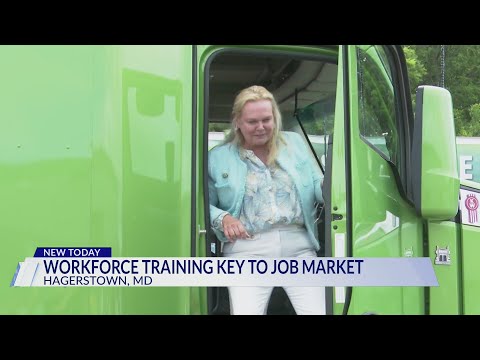
U.S. Representative April McClain Delaney (MD-06) with Hagerstown and industry leaders.

U.S. Senator Jon Husted (R-OH) and Acting U.S. Secretary of Labor Keith Sonderling with Owens President Dr. Dione Somerville.

Grant Opportunities
Please view this new ACCT Now Blog: Don’t Miss These Grant Opportunities for Community Colleges This Fall!
Please view ACCT's new resource highlighting top competitive grant opportunities for community colleges. These below are the top highlights:
Advanced Technological Education (ATE)
The U.S. National Science Foundation (NSF) is accepting applications to improve the the education and preparation of technicians for high-technology fields that are critical to the U.S. economy. The program supports community colleges and their partners in developing STEM curricula, training faculty, creating career pathways, and strengthening partnerships with industry to prepare students for skilled technical careers in areas such as advanced manufacturing, information technology, engineering, energy, cybersecurity, AI, and other emerging technologies. The NSF anticipates up to 80 awards with award size ranging from $475,000 to $7,500,000. The application deadline is October 1st, 2026 at 5:00 PM applicant's time. Learn more and apply here.
Advocacy Note: This program is a significant national priority for ACCT. View the letter ACCT and AACC sent to Congress requesting an increase in total funding for this program nationally.
Community College Internship (CCI) Program - U.S. Department of Energy Office of Science
The Department of Energy's Office of Science is accepting applications for the Community College Internship (CCI) program, a paid 10-week internship at one of 17 participating DOE laboratories and facilities. Students work alongside scientists and engineers on technical projects supporting DOE's science and technology mission, with internship terms offered in summer, fall, and spring. Applicants must be currently enrolled full- or part-time at a community college, have completed at least one semester with a minimum of 12 total credit hours (including 6 in STEM), and maintain a cumulative GPA of at least 2.7. Applicants must also be at least 18 years old and a U.S. citizen or lawful permanent resident. Participants receive a weekly stipend of $650, along with travel reimbursement and housing support. The application deadline is September 30th, 2026 at 5:00 PM ET. Learn more and apply here.
NSF State and Regional AI Infrastructure Hubs
The National Science Foundation is accepting proposals for State and Regional AI Infrastructure Hubs, which will connect researchers and students to AI computing resources and build a skilled AI workforce. NSF anticipates about 10 awards ranging from $4 million to $12 million over five years, with only one award per state or multi-state region. Hubs are structured as consortia of institutions of higher education, including community colleges, working with industry, philanthropy, and state and local governments, and must address workforce development, faculty training, and regional partnerships alongside infrastructure. The full proposal deadline is November 4, 2026. Learn more and apply here.

- August 21, 5 PM ET - Pro Bono Grant Application Assistance
- September 4, 1-2 PM ET - ACCT LAW Live
- September 21 - Accreditation Public Comment Period Closes
- September 30, 5 PM ET - Community College Internship (CCI) Program
- October 1, 5 PM Applicant's Time - Advanced Technological Education (ATE)
- October 2, 1-2 PM ET - ACCT LAW Live
- October 21-24 - ACCT Leadership Congress
- November 4, 11:59 PM ET - NSF State and Regional AI Infrastructure Hubs
- November 6, 1-2 PM ET - ACCT LAW Live
- December 4, 1-2 PM ET- - ACCT LAW Live
Outreach Efforts
Is your institution meeting or hosting an event with federal elected officials?
We created a Congressional Contact Form that will help us track outreach efforts of community college leaders across our membership. By filling out the form, you are better informing ACCT's advocacy efforts and our advocacy team is able to continue those conversations with congressional staff in DC.

ACCT NOW is the go-to resource for issues affecting community colleges. Our new website features original reporting and research, as well as of-the-moment legislative updates. ACCT NOW also includes articles, reports, and research from outside sources that benefit the ACCT community. Read the Latest Articles on ACCT NOW:


Would you Like a Federal Update Session for Your Team?
Both this new presidential administration and new Congress have brought with them a flurry of developments in the federal landscape that can make keeping up a monumental task. ACCT's Government Relations team is here to help by offering a 45-minute to an-hour federal update session to community college leadership teams who are ACCT members. To request a session, fill out this form and please email publicpolicy@acct.org with any questions.
Have a Question?
Contact us with any questions or concerns about public policy and ACCT's advocacy on behalf of two-year colleges and two-year college trustees. ACCT's Latest Action in Washington alerts are sent to interested ACCT members to keep you up to date on important legislative activities that impact community colleges.
If you no longer wish to receive ACCT's Latest Action in Washington alerts, reply to this email with UNSUBSCRIBE in the subject line. For more information about ACCT's advocacy services, visit acct.org/advocacy
Spread the Word.
Please encourage your fellow trustees, presidents and colleagues to stay up to date about legislation that affects their community colleges by joining the Latest Action in Washington (LAW) Alert network. To join, simply register here.
For more community college news from inside the beltway, follow us on Twitter and LinkedIn, or like us Facebook.


