News, Jobs, Events, Opportunities and lots more...
No images? Click here

A quick round up of the latest news, jobs and opportunities


News

New Advisory Community to ACCESS on Intersectionality (ACAI)
We are very pleased to announce the formation of the Advisory Community to ACCESS on Intersectionality (ACAI).
The aim of this initiative is to enable deeper, sustained and accountable progress on diversity and inclusion within ACCESS. Specifically, ACAI is working with the ACCESS Directors to support thoughtful engagement with intersectional perspectives and amplify diverse expert voices across ACCESS events.
ACAI is a collective of seven environmental social science experts from a range of backgrounds, including research, government and policy work, campaigning, and grassroots activism:
- Jaya Gajparia (Lead), University of Exeter, ACCESS Senior Research Fellow & Independent Scholar
- Zarina Ahmad, University of Manchester & Co-Director of the Women's Environmental Network
- Nawang Choden, Cambridge Conservation Initiative
- Lorraine Dongo, ACU (The Association of Commonwealth Universities) & Race on the Agenda (ROTA)
- Andre Kpodonu, Co-Director of Seeding Reparations
- Viji Kuppan, University of Leicester & Loughborough University
- Chamindra Weerawardhana, Independent Scholar & Activist
Together, they bring different perspectives but share a common commitment to social and environmental justice.
We will be sharing written outputs and honest evaluations of ACAI’s work and its impact towards the end of 2026, so do look out for these.
ACCESS Director Patrick Devine-Wright says:
“The social sciences are for everyone, and if our contributions are to be viewed as legitimate by society, we must pay serious attention to fairness, inclusion and diversity. ACAI extends the Guiding Principles approach that we have created in ACCESS, and arises from our own reflections on who is in the room at ACCESS events, and who is not. ACAI is helping us to broaden the range of voices who speak and attend, and by carefully evaluating this intervention, we aim to produce rigorous new evidence that can inform future work in this area across social science and environment sectors.”
Last few places remaining to attend the 2026 ACCESS Assembly online sessions
We would love you to join us online at this year's ACCESS Assembly on Wednesday 17 and Thursday 18 June
The Assembly is a key event in the ACCESS calendar when we welcome Environmental Social Scientists across academia, policy, civil society and the third sector, to come together and build connections across disciplinary and sectoral boundaries.
‘I felt so welcomed in the online space that it felt absolutely worthwhile attending (which isn't always the case with hybrid/online events). I felt really committed to the event through the careful facilitation from the ACCESS team’ (Assembly 2025 attendee)
To ensure a high-quality online experience, attendance is limited to 50 online participants. Keeping numbers at this level allows us to provide better interaction, including opportunities for attendees to ask questions and to network, supported by our online facilitators.

ACCESS Autumn School 2026
Monday 12 – Wednesday 14 October, Cumberland Lodge, Windsor
Join a small group of environmental social scientists from diverse sectors at our final residential training event – the ACCESS Autumn School.
Autumn School 2026 focuses on fostering collaborative research. This retreat-style event will provide a relaxed and friendly environment where you'll:
- Build relationships across sectors
- Develop and practice skills for collaboration
- Gain experience of communicating across disciplinary boundaries
We welcome social scientists working on three main themes:
- Sustainable Production & Consumption
- Mitigating & Adapting to Climate Change
- People & Nature
Deadline for applications: Wednesday 8 July

Poignant, thought-provoking, memorable – the final ACCESS Leadership College Retreat
Last month ACCESS held our last ever Leadership College Retreat at the Dartington Trust in Devon.
Leadership College lead Saffron O'Neill, supported by ACCESS Operations Team dream-duo Sarah Thorn and Sarah Baker, put together a fantastic final programme of keynotes, field trips, workshops and food for the Leadership College finale.
In this piece on the ACCESS blog, four of the Fellows – Richard Bridge (Defra), Helen Roberts (MetOffice), Susann Power (Ulster University) and Jennifer Rudd (Swansea University), share their personal highlights from this memorable last get-together and talk about the Leadership College experience.
Events

Environmental Psychology Network (EPN:UK) (South) Network Meeting
Thursday 21 May, 10am, University of Portsmouth
Theme: Frontiers in ‘Green’ Psychology: What role is there for environmental psychology in better understanding and promoting environmental sustainability in the next 25 years?
This event invites environmental psychologists of all career stages, although particularly early career researchers, to consider the future of environmental psychology in relation to the key environmental issues of our time (e.g. climate change, biodiversity loss, environment-health interface).
In addition to two keynote presentations from prominent contemporary environmental psychologists, Birgitta Gatersleben (ACCESS Co-Director, University of Surrey) and Lorraine Whitmarsh MBE (ACCESS Leadership Team, University of Bath), delegates will have the option to bring and present a poster of their current or planned research activity and/or thoughts about the future of the discipline.
There will also be a panel discussion at the end of the day, where delegates are invited to ask Birgitta Gatersleben, Lorraine Whitmarsh and Chris Jones (ACCESS Co-Investigator, University of Portsmouth) about careers in environmental psychology.
Webinar: Well-adapted UK: What the latest Climate Change Committee report tells us
Thursday 21 May, 1-2pm, online
This MACC (Maximising UK Adaptation to Climate Change) Hub Webinar will explore insights from the CCC’s latest report to government on climate risk - Well-Adapted UK - being released on 20 May, and what they mean for climate adaptation in the UK.
Register here
Embedding Environmental Sustainability into Research
Monday 6 July 2026, 9.30am-3.30pm, University of Oxford & online
This is Seminar 8 of the Medical Research Council Environmental Sustainability Seminar Series.
This seminar will explore how environmental sustainability can be embedded into research systems and day-to-day operations—from leadership, governance, and institutional strategy to procurement, training, and behavioural change.
The session will bring together speakers from across universities and research organisations to share examples, lessons learned, and approaches to creating long-term organisational change.
Funding
Academy of Social Sciences, EDI Project: Small Grants Fund
As part of the Academy of Social Science's collaborative EDI Project with member learned societies and funded by the Economic and Research Council, applications for our 2026/2027 EDI Small Grants Fund are now open.
Social science societies can submit bids of between £5,000 to £25,000, either at an individual society level or as a partnership/consortium of learned societies, to support work to pilot or scale up inclusivity initiatives or interventions.
They are particularly keen to receive applications which focus on EDI in the research and HE pipeline and community, and/or that focus on collaboration beyond disciplines, organisations and, where applicable, the social sciences.
Application deadline: Tuesday 1 September
Jobs

Project Officer (Active Journeys), Walk Wheel Cycle Trust
Home-based with hybrid working across Central Southern England
As Project Officer, you will work across a wide range of projects to support and enable more people to walk, wheel and cycle.
You’ll plan and deliver practical behavioural change and engagement walking, wheeling and cycling projects and activities, with clear direction and support from the line manager.
You will also integrate volunteers in projects and activities where appropriate, supporting their recruitment, training and ongoing involvement when needed.
Application deadline: Sunday 17 May, 11.59pm
Postdoctoral Researcher, School of Geography, University of Oxford
Living with Drought: Human-Environment Relationships in Drying European Landscapes (ERC project) – with focus on Spain
This ERC-funded research project explores how diverse people and communities learn to live with drought across Europe. It brings together perspectives from anthropology, geosciences, and the environmental humanities to understand drought as a complex socio-cultural and geophysical process.
In this full-time, 30-month position, you will be responsible for carrying out a multi-sited ethnographic case study with a focus on Spain, contributing to a comparative programme spanning Germany, Norway, the UK, and beyond.
This role involves regular travel and extended periods of fieldwork. You will engage with farmers, conservationists, policymakers, scientists, and local communities, to explore how drought is experienced, understood, and responded to in practice.
An ability to conduct research in Spanish is essential, and an interest in cross-disciplinary perspectives and experimental multimodal research approaches is highly valued.
Application deadline: Monday 25 May, 12 noon
Research Fellowship in Geopolitics, Energy Security, and Resilience of Net Zero, University of Warwick
Applications are invited for the role of Research Fellow as part of the UKRI funded UK Energy Research Centre (UKERC) theme on the ‘Geopolitics, Energy Security, and Resilience of Net Zero’, based in the Department of Politics and International Studies (PAIS) at the University of Warwick.
This is a a multi-university, inter-disciplinary project, led by Professor Caroline Kuzemko, working together with the Warwick Business School, and the universities of Sussex, Durham, York and Leeds. There are three work packages within the theme.
The Research Fellow’s primary duties will be to research and draft journal articles and policy briefs, linked to the ‘Geopolitical Economy of Low Carbon Transitions’ work package, which is led by Professor Gavin Bridge.
Closing date: Sunday 31 May, 11.55pm
PhD studentships & fellowships
Fully funded PhD in Climate Extremes & Migration, ETH Zurich, Switzerland
This project aims to deepen understanding of how climate-related shocks—such as extreme weather events—affect migration patterns both within and across borders.
By combining expertise in migration research and climate science, the programme contributes to building more resilient and informed policy responses.
Requirements
• Master’s degree in social science or data-related field
• Strong quantitative & statistical skills
• Experience with R & geospatial analysis
• Interest in climate & migration policy
Application deadline: 1 June
POST/British Ecological Society (BES) Fellowship 2026/27
Applications are open for the 2026/2027 British Ecological Society (BES) Fellowship.
The 13-week fellowships will start at the earliest in September 2026 and at the latest January 2027.
Fellowships offer opportunity for students to gain real-world experience in the communication of research to policy makers. The successful applicant will be based in UK Parliament, supporting its use of research evidence, potentially outside their immediate area of expertise.
Open to British Ecological Society members currently studying for a PhD in a UK university.
Closing date: Wednesday 10 June, 11.59pm
Opportunities

Survey: Collaborative working in environmental research policy and practice
ACCESS is working with the Institution of Environmental Sciences to develop a set of resources promoting interdisciplinary collaborative working in research, policy and practice.
As part of this project we are inviting people from different disciplines and sectors to complete an online survey to gather insights and experiences with collaborative working in the environmental field.
The survey has two key aims: 1) to gather examples of successful and unsuccessful collaborative working and 2) to assess what factors affect (un)successful collaborative working.
As an expert in the field, we would like to learn from your experiences.
By completing this survey you can help us develop a toolkit and case study report to support collaborative working.
We would be grateful if you could complete the survey by Friday 15 May.
It should take 10-15 minutes to complete the survey.

Apply: Expert Review of Special Report on Climate Change and Cities Second Order Draft
The Intergovernmental Panel on Climate Change (IPCC)'s Government and Expert Review for the Second Order Draft of the Special Report on Climate Change and Cities will take place from 8 May to 3 July 2026.
Registration is now open for prospective expert reviewers. If you would like to apply to be a reviewer, read more about the role.
Registration closes: Friday 26 June 2026, 9.59pm
Info

Guidance and inspiration for engaging communities with underground thermal energy storage
This is practical, free resource is from the Horizon Europe project PUSH IT (Piloting Underground Storage of Heat in geoThermal reservoirs).
It's a collaboration by Merryn Thomas, Iain Soutar and ACCESS Director Patrick Devine-Wright (University of Exeter), and Melanie Rhose and Madeleine Kechagia (Anglia Ruskin University), together with technical partners and engagement practitioners.

How to run a successful writing retreat
In February 2026, the ACCESS project hosted a 3-day writing retreat for our team of Knowledge Exchange & Impact Fellows. The event was organised by Dr Sarah Golding, who is our Knowledge Exchange Fellow for our Building Capacity workstream.
In this ACCESS blog, Sarah shares some of her top tips for organising a successful writing retreat.
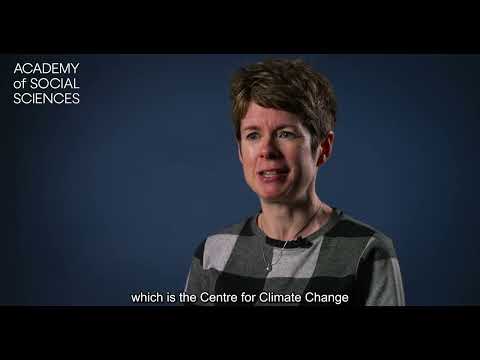
Creating a more sustainable world with social science
The Academy of Social Sciences has published a new series of short videos in its Making a Difference library highlighting the breadth of impact social science research, evidence and insights make to our everyday lives.
In this video, Lorraine Whitmarsh (ACCESS Leadership Team, CAST Director, University of Bath) and Jadu Dash (University of Southampton) discuss how social science research is helping us to tackle climate change and create a more sustainable world for all.
Missing the humanities? Prioritising affective, imaginative, transformative, critical and human dimensions in transitions research
This paper from Alevgul Sorman (Basque Centre for Climate Change) et al. in Energy Research & Social Science, makes the case for a more authentic alliance between the social sciences and humanities in transitions scholarship.
It argues that the humanities are fundamental to shaping just, legitimate, and meaningful sustainability transitions, despite their marginalisation.
The authors write:
"...the very qualities that render the humanities vulnerable are precisely the sources of their strength. Humanities approaches can unsettle assumptions, amplify overlooked voices and actors, and situate current transition narratives within broader historical, socio-cultural and ethical contexts, thereby enriching diverse epistemologies for transformative change."

Are you on the ACCESS Network database?
ACCESS aims to make social science expertise more accessible. We have created a publicly available, searchable database (The ACCESS Network) of social scientists and experts working in the fields of climate and environment.
Join the ACCESS Network to share your research and start making connections with other environmental social scientists.


