|
|
|
|
It’s surprising how little we know about the insects that inhabit our planet. As many as 80% may not even have been discovered yet, and the majority of the world’s estimated 5.5 million species are thought to live in tropical regions where, to date, little research has been carried out.
The tropics – including the Amazon rainforest, all of Brazil and much of Africa, India and south-east Asia – are also where the combined effects of climate change and habitat loss are being experienced most profoundly. Which is bad news for the cocoa farmers of Indonesia, for example, whose crops are primarily pollinated by midges, a group of flies better known in the UK for bedevilling camping trips in Scotland.
In this Insights long read, the authors of a new UCL study – one of the biggest global assessments of changes in insect biodiversity – reveal that intensively farmed land in these tropical regions is suffering some dramatic species collapses. They also point out that, as consumers, we all have a role to play in reducing these declines – for example, by buying shade-grown cocoa and coffee that have less impact on biodiversity.
For anyone who’s ever hired someone for a job, we’ve also got new evidence on the thorny question: should you choose the better-qualified candidate, or the one you have more in common with? And we’ve asked a professor of philosophy to tell us if Boris Johnson is lying about Partygate. Now that really is a tough question.
|

|
Mike Herd
Investigations Editor, Insights
|
|
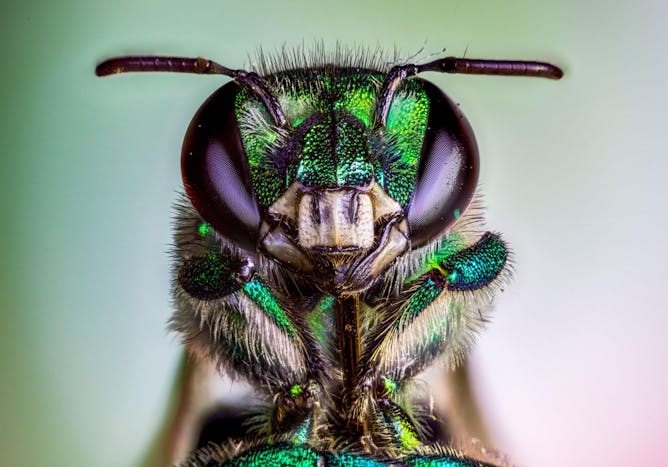
Numbers of forest-dependent orchid bees in Brazil have been found to have declined by around 50%.
Alamy
Tim Newbold, UCL; Charlie Outhwaite, UCL
Insect numbers and species decline steeply where agriculture and habitat loss coincide. Preserving natural habitat can reduce losses up to nine-fold
|

PA/Alamy
Sorin Baiasu, Keele University
The prime minister accepts he broke the law but the question now becomes, did he mislead parliament about it?
|

‘He’s a bit stupid but we go wayyyy back.’
fizkes
Sheheryar Banuri, University of East Anglia
Nepotism is not such a bad move, it seems.
|
Health
|
-
Paul Hunter, University of East Anglia
The Valneva vaccine is the sixth COVID vaccine to be approved in the UK.
-
Rachel Hurst, University of East Anglia; Colin Cooper, University of East Anglia; Jeremy Clark, University of East Anglia
New research shows five bacteria are associated with an increased risk of aggressive prostate cancer.
|
|
Arts + Culture
|
-
Madeleine Pelling, University of York
Marie Antoinette has become a symbol of female profligacy made up of as much history as she is of modern film and art.
-
Keith Parry, Bournemouth University
Record attendance of professional women’s matches show support is higher than at any time in history.
|
|
Environment
|
-
Susan Hazel, University of Adelaide; Julia Henning, University of Adelaide
Although cats are evolved for night-time activity, during domestication they have adapted to human lifestyles. There’s plenty you can do to try and get your cat to stop waking you in the wee hours.
|
|
Politics + Society
|
-
Vera Kubenz, University of Birmingham
Many people want to go ‘back to normal’, but this isn’t possible for many disabled people.
|
|
|
|
| |
| |
| |
| |

|
| |
| |
| |
Featured events
|

|
— Online, Southampton, Southampton, SO17 1BJ, United Kingdom of Great Britain and Northern Ireland — University of Southampton
|

|
— The University of Manchester, Oxford Road, Manchester, Manchester, M139PL, United Kingdom of Great Britain and Northern Ireland — University of Manchester
|

|
— Oxford Martin School (and online), 34 Broad Street, Oxford, Oxfordshire, OX1 3BD, United Kingdom of Great Britain and Northern Ireland — University of Oxford
|
|
|
— Online, Southampton, Southampton, SO17 1BJ, United Kingdom of Great Britain and Northern Ireland — University of Southampton
|
|
|
|
| |
| |
| |
| |
| |
|
|
|
|
|
|
|

