

Join DiCE, ENKORE and INCREACE in Brussels!
Join us as DiCE translates three years of circular health insights into concrete policy recommendations.
This half-day workshop brings together DiCE and fellow European projects INCREACE and ENKORE to present findings, compare approaches and explore how the evidence we've gathered can be turned into meaningful policy change.
Expect insights from leading voices across the circular health ecosystem, including:
- Xenia Beltran (Universidad Politécnica de Madrid), Marco Cinelli (Leiden University) and Marianna Zarro (Campus Bio-Medico University of Rome) - on scaling circular solutions in healthcare through ENKORE
- Maria Anta, Technical Advisor, WEEE Forum - on legislative insights from DiCE pilots
- Sonia Valdivia, Scientific Director, World Resources Forum - on systemic barriers and evidence-based recommendations
- Els Ducheyne, Director Circular Packaging and Devices, Johnson & Johnson
- Representative(s) from the UK Design For Life Programme
- And more!
The morning will close with a panel discussion on making circular health device policies impactful, followed by a networking lunch.
Look Back on Our Last Workshop
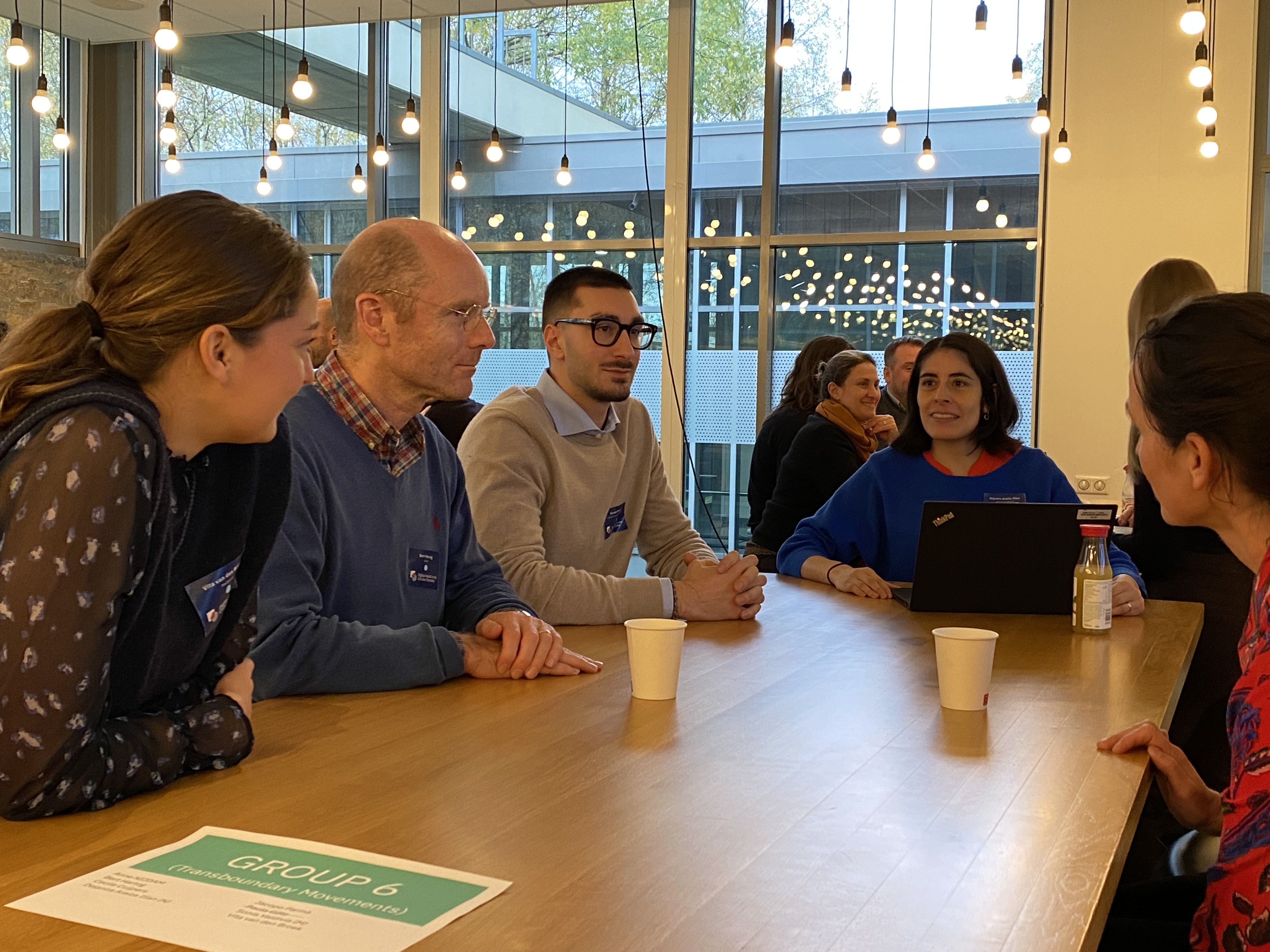
44 participants gathered at the Philips High Tech Campus in person and 34 people joined online for the project’s third annual event on 20 November.
DiCE Partners shared the latest progress from the DiCE project – from our brand new Circular Design Guide through early results from smart collection pilots to the value chain mapping of our endocutter case study. We also dived into circular business models for healthcare devices and looked at key policies that can help (or hinder) the shift to more sustainable systems.

Save the Date: DiCE Project Final Event
Join us for the DiCE Final Event, a full-day gathering bringing together industry leaders, policymakers, and innovators to explore the future of digital health devices in the circular economy. Through interactive sessions, live demos, and expert panels, the morning programme will take a deep dive into environmental impact, sustainable design, collection behaviour, and business modelling - giving attendees practical insights and real-world evidence from the DiCE pilots.
The afternoon will shift focus to policy, with a live dashboard simulation, a guided prioritisation exercise, and a high-level panel discussion to shape actionable recommendations for the road ahead.
We look forward to welcoming you and to rounding off the day with networking drinks!
The full agenda will be published soon!
Three Years of Progress: Translating
Circularity into Practice
As we wrapped up the third year of DiCE in 2025, we were excited to share the progress to make digital health devices more circular. Our work - so far - brought together researchers, manufacturers, hospitals, citizens and waste handlers to rethink how these devices are designed, used, and could be reused – all with the goal of reducing electronic waste and protecting the environment.
DiCE Response to Consultation and Call for Evidence for Upcoming Circular Economy Act
The Digital Health in a Circular Economy consortium (DICE Grant agreement ID: 101060184 & DOI 10.3030/101060184) welcomes the opportunity to provide input to the public consultation on the future Circular Economy Act (CE Act) and wants to highlight four points that support the circular transitioning of healthcare.
Broadening the CE Act Beyond Recycling: Embedding a Hierarchy of Circular Strategies
The Clean Industrial Deal recognizes that products must stay in circulation for as long as possible but its proposed measures place most emphasis on recycling. To achieve its objectives, the CE Act should extend its scope to other circular strategies. Hoveling et al. (2024a) mapped best circular practices and identified gaps for medical devices. Additionally, Hoveling et al (2024b) demonstrated that the waste hierarchy (in the Waste Framework Directive) may not yield the maximal environmental impact reduction and that a holistic revision of different strategies must be considered while delivering economic value (Rønn et al., 2023).
Guidance on circular priorities must be informed by life cycle assessments to target the most impactful areas. Without this, the CE Act risks locking in end-of-pipe solutions instead of improving upstream efficiency. Using an evidence-based approach would help the EU strengthen harmonisation and set a global benchmark for comprehensive circularity policy.
Harmonised Terminology
The CE Act should establish clear and harmonised terms & definitions to ensure consistent use. DiCE highlighted the value and need of a unified glossary to be able to communicate along the value chain. Hoveling et al (2024a) revealed that key actors were unclear of how circularity applies to them, and which strategies may be used. Therefore, DiCE’s consolidated Terms & Definitions can serve as the basis and be adopted by the CE Act for promoting a common understanding among value chain actors and regulatory bodies, reduce fragmentation, and support coherent application of the legislation.
Expanding CE Metrics Beyond Circular Material Use Rate (CMUR)
Relying only on the CMUR is too narrow to capture the full circularity. While useful, CMUR misses aspects like product design, repairability, durability, recyclability at end-of-life. To ensure comprehensive monitoring, the Act should add indicators such as recycled content, recyclability metrics (e.g. recycling rates, Jager et al., 2024) and repairability index, among others. This broader framework would track progress across product lifecycles more effectively, helping policymakers to target interventions where it matters and positioning the EU as a global leader in circularity monitoring.
Advancing Circularity and Social Sustainability through Awareness and Cooperation
The CE Act should focus on awareness-raising and fostering collaboration among actors and change agents as these are key enablers of circularity and social sustainability. Engaging all stakeholders including the public can boost medical device collection rates and speed up acceptance and adoption of circular practices2. Engagement can lower the (perceived) health & safety risks when circularising medical devices, and support social benefits such as skills development and the creation of new jobs, particularly within Europe (Valdivia et al., 2025).
Finally, citizen engagement is an essential component to enable closed loops. Integration of behavioural science through e.g. co-creation and motivational strategies is critical (Vermeylen et al. (2024)) to ensure that products designed for closed-loop systems are returned and can be recirculated.
Sharing is caring
Do you know someone in your local network who would be interested in the outcomes of DiCE? Click here to download our leaflet in Slovenian, Flemish or Spanish. English speakers are no exception either, find your copy here! All interested parties are also invited to register to the DiCE network!
Follow us on social media:


This project is funded by the European Union under the Horizon Europe Research and Innovation Programme. The contents of this newsletter only reflect the views of the project.
