|
|
|
|
Since we launched our audience has grown more than ten-fold, from 15m in our first 12 months to 175 million at the peak in 2020. It’s always gratifying to hear from some of these of readers.
When we launched the campaign last week a new donor wrote to say: “Thank you for all that you do. I love The Conversation for its topical, non-partisan, research-based articles.”
Our research-based articles today include an examination of the different views of two leading US climate scientists, how the oil and gas industry has lobbied delegates at COP28 to influence discussions, and a look at a study that suggests, counterintuitively, that exercise doesn't have any effect on longevity.
Newsletter subscribers have written in too. One spoke of how The Conversation’s articles provided an important baseline of facts in a world of spin: “It's a pleasure to read neutral, well-written and well-researched journalism (with full transparency for sources and references). It's refreshing and much-needed at a time when it's becoming increasingly worrying to observe the rise of partisan and unreliable reporting in the British media.”
And sometimes a supporter gives us some insight into their lives which underscores why what The Conversation does is important. Referring to the pandemic, the donor writes: "I was so very frightened at the start due to my health, my granddaughter was pregnant and my grandson had just been diagnosed with type 1 diabetes. Your truthful articles helped me find the right balance between being scared, being careful, and living. Thank you to everyone at The Conversation for their hard work."
Our editors work with leading experts to offer their research insights, carefully presented and made clear for our readers to learn from. Comments like this remind us why we do what we do, and that we're on the right track.
Thank you for reading. If you value our work, please consider making a donation today.
Donate
|

|
Jo Adetunji
Editor
|
|
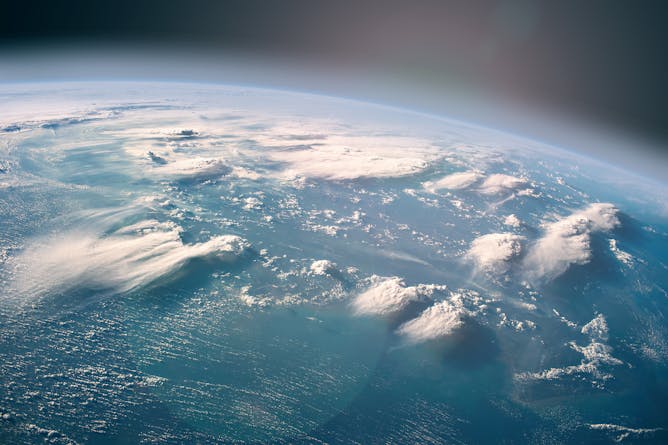
Vladi333/Shutterstock
Robert Chris, The Open University; Hugh Hunt, University of Cambridge
Is reaching net zero emissions by 2050 enough to halt warming? One leading scientist says no.
|

Sadi-Santos/Shutterstock
Alain Naef, ESSEC
Many oil and gas companies support a tax on carbon, even though they are significant emitters.
|

BGStock72/Shutterstock
George M. Savva, Quadram Institute
We should not rule out a direct link between exercise and longevity, but it may have a smaller role than previously thought.
|
Politics + Society
|
-
Klaus Dodds, Royal Holloway University of London
A longstanding territorial dispute could flare into open confrontation in South America.
-
Joseph Powell, University of Cambridge
Poet, actor, activist and musical luminary, Zephaniah embodied a challenge to the pervasive, racist stereotypes that have long tagged the Rastafari movement in the UK.
-
Timothy Noël Peacock, University of Glasgow
A climate of fear about international war inspired Eisenhower’s Atoms of Peace speech in 1953, his words about global peace seem relevant to global peace today.
-
John Strawson, University of East London
Israelis are still reeling after October 7 and many feel that the international community has turned against them.
|
|
Arts + Culture
|
-
Anna Walker, The Conversation
An oil-painted instant cult classic, the Game Awards nominees and more.
-
Joseph Powell, University of Cambridge
Poet, actor, activist and musical luminary, Zephaniah embodied a challenge to the pervasive, racist stereotypes that have long tagged the Rastafari movement in the UK.
-
Melanie Williams, University of East Anglia
The scandal that engulfed the tempestuous couple from the beginning fed a media and public obsession that lasted for the rest of their lives.
-
Emma Joy Reay, University of Southampton
The game’s expansive world thrives on creative play where every choice has a unique outcome depending on how you play.
-
Christophe Premat, Stockholm University
Ridley Scott’s film is not intended to paint a romanticised image of Napoleon, but rather immerse the viewer in the dilemmas and complexities of power.
|
|
Business + Economy
|
-
Simon Oldham, Royal Holloway University of London; Laura Spence, Royal Holloway University of London
If you must buy new gifts, here’s how to do it in the best way.
|
|
Environment
|
-
Richard Davies, Newcastle University
Undersea ‘fire-ice’ is vulnerable to leaking greenhouse gas, finds new study.
-
Hannah Watson, Lund University
Research shows providing food for birds not only stops them going hungry, it may help them fight off infection too.
|
|
Health
|
-
Hazel Flight, Edge Hill University
Ginger, a staple spice in this Christmas confection, may help reduce the risk of colds and help with digestion.
|
|
Science + Technology
|
-
Rachael Medhurst, University of South Wales
Cyber-scams tend to ramp up at this time of year, with criminals and scammers eager to exploit people’s generosity and excitement.
-
Hannah Watson, Lund University
Research shows providing food for birds not only stops them going hungry, it may help them fight off infection too.
|
|
|
|
| |
|
|
11 December 2023
•
Manchester
|

|
12 December 2023
•
Manchester
|
|
10 - 11 January 2024
•
Leeds
|

|
10 - 12 January 2024
•
Manchester
|
|
|
|
|
| |
| |
| |
| |
| |
|
|
|
|
|
|
|


