|
|
|
|
This week came the low-key but significant admission that COVID-zero was not going to be possible. At least, not possible in the big eastern states, where it is running rampant. But as Michelle Grattan writes, the acknowledgement that the pandemic is now endemic brings new considerations: what number of daily cases can we “live with”, in the modern parlance? How do we balance that with the inevitable strain on the hospitals, and the deaths
that will occur?
Given many states in Australia remain relatively COVID-free, it’s a vexed question. And the upshot is that the Australian federation is more fractured than at perhaps any time in its history. As we transition from one difficult situation to another, Grattan writes, the question will be: how much will people tolerate? What is the balance between health risks, and economic and social risks? These are the difficult, complex questions with which leaders must grapple in the weeks and months ahead.
|

|
Amanda Dunn
Section Editor: Politics + Society
|
|

Mick Tsikas/AAP
Michelle Grattan, University of Canberra
Victoria Premier Daniel Andrews’s raising of the white flag on “COVID zero” was greeted positively by the Morrison government and with relief by many among the public who are at the end of their tether.
|

Carlos Ortega/EPA
Paul Griffin, The University of Queensland
We shouldn’t be too worried about Mu. It’s reassuring that despite being around since January, it doesn’t seem to be outcompeting Delta.
|

Shutterstock
C Raina MacIntyre, UNSW; Greg Kelly, The University of Queensland; Holly Seale, UNSW; Richard Holden, UNSW
Most kids will be unvaccinated if schools in the two largest states re-open in term 4. There may still be community transmission, but there are measures we can take to shield kids from the virus.
|

Author Kate Murphy’s grandfather, Geoff Murphy, posing with children Pete, Lynne and Mick in 1955.
Author provided
Kate Murphy, Monash University; Alistair Thomson, Monash University
Australian fatherhood remains closely tied to ‘breadwinning’. History helps us to understand why.
|

Climate change made the devastating flooding in Belgium, Germany and other European countries in July 2021 more likely.
Anthony Dehez/Belga/AFP via Getty Images
Xubin Zeng, University of Arizona
A new attribution study finds human-caused climate change made Europe’s July floods more likely. What about Tennessee’s flooding? An atmospheric scientist explains how scientists make the connection.
|

Hoda Afshar’s exhibition Remain, The Substation, Melbourne, 2019.
Photograph by Leela Schauble. Courtesy the artist and The Substation, Melbourne
Daniel Palmer, RMIT University; Martyn Jolly, Australian National University
From the Intercolonial Exhibition in 1866 to a landmark show, a century later, in which Aboriginal photographers displayed their works, photography has shaped the nation.
|

Shutterstock
Roderic Broadhurst, Australian National University; Matthew Ball, Australian National University
One study found 80% of darknet traffic on Tor went to sites hosting unmoderated porn and child sex abuse material.
|
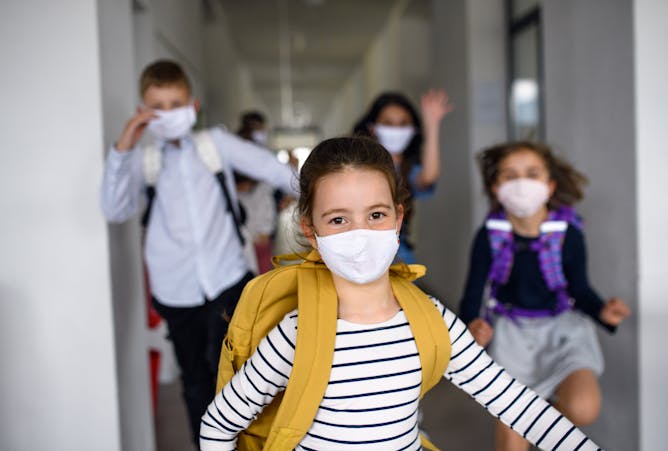
COVID-19 in the classroom: how to go back to school safely.
Halfpoint/Shutterstock
Gemma Ware, The Conversation; Daniel Merino, The Conversation
Plus, new research into what happens in our brains when we daydream. Listen to The Conversation Weekly podcast.
|
Arts + Culture
|
-
Ted Snell, Edith Cowan University
Perth band The Triffids were indie pioneers, and their charismatic vocalist David McComb, who died at 36, wrote lyrics imbued with the Western Australian landscape. A new film charts his story.
|
|
Science + Technology
|
-
Jair Garcia, RMIT University; Adrian Dyer, RMIT University; Mani Shrestha, Bayreuth University
Plants use their flower colours for ‘brand recognition’ among insects - but also work together to attract more pollinators.
|
|
Environment + Energy
|
-
Victoria Haynes, University of Sydney; Dale Dominey-Howes, University of Sydney; Emma Calgaro, University of Sydney
The research, focused on the Jordan Springs estate in Western Sydney, found houses were built close together and made from materials which exacerbate hot weather.
-
Elliott Dooley, University of Newcastle; Matt Hayward, University of Newcastle
Meet the parma wallaby: for decades it was presumed extinct, until it turned up in New Zealand. Today, its failure to charm Australians may have doomed it – for good.
|
|
Business + Economy
|
-
Richard Holden, UNSW
OzSAGE brings together infectious disease and public heath experts, engineers, architects, economists and social scientists. Its first recommendations deal with ventilation and the measures that will have to accompany widespread vaccination.
-
Dilan Thampapillai, UNSW; Sarah Steele, University of Cambridge
Strip away the sexy marketing and what you have is just another digital platform shifting legal responsibilities and risks.
-
Ranjana Gupta, Auckland University of Technology
Under the uncertain economic conditions of the pandemic, a voluntary disclosure program for overseas income could protect New Zealand’s small businesses — and promote tax honesty at the same time.
|
|
Politics + Society
|
-
Paul Williams, Griffith University
Mavericks have existed since the earliest days of Australian politics. And they find a natural home in Queensland.
-
Erin O'Donnell, The University of Melbourne; Professor Marcia Langton, The University of Melbourne; Sue Jackson, Griffith University
History is being repeated with the Northern Territory government finding ways to stop Aboriginal people from gaining access to water to use or trade.
|
|
Health + Medicine
|
-
Nial Wheate, University of Sydney; Andrew McLachlan, University of Sydney; Slade Matthews, University of Sydney
Side-effects for this unproven and potentially dangerous treatment range from vomiting and diarrhoea to seizures and a coma.
-
Peta Stapleton, Bond University
You might have heard of EMDR therapy recently after Prince Harry said he’s been using it.
|
|
Education
|
-
Anna Sullivan, University of South Australia; Andrea Reupert, Monash University; Michele Simons, Western Sydney University; Neil Tippett, University of South Australia; Simone White, Queensland University of Technology; Stuart Woodcock, Griffith University
Newly qualified teachers who aren’t involved in a good induction program are more likely to leave the profession within their first five years of teaching. And most don’t get these inductions.
|
|
| |
Featured jobs
|
|
|
| |
| |
| |

|
| |
| |
| |
Featured Events & Courses
|

|
New South Wales, 2009, Australia — University of Technology Sydney
|

|
UNSW Sydney, Sydney, New South Wales, 2052, Australia — UNSW
|
|
|
UNSW Sydney, Kensington, New South Wales, 2052, Australia — UNSW
|

|
Online, Melbourne, Victoria, 3800, Australia — Monash University
|
|
|
|
| |
| |
| |
| |
| |
|
|
|
|
|
|
|