No images? Click here


Annual Event | 1 September 2025, Geneva
DPP implementation in Europe and beyond | Challenges and opportunities
Join us for an engaging afternoon dedicated to exploring the role of Digital Product Passports (DPPs) in driving circularity across value chains on 1 September, in Geneva!
The event will feature presentations on the CE-RISE Information System, insights into measuring circular strategies and their social, economic, and environmental impacts, as well as real-world applications, including a case study from Viessmann Climate Solutions.
The panel discussion will address the global outlook on DPP adoption, regulatory alignment, and the perspectives of both large corporations and SMEs.
Don’t miss this opportunity to connect with experts and stakeholders shaping the future of digital circular solutions in Europe and beyond.
(This event is organised in the framework of WRF'25.)
Take the Consumer Survey on Circularity Strategies Communication!
The survey is intended for customers who purchase and use technical ICT products – particularly smartphones, laptops, and tablets. As a potential user of the information service we are developing, your input is essential to the success of this project.
This questionnaire has been designed to gather consumer feedback on how circular strategies are communicated, with a particular focus on how these messages influence customer trust and loyalty.
Your responses will help us improve how we communicate circularity in ways that are clear, trustworthy, and engaging for consumers. The survey will take approximately five minutes to complete, and your insights will play a crucial role in shaping the direction of the research.
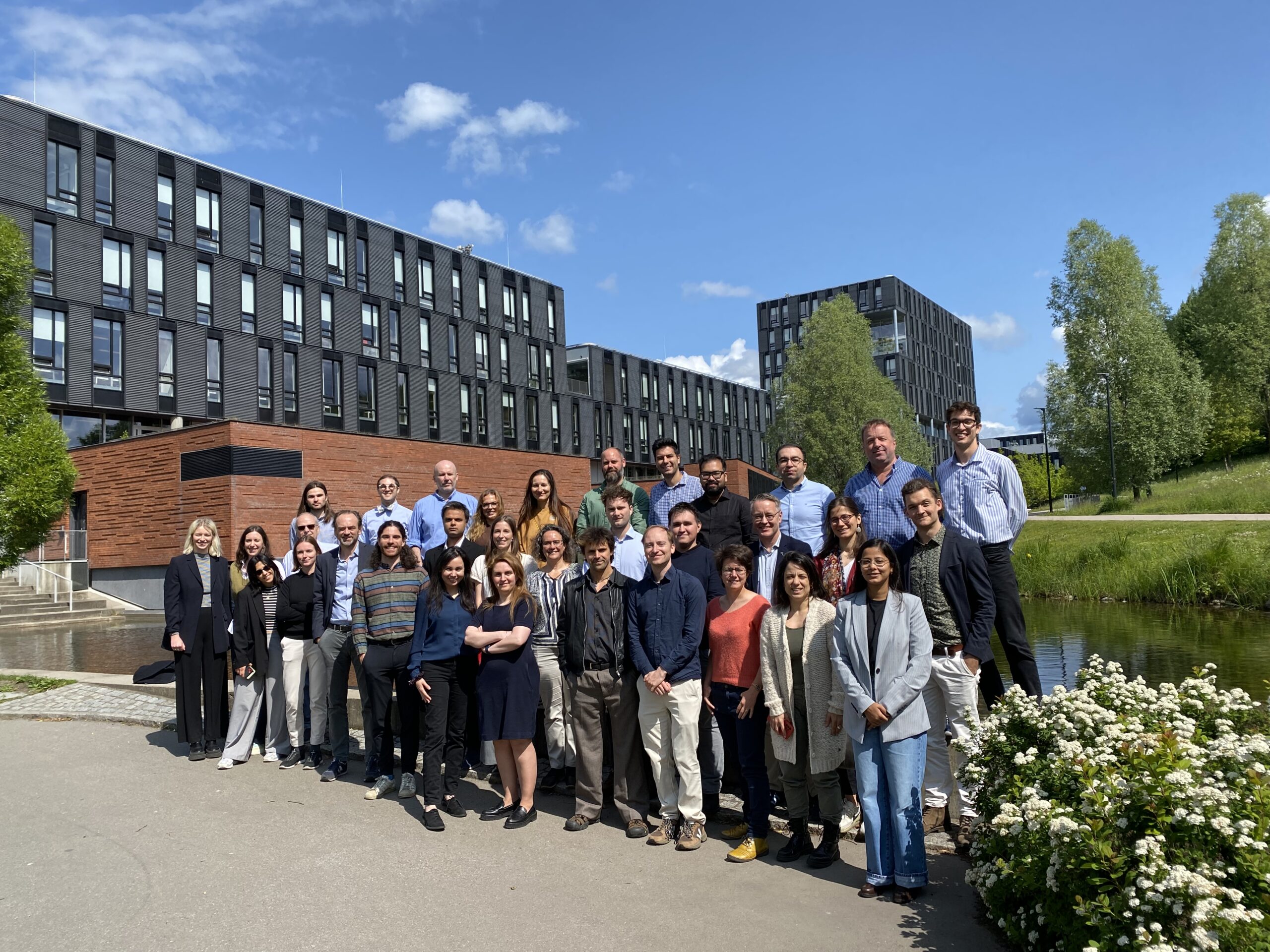
Consortium Meeting
The CE-RISE consortium recently convened in Oslo for its bi-annual project meeting, bringing together nearly 40 experts and partners to review progress and align on future directions for the Circular Economy Resource Information System. Over two days, participants explored key topics such as module interdependencies, RE-criteria implementation, RE-indicators, Product Environmental Footprint calculations, and mock Digital Product Passports. The meeting featured technical workshops on data interoperability, AI-supported data modelling, and potential integration with Granta MI, as well as discussions on training materials and the system’s role in ICT reuse and refurbishment. The event concluded with a compelling case for Digital Product Passports and a look ahead to the CE-RISE annual event in September.

The CE-RISE Information System: A Modular, Ontology-Driven Framework for Interoperable, High-Quality, and Compliant Value-Chain Data Integration
At its core, CE-RISE serves as a bridge between diverse data sources, analytical tools, and decision-making applications. What distinguishes it from conventional information systems is its modular architecture, reinforced by an internal ontology that ensures interoperability, data quality, regulatory compliance, and analytical robustness across all components.
To realise this vision, CE-RISE is designed to integrate data from a wide array of systems, including Enterprise Resource Planning (ERP) platforms, analytical databases, and decentralised technologies such as blockchain-enabled DPPs.

EU Digital Product Passport (DPP) and Global Supply Chains: Implications for Third Countries
For third-country suppliers - any of whom provide raw materials, components, or finished products for EU markets - the DPP presents both challenges and opportunities.
- Compliance with EU sustainability standards
- Increased data and reporting demands
- Strengthening market access and competitiveness

Formal Reuse of WEEE in the UK
In a 2024 research study by waste management company FCC, it was estimated that that 84% of British shoppers buy second hand items.
The reuse network in the UK of which Ecogenesys (formerly REPIC) is a member, calculated that they facilitated the reuse of 2.55 million items of furniture or electrical items in the UK in 2024. However, this is just a portion of the estimated total, as not all instances of reuse are captured in official statistics, as detailed below.
Given the scale of its UK operations, Ecogenesys is involved in a number of repair centres adjacent to Household Waste Recycling Centres across the U.K. and has partnerships with reuse facilities across the country. These centres are often set up with links to local community groups or charities, however there is no central reporting system for sales of electrical items via charity shops and reuse centres. This lack of national-level data is compounded by online peer-to-peer sales via platforms such as eBay and Vinted, and further still by gifting.
How Digital Product Passports (DPPs) Help Businesses Comply with Regulation
As regulatory requirements surrounding sustainability, recycling, and product safety become more stringent, companies must invest in traceability solutions to ensure compliance. By providing a trustworthy and easily accessible record of a product’s lifecycle - from raw materials to disposal - digital product passports enable businesses to track compliance with various mandatory and voluntary requirements that support the goal of reduced emissions and greater sustainability.
Digital product passports are more than just a tool for regulatory compliance; they are also a critical enabler of transparency, trust, and innovation in the supply chain. As more countries adopt regulations that require businesses to document and report on their environmental impact, DPPs will become an essential part of meeting these obligations and driving the transition towards a more sustainable, circular economy.
What the Basel Convention’s New Amendment Means for the ICT Reuse Industry
For SMEs (small and medium enterprises) who are building Digital Product Passports to support transparency in ICT value chains, the outcome of the R14 debate is highly relevant. DPPs rely on clear distinctions between used products and waste to function effectively. Therefore, in anticipation of the outcomes of BC COP-17, a thoughtful approach to integrating R14 with the correct definitions and provisions will be essential.
From Data Gaps to Data-Driven Sustainability: LCA Meets DPP
A product-specific, comprehensive, PEF-compliant LCA requires vast amounts of accurate data, which is often unavailable or inconsistent across value chains. In many cases, primary data gathering is not an option (e.g. because of time or resource constraints, lack of communication between value chain actors, or the absence of source information). Therefore, LCA practitioners regularly fall back on more generic secondary datasets. Such datasets often do not accurately reflect the specific process in the value chain under study, e.g. lacking a specific location or using a more generalised process in lieu of a specific one. In this way, a lack of available primary data negatively affects the accuracy and increases the uncertainty in the study’s results.
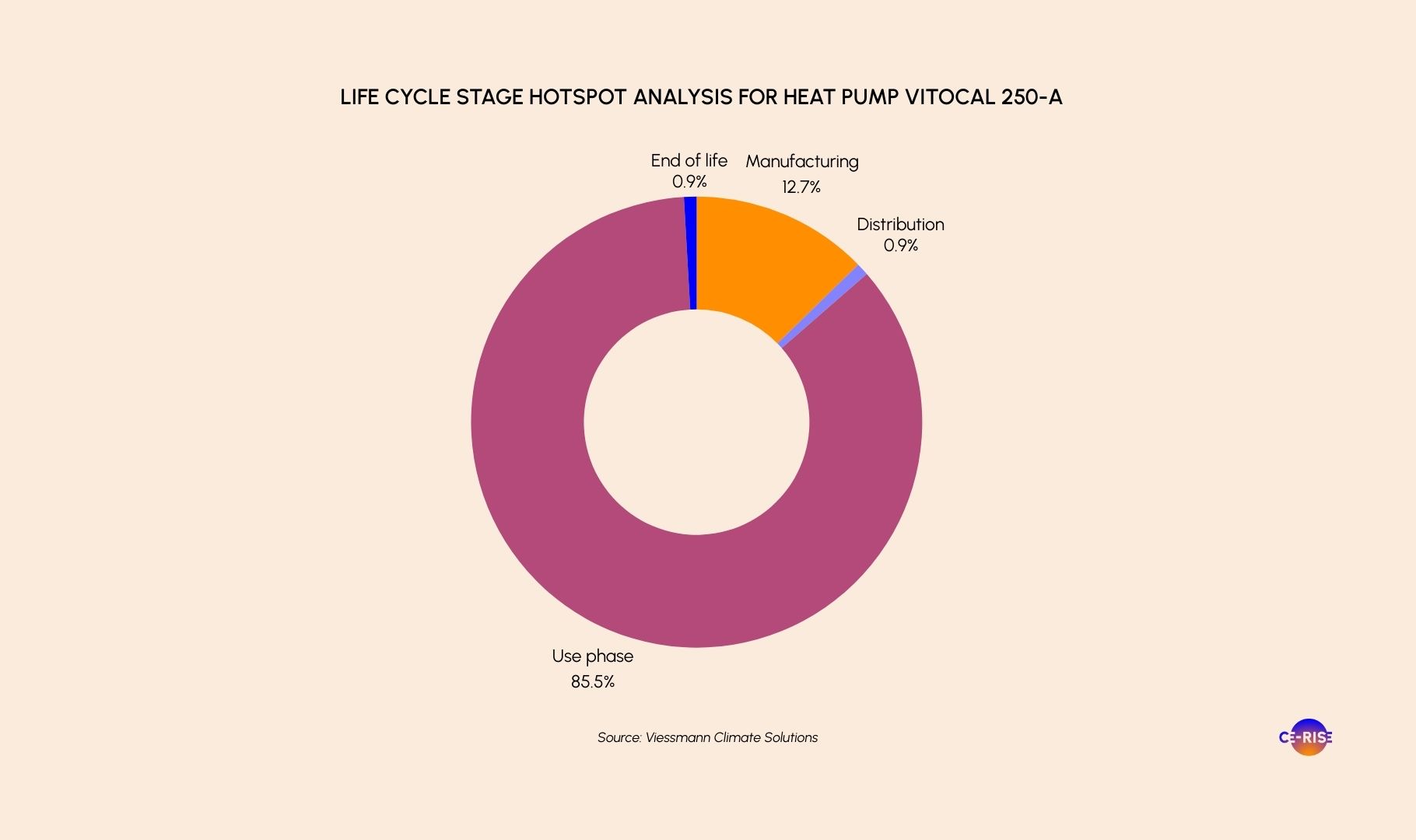
Embodied Carbon – The Next Frontier in Heating Sector Decarbonisation
A life cycle perspective is imperative when decarbonisation of heat is analysed. While electrification reduces the GHG (greenhouse gas) emissions of end-user heating needs significantly, the use of primary energy is also brought down. This isn’t only because heat pumps are more energy efficient but also “smart” enough to take heat from the surroundings while boilers burn fuel with less efficiency.
Looking at the pledges of EU member states – the electric grid is expected to be further decarbonised resulting in a rather optimistic outlook on reduced CO2 emissions.
The Strategic Role of the Digital Product Passport in Italy
As Europe accelerates its transition toward a circular economy, the reuse of Waste Electrical and Electronic Equipment (WEEE) is becoming a key strategy to reduce pressure on raw materials, cut carbon emissions, and generate new social and economic opportunities. In this context, the RISE Laboratory of the University of Brescia presented a comprehensive study in November 2024 (soon available online as well), aimed at exploring the potential of the reuse sector in Italy, while drawing useful comparisons with the French model of Envie Rhône-Alpes -one of the most advanced initiatives in this field.
The Environmental Footprint
The environmental footprint is a key metric used to quantify the impact of human activities on the planet, serving as a crucial tool for assessing sustainability, guiding policy decisions, and promoting responsible resource management. It encompasses various factors such as carbon emissions, water use, land degradation, pollution, and resource depletion. From these metrics, different footprints such as carbon, water, and energy footprints can be calculated. The ecological footprint specifically measures the biologically productive land required to sustain a population’s consumption and absorb its waste.
Unlocking Trust and Value: How Digital Product Passports Benefit Consumers Buying Refurbished ICT
Digital Product Passports, supported by Product Environmental Footprint data, are transforming how consumers purchase refurbished ICT. With transparency, measurable sustainability, and certified trust, DPPs enable users to make informed, eco-conscious decisions. As adoption expands globally, DPPs promise not only to support responsible buying but also to drive the future of circular, low-impact digital technology.
Leveraging Digital Product Passports (DPPs) to Drive Sustainability and Innovation in Producer Responsibility Organisations (PROs)
Despite their critical role, PROs face significant challenges, including data composition scarcity, inefficiencies in sorting processes, and difficulties in tracking products reaching their end of life. DPPs can address these challenges by providing standardized, real-time data on electronic products, thereby supporting the transition to a more resource-efficient system.
A major barrier to efficient recycling is the lack of precise information on products. Without accurate information, recyclers struggle to extract valuable material effectively. DPPs can provide real-time insights into materials, hazardous substances, and design specifications, allowing PROs to:
- Identify products containing critical raw materials (e.g., rare earth metals) for targeted sorting during and/or following initial collection.
- Improve sorting efficiency by categorizing products based on material composition, hazardousness and recyclability.
- Providing insights in the processing of electronics for establishing treatment protocols and conditions with contracted recyclers and refurbishers.
Have your say!
Stakeholders’ contributions are crucial for the project! Our goal is to create a network that will provide feedback to enable us to understand end user needs, collect data, test outcomes and raise awareness through sharing results.
Follow us on social media:


This project is funded by the European Union under the Horizon Europe Research and Innovation Programme. The contents of this newsletter only reflect the views of the project.