
NEWSLETTER
Sixth edition - July 2026
A message of thanks from the DigiCare4You project coordinator
As DigiCare4You comes to a close I would like to take a moment to reflect on what we have achieved together and, most importantly, to express my sincere gratitude to everyone who made this project possible.
Over the past few years, DigiCare4You has worked towards an ambitious goal: improving the early prevention and management of type 2 diabetes (T2D) and hypertension (HTN) through a person-centred, community-based approach supported by digital tools. Together, we sought to identify individuals at risk, support healthier lives, strengthen disease management and explore how innovative health interventions can be scaled and transferred across different healthcare settings and countries.
None of this would have been possible without the dedication, expertise, and collaboration of our consortium. I would like to extend my heartfelt thanks to our 16 partner organisations across Europe, Australia and the United States. Their commitment, knowledge and perseverance have been the driving force behind every milestone achieved throughout the project.
I would also like to thank the members of our International Stakeholder Advisory Board and the many external stakeholders who generously shared their expertise through our Capacity Building and Recommendations Development (CBRD) Workshops. More than 90 experts, policymakers, healthcare professionals, researchers and community representatives contributed valuable insights that have helped shape our roadmap for the future scale-up and sustainability of the DigiCare4You approach.
Our gratitude also goes to the schools, healthcare centres, municipalities and local communities that welcomed the project and embraced its activities. Their openness, engagement and support were essential in bringing DigiCare4You from concept to reality.
To everyone who followed our journey through our newsletters, social media channels, events and activities across Albania, Bulgaria, Greece and Spain, thank you for your interest, encouragement and continued support. Sharing knowledge, raising awareness and building dialogue have been central to the project's mission, and your engagement has helped amplify its impact.
Most importantly, I would like to thank the more than 1,200 participants who took part in DigiCare4You. By choosing to participate, engage with the intervention and entrust us with your health information, you made this research possible. Your contribution extends far beyond this project. The knowledge generated through your participation will help inform future health interventions, strengthen prevention efforts and support the adoption and scale-up of approaches that can improve health outcomes for citizens across Europe and beyond.
While DigiCare4You may be reaching its conclusion, the lessons learned, partnerships built and knowledge generated will continue to shape future efforts in T2D and HTN prevention and management. Together, we have taken an important step towards creating healthier communities and more resilient health systems.
Prof. Yannis Manios | Project Coordinator, DigiCare4You
Key results from the project
DigiCare4You successfully implemented a large-scale community screening effort, engaging families across Albania, Bulgaria, Greece and Spain
The results from the two-stage screening procedure show that nearly 34,500 families were informed about the DigiCare4You programme through an outreach via schools and healthcare centres across Albania, Bulgaria, Greece and Spain. More than 11,000 families (33%) agreed to participate in the first stage screening procedure, which resulted in just under 20,000 parents/caregivers completing the FINDRISC questionnaire. Among the screened parents, just over 5,000 (26%) individuals were identified as high risk for T2D, and over 2,500 of them completed the second stage screening, including glucose, blood pressure and anthropometric testing.
The two-stage screening procedure identified people living with intermediate hyperglycaemia and new cases of T2D
Among those completing the two-stage screening, over 1,000 individuals (40%) were identified with intermediate hyperglycaemia (IH, also known as prediabetes) while just over 150 individuals (6%) were identified as living with undiagnosed T2D, and nearly 450 individuals had a pre-existing T2D diagnosis. Of those identified with IH and T2D, nearly 850 adults with IH and slightly under 400 adults with T2D agreed to participate in the 24-month intervention. The total number of people enrolled in the DigiCare4You programme is just over 1,200 adults and 1,300 children.
Participants' clinical data from the two-year intervention show encouraging results
Individuals confirmed with IH or T2D were invited to join the intervention over a 24-month period. A comparison group received enhanced standard care (ESC). Participants in both groups received regular face-to-face follow-up throughout the study (every 3–6 months for those living with T2D and every 6–12 months for those with IH). The ESC group received individual health results, healthy lifestyle recommendations, and standard educational materials. The DigiCare4You intervention group additionally received three intensive counselling sessions during the first eight weeks, including structured lifestyle counselling, SMART goal setting, personalised meal plans, and access to mHealth tools that supported self-management between visits.
The DigiCare4You intervention demonstrated encouraging results in the prevention and management of T2D and HTN. Participants experienced improvements in glucose control, weight management and healthy lifestyle behaviours over the two-year study period.
Notably, participants in the intervention group were less likely to progress to T2D, more likely to return to normal glucose levels, and more likely to achieve clinically meaningful weight loss than those receiving standard care. Positive changes were also observed in blood pressure, cholesterol levels, diet, sleep and physical activity habits.
Overall, these results confirm that DigiCare4You is facilitating meaningful behavioural change and measurable clinical improvements.

Cost-effectiveness evaluations show the DigiCare4You intervention is likely to be cost-effective
Within the DigiCare4You project, two health economic evaluations were conducted for Albania, Bulgaria, Greece and Spain. Firstly, a cost-effectiveness analysis evaluating the long-term value for money of the intervention and secondly, a budget impact analysis evaluating the financial consequences of national implementation of the intervention. The final analysis provided the following conclusions:
The DigiCare4You intervention was likely to be cost-effective in the long-term compared to the ESC group in Albania, Bulgaria and Greece when targeting both adults with IH and T2D. In these countries, cost-effectiveness was most favourable when targeting adults with IH. In Spain, results were more mixed when targeting both adults with IH and T2D, however, cost-effectiveness results improved when targeting only adults with T2D.
The budget impact analyses revealed a required upfront investment in the first year of implementation for all countries, followed by savings over time through averted diabetes-related complication costs.
Latest activities from the project
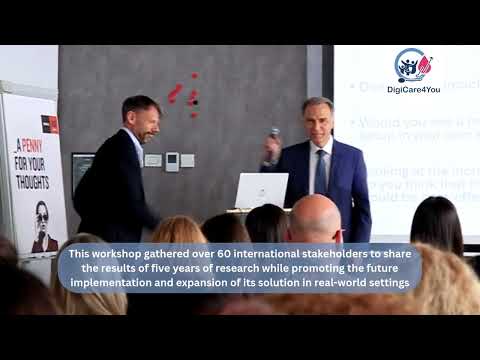
Second Capacity-Building and Recommendations Development (CBRD) workshop took place on April 29, in Brussels, Belgium
A core objective of the DigiCare4You project is to assess the scalability and transferability of the solution. The second CBRD workshop brought together over 60 experts, including members of the International Stakeholder Advisory Board, project partners and other stakeholders. We presented the key results from the two-year intervention and presented the first draft of the 'DigiCare4You Roadmap for Scale-up'. We'd like to thank everyone who participated in the workshop for their valuable insights and expertise that will feed into the final version of the 'Roadmap'.

DigiCare4You webinar explores how digital health can scale from pilot to policy
On May 19, DigiCare4You hosted a webinar to explore how integrated digital solutions, such as DigiCare4You, can move beyond pilot implementation studies and become sustainably embedded within healthcare systems.
- Read more about the webinar here.

New article published in mHealth
Consortium partners published an article in mHealth investigating user preferences for the design and features of digital health apps used to support the self-management of chronic conditions and healthy lifestyles.
The results suggest that mHealth apps should support shared goal-setting with healthcare professionals (HCPs), limit notification and data entry burden, and focus on physical health monitoring.

In case you missed it
Learn more about the first and second CBRD workshops through our highlight reels
Tips for healthy nutrition to help prevent and manage T2D and HTN - now translated in all languages!
What we eat can play a crucial role in the prevention and management of chronic conditions like T2D and HTN. To manage blood pressure and blood glucose levels, it's important to limit foods high in saturated fat, sugar, and salt. Explore more about what you should eat, and what the World Health Organization recommends in our newly translated videos in Albanian, Bulgarian, Greek and Spanish

Meet Christina - project implementer in Greece
Behind every successful health intervention are the HCPs who bring it to life. We spoke with Christina Pelekanou, a DigiCare4You implementer and dietitian–nutritionist from Greece, about her experience supporting families throughout the programme.

Understanding HTN - now translated in all languages!
Hypertension, commonly known as high blood pressure, affects 1.28 million adults around the world. Forty-six per cent of adults are unaware that they have hypertension, and only 21% of those diagnosed have their condition under control. But what is HTN exactly, and what are the risk factors?

Interview with consortium member from METEDA
How do you develop digital health tools that can be used across different countries and healthcare settings? We spoke with consortium member Sandro Girolami from METEDA about the development and adaptation of the DigiCare4You digital tools, the challenges encountered during implementation, and how these technologies support people at risk of, or living with, T2D and HTN.
- Find the full interview here.
Video with tips and recommendations for being physically active - now translated in all languages!
Regular physical activity is one of the best investments you can make in your health. It can help prevent T2D and HTN reduce stress, improve mood, and support healthy brain function. Need some motivation to get started? Watch our video for simple tips to help you get moving.

Meet our participants!
At the heart of the DigiCare4You project are our participants. We spoke with a few of them in Greece to hear about their experience of participating in the intervention and their motivations and challenges. Their interviews are available in audio and written formats.
- Meet Stella: audio interview or written interview
- Meet Zacharias: audio interview or written interview
- Meet Ilia: audio interview or written interview

A closing word from the DigiCare4You project manager
When DigiCare4You was launched in 2021, it set out to answer a question that seems simple but is profoundly difficult to answer in practice: can a digitally supported, community-based screening and intervention model meaningfully reduce the risk of T2D and HTN in people who need it most?
Five years on, as we reach the close of this Horizon2020 research project journey, I can say with confidence that the answer is yes — and in ways that matter beyond the numbers.
The clinical and behavioural outcomes achieved across our participating countries speak for themselves. But what I am perhaps most proud of is who we reached. Digital health interventions have long struggled to engage individuals from lower socioeconomic backgrounds, older age groups, and communities with limited health literacy — precisely those at greatest cardiometabolic risk. DigiCare4You was designed from the outset to address this gap, and our results demonstrate that a carefully co-designed, person-centred programme can indeed reach and meaningfully support these populations.
Equally encouraging was the warm welcome we received at the second International Capacity Building and Recommendations Development Workshop in Brussels in April 2026. Bringing together policymakers, public health representatives, and implementation experts from across Europe and beyond, the workshop confirmed something our consortium had long believed: that the DigiCare4You model has real potential for wider uptake. The enthusiasm expressed by policymakers regarding the feasibility of scaling this approach within their national health systems reflected a genuine recognition that community-based, digitally-enabled prevention is both viable and necessary.
None of this would have been possible without the vision and leadership of Professor Yannis Manios, who as Project Coordinator shaped the scientific and strategic direction of DigiCare4You from its inception. My sincere thanks go equally to our consortium partners, the HCPs and community workers who delivered the intervention on the ground, and above all, the participants themselves, who trusted us with their time and their health.
As DigiCare4You formally concludes, its work does not. The evidence we have generated, the networks we have built, and the policy conversations we have opened will continue to inform how Europe — and beyond — approaches the prevention of chronic disease. That continuity is, in many ways, the most meaningful outcome of all.
Eva Karaglani, MSc, PhD | Project Manager, DigiCare4You
Never miss a post again and join us on social media
DigiCare4You is ending, but our socials will live on -DigiCare4You is on YouTube, Facebook, X and LinkedIn.
The DigiCare4You accounts on Facebook, X and LinkedIn promote the latest news of the project and consortium partners as well as the latest updates and events on T2D, HTN and digital technology in health. We also have the DigiCare4You YouTube channel which hosts the video content created for the project. Head over to our YouTube channel to watch our latest videos and subscribe to our channel to see our new content as soon as it's published!


About us
DigiCare4You sought to improve the early prevention and management of T2D and HTN.

The project aimed to do so by identifying parents/ caregivers already living with, or at risk, of diabetes and hypertension and secondly, developing a person-centred, community-based solution, that uses digital tools, to prevent the development of these conditions and/or improve their management and prevent and delay complications.
Furthermore, the project aimed to assess the scalability and transferability of the DigiCare4You solution, within the implementation countries and beyond. The implementation study was conducted in two high-income countries (Greece and Spain) and two middle-income countries (Albania and Bulgaria).

For more information visit our website and social media pages


 |