Maiyoo Keyoh announce a new IPCA, hiring an Economic Lead to join our Climate Team, and more!
No images? Click here

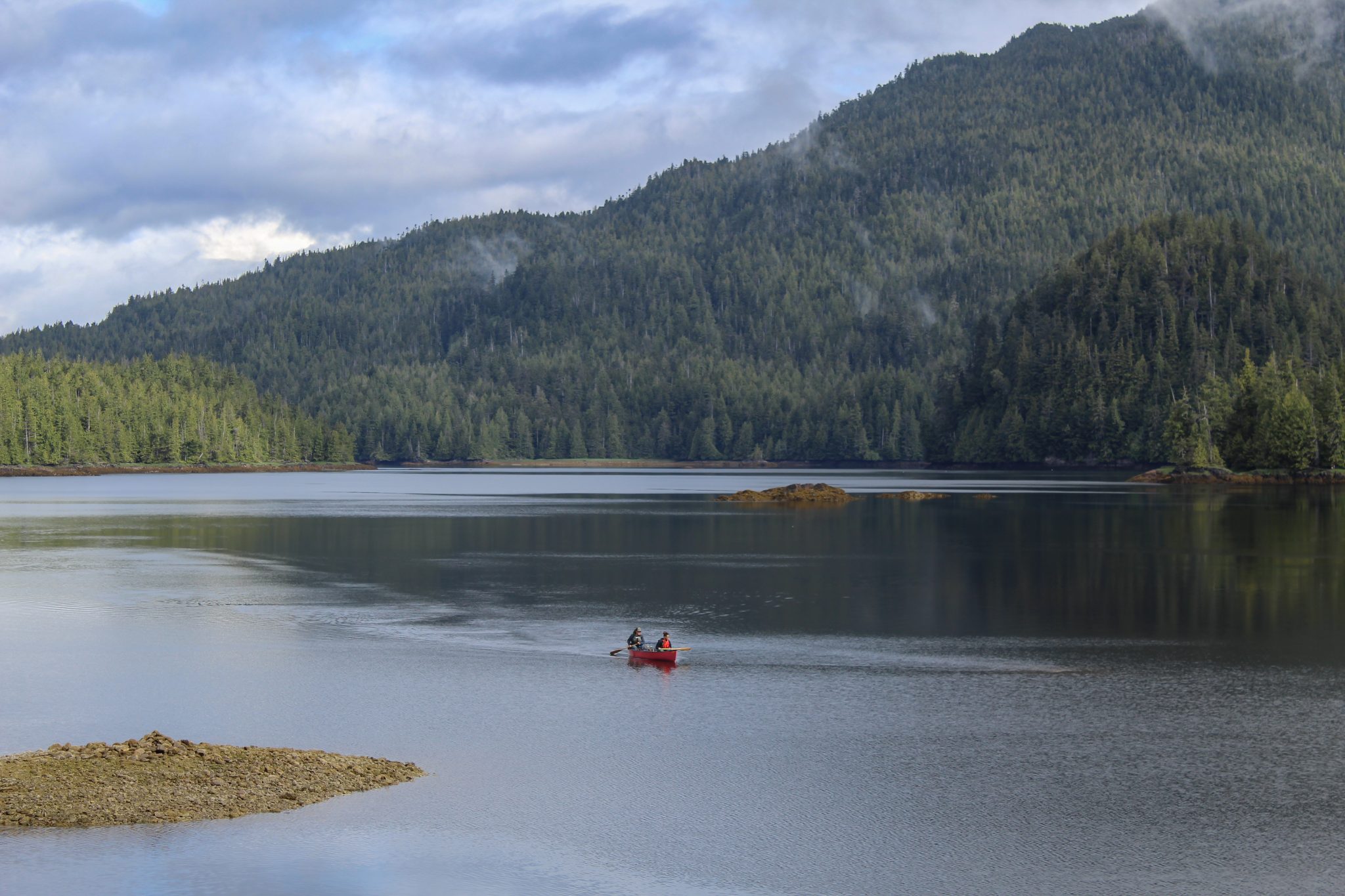
A student and a teacher from Charles Hays Secondary School in Prince Rupert collect Dungeness crab for a hands-on lesson provided by Ecotrust Canada. (Matina Ressl/Ecotrust Canada photo)
From the classroom to the sea: connecting marine science and careers in northwest BC
Over six years ago, a friend, who was a high school science teacher with a vision, asked me to connect her with someone from our Community Fisheries program. Vania Ling knew that I worked at Ecotrust Canada, a non-profit organization known locally for its long-standing fisheries observer program. She was hatching a specialty marine science course for Grade 12 and wondered if our fisheries team would be interested in teaching the students about crab life cycles, biology, and how our observers handle and collect data aboard vessels.
I loved the concept of place-based experiential learning, and hoped it might attract younger generations to fishing careers (60% of commercial fish harvesters in BC are 45 years of age or older). I put her in touch with Katy Bond, our Program Manager for Area A and North Coast Salmon.
“That opened the doors for me in terms of connecting with more of the community,” Ms. Ling said. “Every year, we learn from Ecotrust Canada about how to observe and record measurements, like size and condition, on the crabs, which is done outdoors by the shore. It's one of the students’ favourite activities, being out in nature and learning with friends.”
What started as a spitball conversation has now evolved into skill-building that introduces students to future career paths, and enriches their knowledge of the fishing and marine industries in northern B.C.
Over the years, the high school’s marine science course has expanded to include many more community partners. Ecotrust Canada’s fisheries team has been invited back to the outdoor classroom annually, and the program now has 40 students divided into two classes, studying fish, invertebrates, marine mammals, and, new this year, algae and seaweed.
“It’s so important to have outreach with the youth,” said Katy. “That’s the future of the fishing industry. It’s good for them to know what career paths are available in town. There are so many jobs, not just fishing, but also in fish processing, transportation, Nation-led fisheries programs, the Department of Fisheries and Oceans, boat repairs, bait packaging, and so on.”
Former students have become fish harvesters, deckhands, fish and crab processors, or are furthering their education in environmental and sustainability studies with the aim of working on the water.
What started as a conversation between friends has grown into skill-building and career pathways for youth across the region.
New & Noteworthy

Maiyoo Keyoh’s IPCA
In the central interior of BC, Keyohwhuduchun Petra A'Huille declared their 20,461-hectare Indigenous Protected and Conserved Area (IPCA) over the Maiyoo Keyoh, protecting a system of natural forests, waterways, and a living cultural landscape within their unceded ancestral territory, and sustaining the Dakelh land governance system that has cared for them since time immemorial.
She declared it under Dakelh law as Keyohwhuduchun (hereditary Chief) Petra A'Huille. Ecotrust Canada is supporting their work to protect their remaining ancestral forests and revive the living wealth of the logged ones.
This work is crucial. Both the BC and federal governments have committed to protecting 30% of Canada's lands and waters by 2030. Maiyoo Keyoh’s IPCA is exactly the kind of Indigenous-led initiative that makes that target achievable and builds climate resilience.
Learn more in our recent blog “Caring for the Land: How the Maiyoo Keyoh Are Building Climate Resilience in BC.”
The Maiyoo Keyoh IPCA is documented on the UNEP-WCMC ICCA Registry — one of only two sites in Canada — joining the global record of territories conserved by Indigenous peoples. Explore the case study.
Five years after the heat dome, it’s time to enact a right to cooling
On the anniversary of the deadly heat dome in BC, Senior Program Manager Josephine Schrott recalled her own experience for an opinion piece published in the Times Colonist. In her work supporting energy-efficient home renovations, she’s heard countless stories about the struggles that unsafe indoor temperatures continue to impose, as well as the massive positive impact that good cooling, heating and ventilation systems have on people’s comfort and health.

Please join us in welcoming three talented new team members, hired through the Canada Summer Jobs program to strengthen our work on housing, food systems, and storytelling along the BC coast.
Breanna Spence, Housing Policy Analyst with our Indigenous Homelands program, is supporting research and policy initiatives related to Indigenous housing, community toolkit development, and Indigenous-led approaches to land and housing governance.
Jayne Stevens, Greenhouse and Gardening Assistant, is back again this year working with our Food Systems team in Prince Rupert, helping with harvests and building greenhouses.
Pia Khaira, Communications Specialist in Prince Rupert, is supporting both our fundraising and storytelling efforts.
Welcome to the team, and thank you to Canada Summer Jobs for making it happen.
We’re hiring an Economic Lead to join our Climate team
We are seeking an experienced professional to support our work with forestry-dependent Indigenous communities, mainly in the central interior of BC. The Economic Lead will bring technical and analytical knowledge about forestry economics, experience and curiosity around nature-based financing, and familiarity with forest inventory, policy, and legislation. This role supports rural, remote, and Indigenous partners in developing proposals and projects that advance economic transition in support of community and conservation goals.
Apply by August 25.
Where We Work

The sockeye salmon season is well underway on the north coast of BC at the mouth of the Skeena River. Our salmon observers spent the day hopping from one gillnet boat to another, recording data on the catch. During our short stays on these boats, we saw how much skill and effort go into every catch, and how much this fishery means to the harvesters who rely on it.
(Shannon Lough/Ecotrust Canada photo)
P.S. What did you think of our blog this month?

Proving the Possible
Ecotrust Canada works with rural, remote, and Indigenous communities toward building an economy that provides for a healthy and resilient natural environment; sustainable and abundant energy, food, and housing; prosperous and meaningful livelihoods; and vibrant cultures and inclusive societies. We call this approach, building an economy that provides for life.
Thank you for your continued support!
The Ecotrust Canada Team


