4,000lbs of potatoes, a day for reconciliation, and a new report on electrical demand
No images? Click here


Big Cedars Trail, on the traditional territory of the Nuxalk Nation in Bella Coola, BC, is an ancient grove with culturally modified cedar trees. (Shannon Lough, Ecotrust Canada)
An open-access toolkit for communities exploring Natural Climate Solutions
Earlier this month, the United Nations reported that global temperature rise is likely to cross 1.5°C above pre-industrial levels within the next few years and urged that we limit the overshoot.
Here in Canada, our primary forests are among the world’s most important carbon sinks and a powerful defence against climate change. They are also home to rural, remote, and Indigenous communities that rely on forests for their sustenance, culture, and economic prosperity.
Natural climate solutions, which are deliberate human activities that work with nature to reduce greenhouse gases in the atmosphere, could address the global climate and biodiversity crises simultaneously. Natural climate solutions grounded in community values can support local priorities, including cultural revitalization, employment opportunities, food security, and climate change adaptation and mitigation.
Our Climate Resilience program supports Indigenous-led natural climate solutions projects that shift extractive activity away from them while enabling economic activity in previously degraded areas.
Today, we’re introducing the Natural Climate Solutions Toolkit. This online platform provides open-access information about natural climate solutions in Canada. This toolkit was designed primarily for an Indigenous audience, but non-Indigenous communities can also use it to better understand opportunities to develop solutions for their community or territory.
New & Noteworthy
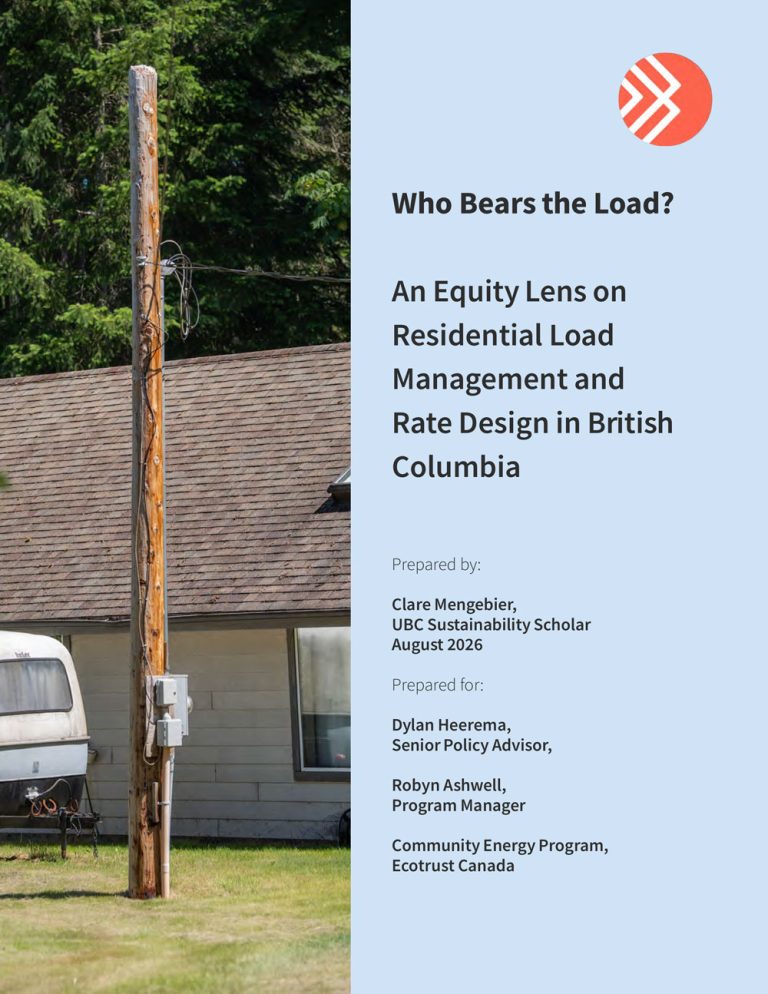
New Report on Electrical Demand
As B.C.'s electricity demand climbs toward a 50% jump in 15 years, smart thermostats, batteries, and time-of-use rates promise real savings — but only if they're designed with equity in mind. Our latest report digs into who actually benefits from residential load management, and who gets left behind. From free tech upgrades to fairer solar access and bill protections for income-qualified households, we outline a practical path to a grid that works for everyone.
The National Day for Truth and Reconciliation

Every Child Matters memorial of shoes at the base of a totem pole in Nuxalk Nation (Central Coast, Bella Coola, BC).
On September 30, we honour the National Day for Truth and Reconciliation. Take time to learn about the stories of the First Nations, Inuit, and Métis peoples, and the ongoing legacy of Indian Residential Schools in Canada.
There are many ways to engage with this day, including:
1. Wear an orange shirt and support the grassroots campaign founded by residential school survivor Phyllis Webstad.
2. Read the Truth & Reconciliation Commission’s 94 Calls to Action and consider how you or your workplace can act.
3. Attend a local ceremony or gathering organized by Indigenous people in your community.
4. Know whose land you reside on and how you can support their local communities and survivors (visit native-land.ca).
Where We Work

Over 4,000 lbs of potatoes were donated to community members and local organizations in Prince Rupert, BC, on Ts’msyen territory. The late-August distribution shows how our Food Systems program is building connections within the local food network and strengthening the food economy in Prince Rupert, BC, and across the region.
(Pia Khaira photo)
P.S. What do you know about natural climate solutions?

Proving the Possible
Ecotrust Canada works with rural, remote, and Indigenous communities toward building an economy that provides for a healthy and resilient natural environment; sustainable and abundant energy, food, and housing; prosperous and meaningful livelihoods; and vibrant cultures and inclusive societies. We call this approach, building an economy that provides for life.
Thank you for your continued support!
The Ecotrust Canada Team


